


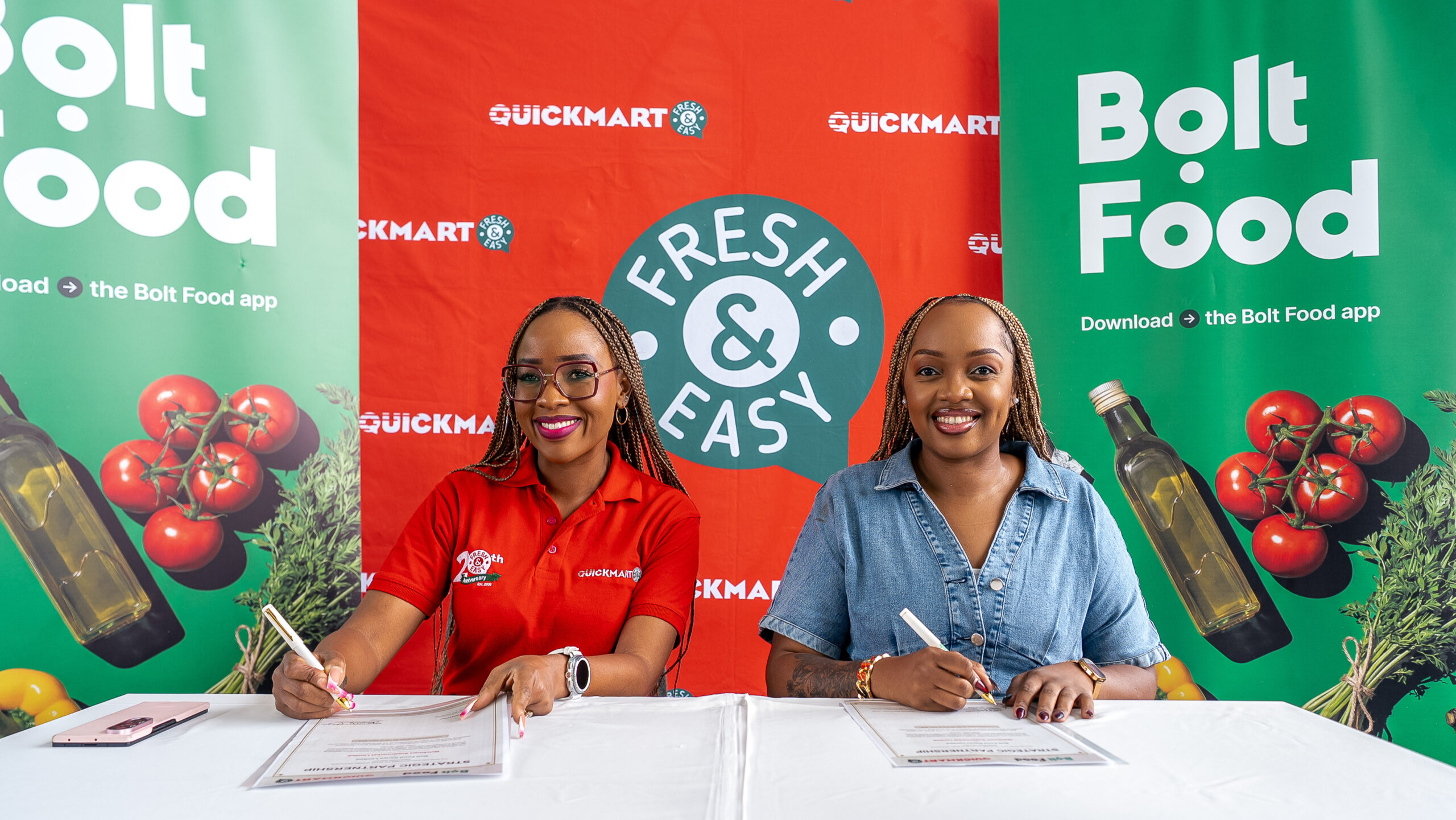
Bolt Food now delivers the supermarket. Through a new partnership with Quickmart, customers can order from over 12,000 products, including fresh groceries, beverages, wellness items and household essentials, straight to their door through the Bolt Food app. The service rolls out across more than 60 Quickmart stores nationwide.
The move pushes Bolt Food well beyond its restaurant roots. The platform now positions itself as a daily convenience tool, one that handles not just dinner but the shopping run.
From food delivery to full-basket convenience
Ali Zaryab, Bolt Food’s General Manager for Kenya and Ghana, frames the shift as part of a longer journey. “This partnership marks a significant step in how we are evolving Bolt Food, from a food delivery service to a platform that supports everyday needs,” he says. “By working with trusted names like Quickmart, we make it easier for customers to shop on their terms, and for our partners to reach more households through digital channels.”
Zaryab adds that the expansion also opens up income for the platform’s courier network, a point the company has been keen to underscore as gig economy scrutiny grows across the continent.
For Bolt Food, groceries represent one of the most frequent use cases in retail. Getting into that rhythm builds the kind of daily habit that sustains a platform long after the novelty wears off.
Quickmart turns 20 with a digital leap
The timing matters for Quickmart too. The supermarket chain marks its 20th year serving Kenyan households and sees the Bolt Food deal as a step toward meeting customers where they increasingly spend their time: on their phones.
“By enabling customers to access Quickmart’s wide range of goods through on-demand delivery, we are making everyday shopping easier, faster and more accessible,” says Betty Wamaitha, Quickmart’s Chief Marketing Officer. “We remain committed to being always fresh and easy, and this collaboration ensures our customers experience that promise in even more ways.”
With close to 70 stores across the country, Quickmart brings the geographic reach. Bolt Food brings the logistics and the user base. The combination gives both sides something they could not easily build alone.
The economy behind the delivery bag
The partnership lands at a moment when Kenya’s gig economy is drawing serious attention. A recent report from Bolt and Ipsos found that the sector supports around 1.5 million workers and contributes more than KES 100 billion to the economy each year. Some 53 percent of gig workers depend on platform work as their main source of income, and 98 percent report an improvement in their standard of living since joining.
Those numbers give context to what on-demand delivery actually means beyond the convenience of the consumer. Every order places work in someone’s hands.
What comes next
Bolt Food describes this launch as the start of a broader retail push. More product categories and additional retail partners are on the way, the company says, alongside continued investment in technology and local operations.
The app already handles the commute, the meal and now the weekly shop. The question is what daily errand it reaches for next.
