


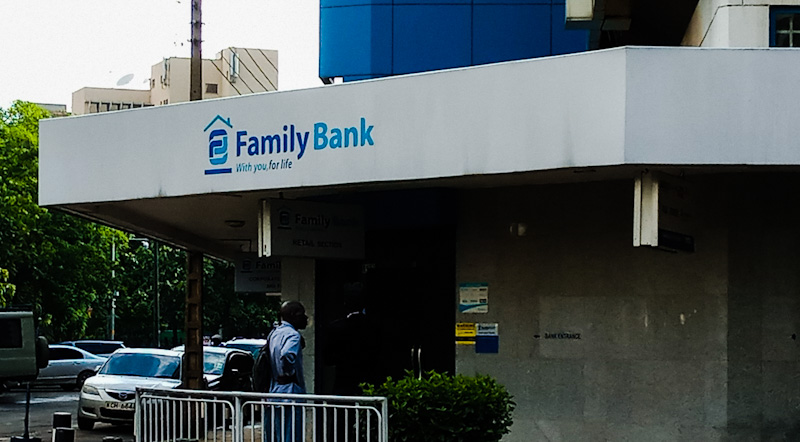
Family Bank delivered its strongest quarterly result on record in the three months ended March 31, 2026, posting profit after tax of KSh 1.60 billion, a 52.6% increase from the same period last year.
The result arrives as the lender prepares for a debut on the Nairobi Securities Exchange through a listing by introduction, advised by Standard Investment Bank.
Interest Income Drives the Headline Number
Net interest income powered the result, rising 45.5% to KSh 4.72 billion from KSh 3.25 billion in Q1 2025. Total interest income grew 26.6% to KSh 6.94 billion while interest expenses fell 1.0% to KSh 2.21 billion, even as customer deposits expanded 27.1%. That combination, growing income against a falling or flat cost of funds, produced the widest net interest margin dynamic the bank has recorded in recent years.
Non-interest income moved in the opposite direction, contracting 22.4% to KSh 1.32 billion. Despite that drag, total operating income still grew 22.1% to KSh 6.05 billion, with profit before tax rising 55.5% to KSh 2.33 billion.
Operating expenses rose just 7.6% to KSh 3.71 billion, well below the pace of income growth. That gap between revenue expansion and cost growth produced the strongest cost efficiency result the bank has recorded in recent years. Earnings per share rose 19% to KSh 0.96.
The Balance Sheet Expands Sharply
Total assets grew 32.3% to KSh 230.30 billion from KSh 174.04 billion a year earlier. Customer deposits reached KSh 168.18 billion, net loans and advances rose 12.6% to KSh 108.40 billion, and total shareholders’ funds climbed 42.2% to KSh 34.77 billion.
The bank also placed KSh 100.4 billion in government securities, a 96% increase year on year, reflecting a deliberate shift toward lower-risk assets even as the loan book grew. Borrowed funds nearly doubled to KSh 14.13 billion, the highest level on record. As Family Bank approaches its public listing, the scale of wholesale funding relative to the deposit base warrants watching.
Asset Quality Deteriorates Despite Strong Provisions
Asset quality moved in the wrong direction. Gross non-performing loans reached KSh 17.19 billion, continuing a trend that has seen the NPL book rise in every Q1 since 2015, when it stood at KSh 2.77 billion. Net NPL exposure widened sharply to KSh 1.14 billion from KSh 259.55 million a year earlier, the steepest single-year deterioration in the series. Loan loss provisions rose 21.3% to KSh 404.86 million in response, signalling that management is pricing in further stress across the loan portfolio.
The Q1 2026 result closes a decade-long recovery arc. Family Bank posted a KSh 258 million loss in Q1 2017. Since that low point, it has recorded unbroken quarterly profit growth. Net interest income has expanded 4.7 times to KSh 4.72 billion, total assets have nearly tripled from KSh 82.49 billion in Q1 2020, and customer deposits have grown in every Q1 on record, rising 3.8 times from KSh 44.56 billion in Q1 2017.
The NSE Listing Brings Liquidity, Not Fresh Capital
The upcoming NSE listing by introduction will not raise new money. No new shares go on sale. Instead, existing shareholders gain a public market through which to trade their holdings for the first time. The route to listing was cleared by a December 2025 private placement that raised KSh 8.00 billion against a KSh 6.09 billion target, confirming investor appetite well ahead of the public debut.
About Family Bank
Family Bank was established in 1984 as Family Bank Building Society with a single branch. It became a fully-fledged commercial bank in May 2007 and is regulated by the Central Bank of Kenya. Today it operates 95 branches across 32 counties, serves more than 1.2 million customers, and supports over 6,000 bank agents and 75,000 merchants nationwide.
The bank built its reputation on retail and SME banking, and on a record of digital innovation. It introduced paperless banking through smart card technology and launched the PesaPap mobile app, one of the earlier mobile banking platforms in the Kenyan market. Its product range covers retail, SME, agribusiness, corporate banking, trade finance, and insurance.
Q1 2026 Financial Summary
| Metric | Q1 2026 | Q1 2025 | Change |
|---|---|---|---|
| Profit After Tax | KSh 1.60bn | KSh 1.05bn | +52.6% |
| Profit Before Tax | KSh 2.33bn | KSh 1.50bn | +55.5% |
| Earnings Per Share | KSh 0.96 | KSh 0.81 | +19.0% |
| Total Operating Income | KSh 6.05bn | KSh 4.96bn | +22.1% |
| Net Interest Income | KSh 4.72bn | KSh 3.25bn | +45.5% |
| Non-Interest Income | KSh 1.32bn | KSh 1.70bn | −22.4% |
| Operating Expenses | KSh 3.71bn | KSh 3.45bn | +7.6% |
| Loan Loss Provisions | KSh 404.86m | KSh 333.80m | +21.3% |
Balance Sheet Summary
| Metric | Q1 2026 | Q1 2025 | Change |
|---|---|---|---|
| Total Assets | KSh 230.30bn | KSh 174.04bn | +32.3% |
| Net Loans and Advances | KSh 108.40bn | KSh 96.24bn | +12.6% |
| Customer Deposits | KSh 168.18bn | KSh 133.00bn | +26.4% |
| Borrowed Funds | KSh 14.13bn | KSh 7.15bn* | ~+97.6% |
| Government Securities | KSh 100.40bn | KSh 51.22bn* | +96.0% |
| Total Shareholders’ Funds | KSh 34.77bn | KSh 24.45bn* | +42.2% |
Asset Quality
| Metric | Q1 2026 | Q1 2025 | Change |
|---|---|---|---|
| Gross Non-Performing Loans | KSh 17.19bn | — | — |
| Net NPL Exposure | KSh 1.14bn | KSh 259.55m | +339.3% |
| Loan Loss Provisions | KSh 404.86m | KSh 333.80m | +21.3% |
