



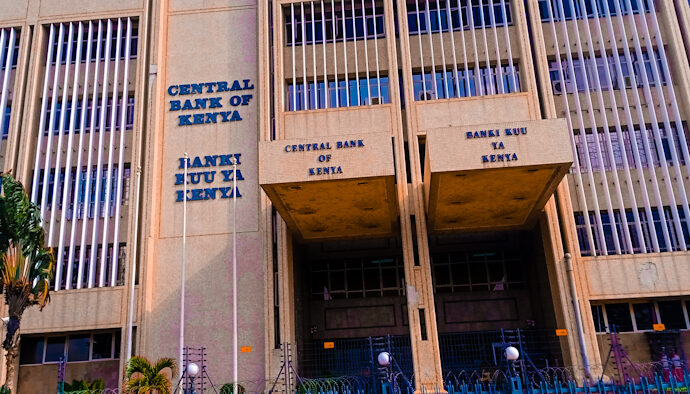
The Central Bank of Kenya (CBK) has proposed an overhaul of mobile money pricing, aiming to slash average transaction fees from KSh 23 to KSh 10 by 2028.
The move, part of the draft Kenya National Financial Inclusion Strategy (NFIS) 2025–2028, seeks to reignite digital finance adoption and address affordability gaps that have stalled growth in Kenya’s mobile-first economy.
“Mobile money is the single most transformative tool for financial inclusion,” CBK stated, noting that high fees have become a barrier for low-income users.
Mobile Money Growth Stalls Despite High Volumes
Kenya’s mobile money penetration stood at 82.3% of adults in 2024, with over 82.4 million registered accounts and 381,000 active agents. Yet, CBK data shows usage has plateaued, with most users relying on basic peer-to-peer transfers rather than savings, insurance, or investment products.
In 2024, mobile money transactions hit KSh 8.7 trillion, but new user growth stagnated. CBK attributes this to “limited interoperability, high transaction costs, low financial literacy, and product designs that do not reflect the realities of underserved groups”.
Safaricom’s M-PESA Faces Margin Pressure
Safaricom’s M-PESA, which controls 91% of the mobile money market, earned KSh 161.1 billion in 2025—nearly half of its service revenue.
CBK proposed fee caps could pressure margins and push telcos toward new growth areas such as lending, merchant services, and digital savings.
“Pricing structures must reflect the role of digital payments as a public utility as much as a profit center,” CBK emphasised.
Technology and Interoperability at the Core
The NFIS outlines a national Fast Payment System to enable instant, 24/7 transfers across banks, mobile wallets, and microfinance institutions.
It also calls for open API standards, integration of Kenya’s digital ID with financial accounts, and guidance on using AI and blockchain to enhance security and onboarding.
Strategy Pillars and KPIs
The NFIS is anchored on six pillars:
- Expand access and reduce exclusion
- Promote affordable, relevant financial products
- Strengthen consumer protection and market conduct
- Build inclusive green-finance markets
- Develop rural and agricultural finance
- Improve access for women, youth, MSMEs, persons with disabilities, and displaced populations
Progress will be tracked via KPIs, including:
- Active bank account usage: 45.6% → 60%
- Formal savings adoption: 68% → 75%
- Investment uptake: 4% → 15%
- Financial inclusion rate: >90% of adults by 2028
Governance and Public Engagement
The strategy will be overseen by a 14-member National Financial Inclusion Council, chaired by the Treasury’s Principal Secretary and co-chaired by the CBK Governor. The council will meet biannually to review progress, mobilise resources, and align public-private efforts.
CBK has invited public comments on the draft strategy, with submissions due by Thursday, October 9, 2025.
“We must balance short-term commercial targets and long-term sustainable growth,” CBK noted, urging stakeholders to support reforms that make digital finance more inclusive.
Why Mobile Money Taxation Could Hamper Financial Inclusion Gains in Africa
