




Bank of Kigali has become the first bank in Rwanda, and the first bank headquartered in East and Central Africa, to join China’s Cross-Border Interbank Payment System as a direct participant.
The bank signed the CIPS Direct Participation Agreement in Xiamen, China, on September 8, during the second CIPS Cross-Border Bank-Enterprise Cooperation Event. The agreement gives Bank of Kigali direct access to the settlement network China built to clear payments in its own currency, the renminbi, without routing transactions through intermediary banks in other countries.
“This milestone strengthens the financial connection between Rwanda and China, enabling faster and more direct cross-border payments in China’s currency,” Bank of Kigali said.
For Rwandan businesses trading with China, the shift matters. Direct participation means payments can move faster and at lower cost, since transactions no longer need to pass through a correspondent bank in a third country before reaching their destination. It also gives Rwandan firms an alternative settlement route that does not depend on the SWIFT network, which currently handles most of Africa’s cross-border payment messaging.
What CIPS Does and Why It Exists
The Cross-Border Interbank Payment System, known as CIPS, is the clearing and settlement infrastructure China built to support international payments in renminbi. The People’s Bank of China backed its launch in 2015, aiming to reduce global reliance on the US dollar and Western payment rails for trade with China.
CIPS works alongside SWIFT rather than replacing it, using compatible messaging formats so banks can connect without overhauling their existing systems. What changes is the settlement path: instead of a payment passing through several correspondent banks before it lands in China, a CIPS direct participant connects straight into the network and settles renminbi transactions on China’s own domestic clearing infrastructure. By 2024, CIPS linked more than 1,400 financial institutions across over 180 countries, and processed transactions worth tens of trillions of renminbi that year.
Which East African Bank Is Already on CIPS?
Bank of Kigali is the first East African headquartered bank to join CIPS as a direct participant, but it is not the first CIPS-enabled bank operating in the region.
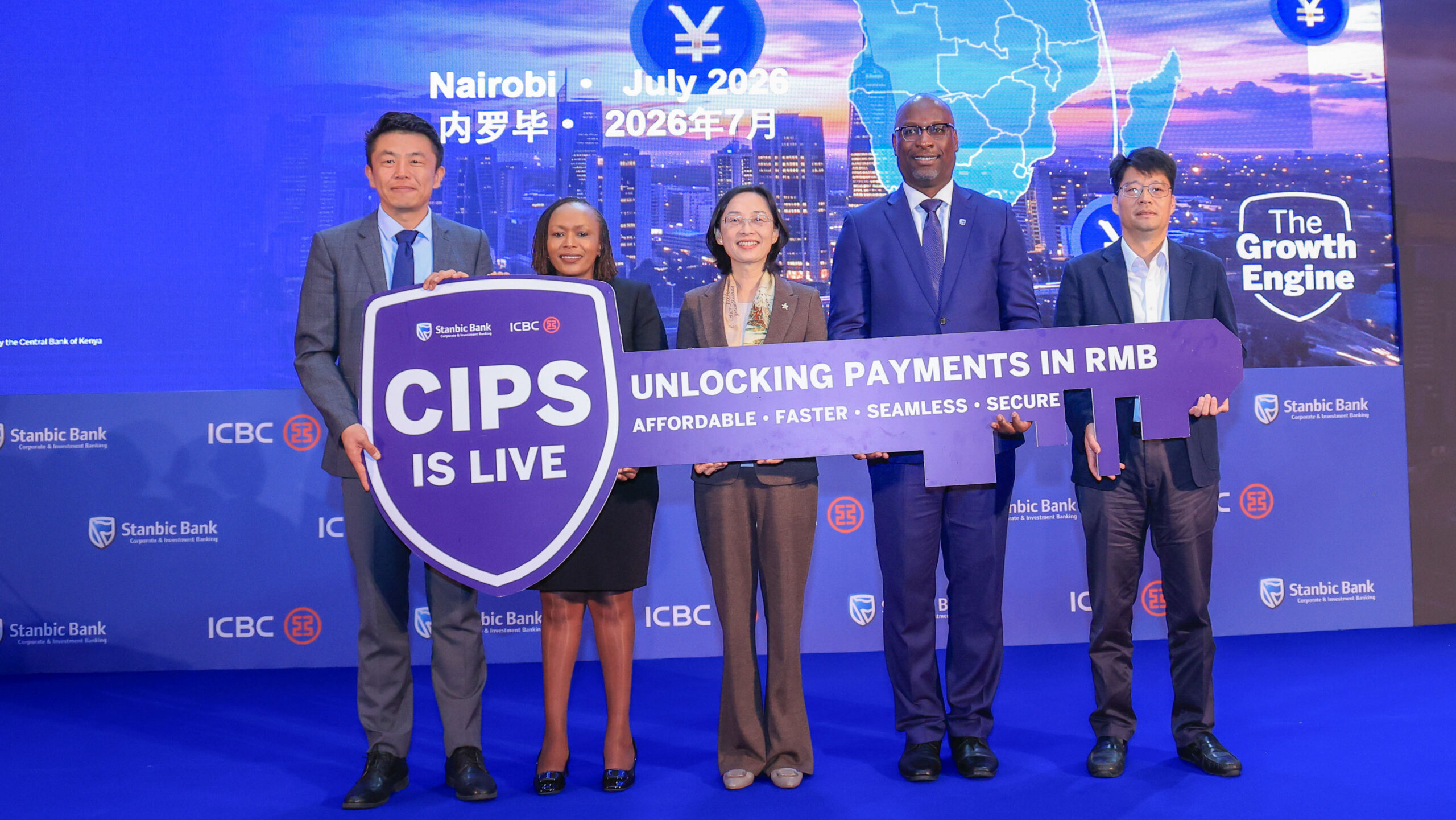
Stanbic Bank Kenya, a subsidiary of South Africa’s Standard Bank Group, began processing renminbi transactions through CIPS earlier in 2026, giving Kenyan businesses the same direct settlement access. The move plugs Kenya into infrastructure that has already carried more than CNY 8 billion, roughly $1.2 billion, in transactions for parent company Standard Bank Group over the past year.
Kenya joined a growing list of African markets on the network through Standard Bank’s rollout. Standard Bank Group broke ground in South Africa after the People’s Bank of China approved it in June 2025 at the Lujiazui Forum in Shanghai, the first African bank to receive that authorisation, and the rollout has since reached Angola, Ghana, Lesotho and Tanzania, meaning Tanzania also has CIPS-enabled RMB settlement through Standard Bank’s local unit.
Stanbic Kenya and Standard Bank Tanzania offer CIPS access as branches of a South African headquartered parent. Bank of Kigali is the first bank whose head office sits in East or Central Africa to hold direct participant status in its own right.

Other China-Linked Payment Initiatives in the Region
Beyond bank payment rails, Kenya has moved a chunk of its sovereign debt into yuan. The government finalised a currency conversion deal with China for its Standard Gauge Railway loans, a move expected to save the country approximately $215 million annually in debt servicing, after Treasury Cabinet Secretary John Mbadi confirmed the government converted part of its Chinese railway debt from dollars to renminbi following bilateral talks.
Ahead of its CIPS rollout, Stanbic Bank Kenya had already built dedicated infrastructure for Kenya-China trade. The China Desk provides specialised trade and cash management solutions tailored for importers, exporters and investors, offering guarantees, letters of credit and working capital, and connecting Kenyan businesses with trusted sellers and buyers in the Chinese market.
CIPS access is the latest step in a relationship that goes back years. CfC Stanbic became the first bank in Kenya to avail the yuan directly at its branches, partnering with the Industrial and Commercial Bank of China to cut out multiple currency conversions for traders.
Participation is also expanding beyond East Africa. The African Export-Import Bank, headquartered in Cairo, has joined CIPS as a direct participant, and reports indicate Ethiopian financial institutions are gradually connecting to the system, while Angola’s Banco de Fomento Angola has signalled plans to join amid rising demand for yuan settlement.
What This Means for the Region
Standard Bank’s CIPS network is spreading RMB settlement capability across East Africa through its subsidiaries in Kenya and Tanzania, giving businesses there faster payment rails without any single East African bank controlling the relationship.
Bank of Kigali’s move is different in kind: it gives a homegrown East African lender direct standing in the network, rather than access borrowed through a foreign parent. Kenya’s SGR conversion adds a third layer, showing that yuan settlement is moving beyond trade payments into sovereign debt management.
Together, the three tracks point to a region quietly building more than one route into China’s financial system, rather than a single coordinated push.
Direct CIPS access gives the Bank of Kigali a tool to serve growing renminbi demand more directly, and positions it to capture a larger share of the payment flows moving through Rwanda as trade with China continues to expand.
