


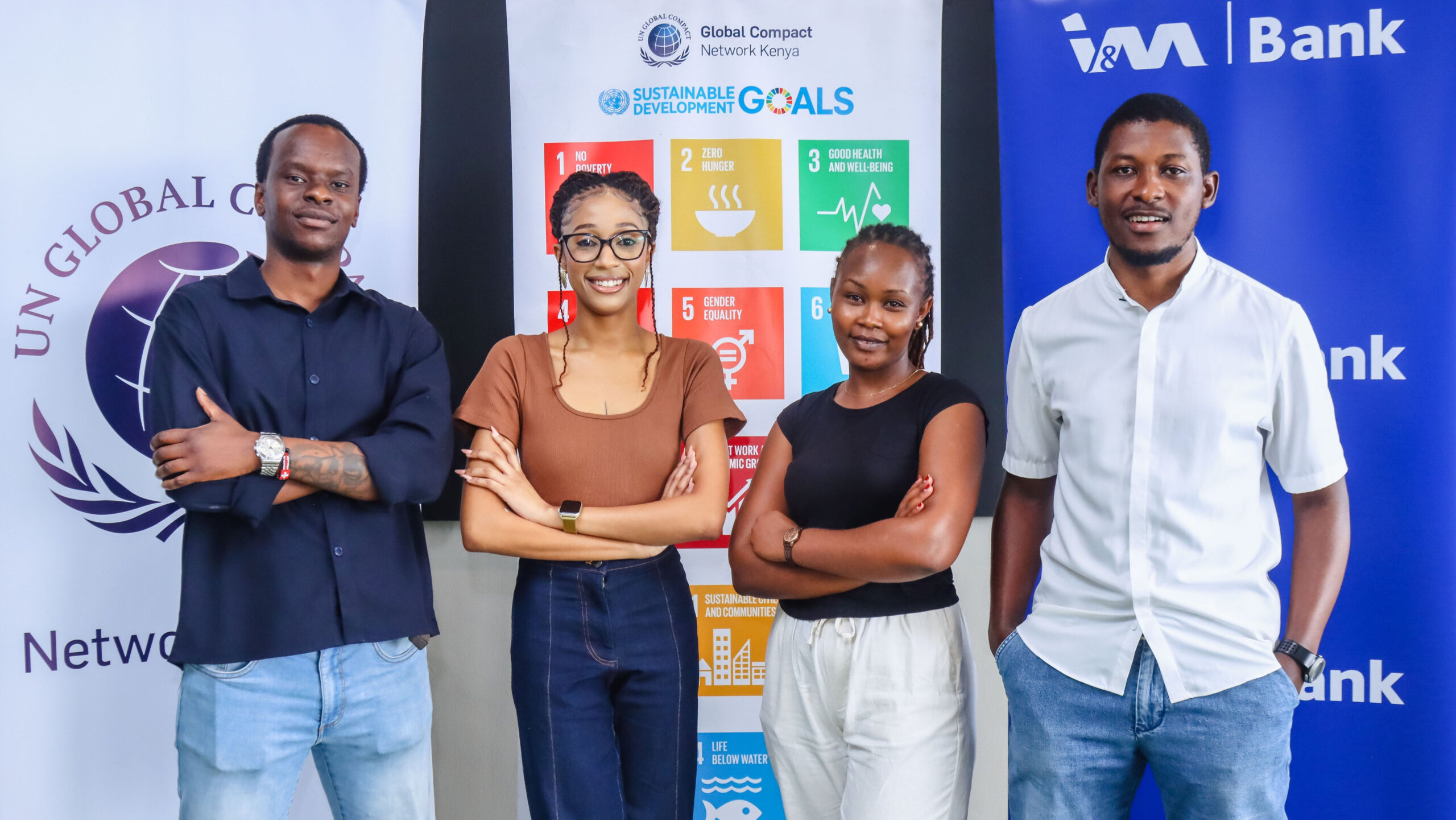
I&M Group has already crossed a target it set for 2026, reporting that its sustainability programmes reached 11.1 million lives across East Africa by the close of 2025, a full year ahead of schedule. The regional lender is now recalibrating toward a bigger goal: touching more than 50 million lives by 2030.
The milestone sits inside a wider push to widen access to credit for small business. Financing to micro, small and medium enterprises (MSMEs) climbed to Ksh.18.3 billion in 2025, up from Ksh.13 billion the year before, a jump of 41 per cent. Digital lending nearly doubled, rising to Ksh.20.6 billion from Ksh.11.5 billion, while financing routed through the group’s wider ecosystem grew to Ksh.5.9 billion from Ksh.3 billion.
I&M frames the growth as a deliberate effort to remove the barriers that keep MSMEs, smallholder farmers and young entrepreneurs locked out of formal credit. The bank says its regional branch network and digital platforms now work together to pull previously unbanked customers into the financial system, rather than treating digital and physical channels as separate tracks.
The timing is not accidental. The Central Bank of Kenya issued its Green Finance Taxonomy and Climate Risk Disclosure Framework in April 2025, giving lenders eighteen months to start disclosing the climate exposure sitting inside their loan books. Every major bank publishing a sustainability report this year is, in part, responding to that deadline rather than acting purely on its own initiative.
The numbers behind the push
| Metric | 2024 | 2025 | Change |
|---|---|---|---|
| MSME financing | Ksh.13.0 billion | Ksh.18.3 billion | +41% |
| Digital lending | Ksh.11.5 billion | Ksh.20.6 billion | +79% |
| Ecosystem financing | Ksh.3.0 billion | Ksh.5.9 billion | +97% |
| Green finance contracts | — | Ksh.3.7 billion | New disclosure |
| Agricultural finance contracts | — | Ksh.2.3 billion | New disclosure |
| Lives impacted | 6.3 million | 11.1 million | +76% |
Source: I&M Group 2025 Sustainability Report
Kenya and Rwanda carry the growth
The group’s 2025 Sustainability Report breaks the regional picture down further. In Kenya, MSME financing reached Ksh.9.2 billion, clearing an internal target of Ksh.8.6 billion and rising from Ksh.5.5 billion in 2024. Over 6,000 MSME customers gained access to financing, and the bank ran targeted clinics on financial management and business continuity to help those businesses stay afloat once the loan lands.
Rwanda posted a sharper move. Under the group’s iMara 3.0 strategy, an ecosystem banking model drove a 177 per cent jump in MSME initiative revenues, with the loan book expanding on a plan to reach 200,000 MSME clients by the end of 2026.
Group wide, I&M says it extended finance to more than 7,000 MSMEs and over 20,000 agribusinesses during the year through a combination of digital platforms, dedicated MSME products and tailored agribusiness solutions.
The push mirrors a broader shift already under way in Kenya’s credit market. As Khusoko has reported, digital lenders and mobile network operators have been racing to close the same gap, pairing mobile money reach with lending algorithms to pull small traders into formal credit for the first time. I&M’s numbers suggest banks are now competing directly in that space rather than ceding it to fintech alone.
Green and agricultural finance move from pilot to portfolio
Beyond MSME lending, I&M recorded Ksh.3.7 billion in green finance contracts and Ksh.2.3 billion in agricultural finance contracts in 2025. The report describes these as foundations rather than finished work, with plans to widen financing for renewable energy, climate smart agriculture and sustainable infrastructure over the coming years.
The group’s sustainability framework rests on three pillars: last mile financial solutions, a sustainable business model and quality of life for the communities it serves. Detailed tracking now runs alongside each pillar, a change from the more general reporting the group used in its first sustainability disclosure two years ago.
Where I&M sits against its rivals
Set beside its Kenyan peers, I&M’s green finance book is still the smaller number in the room. KCB disbursed Sh48.8 billion in green loans in 2025, pushing green lending to nearly 26 per cent of its total portfolio and beating its own 25 per cent target. Standard Chartered says it has mobilised more than Sh97 billion in sustainable finance since 2021, while Absa has set a target of Sh120 billion in climate financing. Khusoko has also tracked how the African Development Bank backed KCB with a $150 million facility aimed specifically at lifting its green portfolio to 25 per cent by 2031, showing how development finance institutions are now underwriting a chunk of this growth rather than banks funding it alone.
| Bank | Green or sustainable finance figure | Reporting period |
|---|---|---|
| I&M Group | Ksh.3.7 billion in green finance contracts | 2025 |
| KCB Group | Sh48.8 billion in green loans | 2025 |
| Standard Chartered Kenya | Sh97 billion in sustainable finance | Since 2021 |
| Absa Bank Kenya | Sh120 billion target in climate financing | By 2025 |
I&M’s numbers put it earlier in the build out than its larger rivals, which fits a bank that only issued its first sustainability report in 2023. The gap also signals where the next few years of competition will run: green lending is shifting from a side initiative to a metric banks compete on publicly.
Community spending tops Ksh.400 million
I&M put more than Ksh.404.7 million into community programmes in 2025, according to the report, with environmental work claiming 62 per cent of that spend. The group planted over one million trees, recording an 85 per cent survival rate, a figure that tracks whether the trees actually grow rather than just counting seedlings put in the ground.
Economic empowerment programmes reached 38,075 women and young people, while the group’s education support extended 440 scholarships and reached 95 learning institutions. Community investment programmes overall touched close to 350,000 people during the year.
The report itself frames the tree planting figures as proof of “tangible progress in ecosystem restoration,” language the group uses to separate its environmental spending from a one off planting event.
Leadership sets the tone
Regional CEO Kihara Maina described the report as more than a compliance exercise.
“Our 2025 Sustainability Report is both an accountability milestone and a statement about the kind of institution we want to become. As we grow across the region, we want that growth to expand economic opportunity, strengthen the resilience of our customers and communities, and contribute to a more sustainable future,” Maina said.
He added that the focus now moves to measurement rather than ambition.
“The report provides a foundation from which we can set clearer priorities, improve how we measure progress and remain accountable for the outcomes we deliver,” he said.
What comes next
I&M operates across Kenya, Rwanda, Tanzania, Uganda and Mauritius, running 119 branches and 154 ATMs with more than 3,600 employees. That footprint gives the group room to scale the programme, but it also raises the bar: having beaten its 2026 target early, I&M now has four years to more than quadruple its impact, from 11.1 million lives to 50 million, while larger rivals extend a lead in green lending it will need to close. The next report will show whether the pace of 2025 was a starting point or a peak.
