


Kenya’s mainstream advertising market spent the first half of 2026 catching its breath. After a strong close to 2025, advertisers pulled back sharply between January and June, dropping total spend to KES 29.53 billion, according to the Reelanalytics Kenya Media Landscape Report H1 2026.
This is a 24% fall from the KES 38.7 billion recorded in H2 2025. Yet it still sits 7% above the KES 27.6 billion spent in H1 2025, a detail that separates this slowdown from a genuine collapse.
“Total advertising expenditure reached KES 29.53 billion, down 24% from H2 2025, but still 7% above H1 2025,” the report states, framing the dip as seasonal rather than structural.
Kenyan advertisers have historically loaded budgets into the second half of the year, when festive campaigns, year end promotions and, increasingly, election related messaging compete for airtime and outdoor space.
What Actually Happened in H1
Four sectors carried nearly half the market. Banking led with KES 4.90 billion in spend, followed by Media at KES 3.66 billion, Betting and Gambling at KES 2.33 billion, and Communication at KES 2.22 billion. Together those four categories accounted for close to 45% of total advertising expenditure, a concentration the report attributes to sustained competition for brand visibility, customer acquisition and digital financial services uptake.

Television held its position as the single largest channel, pulling in KES 16.89 billion. That was a 25% drop from H2 2025’s KES 22.54 billion, but still 2% ahead of H1 2025. Citizen TV recorded both the highest advertising volume and the highest spend on the platform, with the Media sector itself the biggest TV advertiser at KES 2.80 billion, ahead of Banking at KES 2.20 billion.
Radio spend fell 23% quarter on quarter to KES 11.90 billion, down from KES 15.46 billion in H2 2025. Kameme FM logged the most advertising insertions of any station, driven largely by banking campaigns for the KCB Goal Savings Account, the NCBA Now App and Equity’s Fanikisha Loans.
Print was the outlier, and arguably the more interesting number. Spend on newspapers rose to KES 739.2 million, up 13% from H2 2025 and 12% higher than H1 2025. State bodies, led by campaigns from Kenya Pipeline Company, Kenya Power and Nakuru County, dominated the category, underscoring print’s remaining role as the medium of record for government communication.
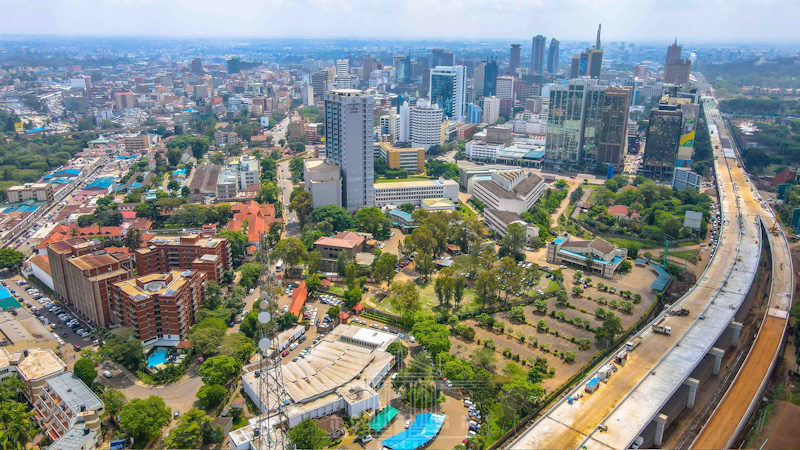
Out of Home advertising delivered KES 3.3 billion in tracked H1 value. Large format billboard occupancy moved between 65% and 70% through the half, climbing steadily toward June, while Nairobi continued to dwarf every other market with 2,350 large format sites against 216 in Mombasa and 199 in Kisumu.
The Digital Picture Is Messier Than the Headline Numbers Suggest
Reelanalytics’ tracking shows digital ad spend swinging from KES 3.3 billion in July 2025 to a peak of KES 4.7 billion in September, before sliding to KES 1.7 billion by November and December and only partially recovering to KES 2.7 billion by March 2026. Facebook remains the dominant platform, and Communications Authority data for the quarter running April to June 2026 puts Meta’s flagship platform at 63 percent of digital advertising activity in Kenya, reinforcing how concentrated the digital spend has become around a single company.
That volatility fits a wider pattern documented elsewhere. Business Daily reported that businesses cut digital advertising expenditure by 48.3 percent to Sh6.08 billion, down from Sh11.76 billion in the quarter ended December 2025, one of the sharpest quarterly contractions on record even as social media engagement kept climbing.
A GeoPoll survey cited in that same report found 36 percent of Kenyan respondents spend more than six hours daily on social media, which leaves a widening gap between where audiences spend their time and where marketing budgets actually go.
Khusoko reported that Kenya’s above the line advertising spend fell 22% to Ksh 66.3 billion in 2025, with gambling curbs driving the decline, and that Reelanalytics itself was forecasting a further 20% drop for 2026 at the time, to roughly Ksh 52.7 billion for the full year. New rules restricting gambling advertisements to digital billboards, capping frequency and requiring dual regulatory sign off have stripped one of the market’s biggest spending categories of much of its former reach.
The H2 2026 Forecast: Growth, But Not a Full Recovery
Reelanalytics projects advertising expenditure will climb 11% in H2 2026, a rebound the report links directly to the industry’s usual second half strength. But the recovery has a ceiling. Even with that growth, projected spend is expected to land below the KES 38.7 billion recorded in H2 2025, meaning the market will likely post a decline on a year on year basis even as it grows sequentially.
| Media Type | H2 2025 Spend (KES Billions) | Share of Spend |
|---|---|---|
| Television | 22.5 | 37.5% |
| Digital | 17.8 | 29.7% |
| Radio | 15.5 | 25.8% |
| Out of Home | 3.5 | 5.8% |
| 0.7 | 1.2% |
Source: Communications Authority of Kenya; Reelanalytics
Beyond H2 2026, the outlook grows harder to read. Kenya is moving deeper into its election cycle ahead of the 2027 vote, and the report expects that shift to reshape demand rather than simply grow it. Political advertising, heightened news consumption and competition for premium inventory are all likely to push up rates, particularly for Out of Home sites in high traffic corridors and strategic city entry points. With roughly 30% to 35% of large format billboard inventory still available through much of H1, Reelanalytics argues the near term opportunity for brands is not simply buying more space but securing the right locations before political campaigns and festive season bookings crowd them out.
Press Freedom, Ownership and the Newsroom Money Problem
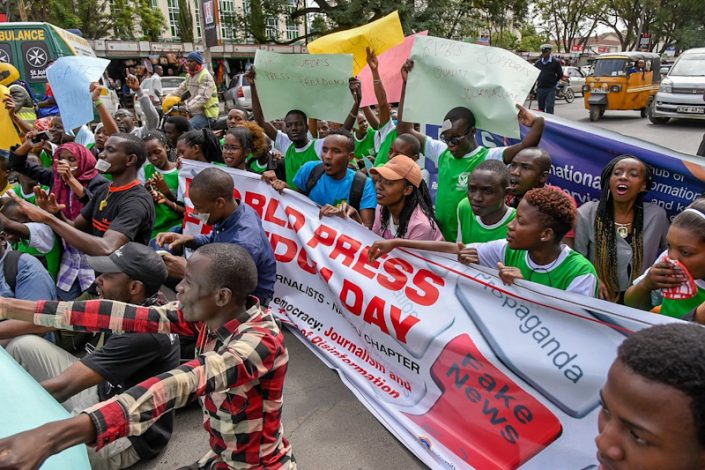
The advertising numbers sit alongside a harder story about the health of Kenyan media itself. Reporters Without Borders moved Kenya up to 106th of 180 countries in its 2026 World Press Freedom Index, from 117th the year before, largely on the strength of an improved political context score. But the report is blunt about what that ranking obscures: Amnesty International Kenya documented journalists harassed and physically attacked at political events between February and May 2026, including a violent assault at a Trans Nzoia rally where reporters were beaten and footage forcibly deleted. Armed men assaulted journalists covering the Ol Kalou by-election in July, a day after Kenya’s Media Sector Working Group had already warned of deteriorating conditions ahead of 2027. A Kameme TV reporter was hit by rubber bullets during a police response to Nairobi protests in March.
The gap between an improving formal ranking and worsening conditions for reporters on the ground is, in the report’s own words, “itself the insight.” Expect that tension, alongside continuing commercial pressure on editorial independence, to define coverage through H2 2026.
Ownership change compounds the pressure. Tanzanian businessman Rostam Aziz acquired a controlling stake in Nation Media Group in 2026, and while he has publicly committed to editorial independence, Khusoko’s coverage of the Reuters Institute’s Digital News Report notes the change removed “a degree of insulation from direct political and commercial pressures” that the Aga Khan Development Network had previously provided. The same reporting found the Kenyan government owes legacy media houses, including NMG, Standard Group and Mediamax, roughly KSh 866 million in delayed advertising payments, a debt that adds to the financial strain newsrooms are already managing.
Audiences are moving faster than the money that is meant to fund them. The Media Council of Kenya’s April 2026 survey found 39 percent of Kenyans now name social media as their primary news source, ahead of both television and radio, with WhatsApp alone reaching 62 percent of the survey sample for news, up 16 percentage points year on year. For an industry still built on television and radio ad sales, that migration is the real story sitting underneath H1’s spending numbers.
What This Means for Advertisers and Broadcasters
For marketers, the practical read is straightforward. Radio and television still carry the reach, but reach is no longer the argument that wins budget. Regional and vernacular radio stations proved their worth in H1 through precision targeting in banking, agriculture and communications campaigns, and presenter driven activations, the kind Royal Media Services leaned on when it reshuffled anchors across Hot 96, Radio Citizen, Mulembe FM and Inooro FM in February, moving existing talent into new slots rather than paying premiums to poach rivals. Radio Africa Group answered with its own stunt in April, swapping presenters across Kiss 100, Classic 105, HOMEBoyz Radio and Radio Jambo for a single day, built up through a week of social media speculation that reached a combined listenership of over 42.5 million.
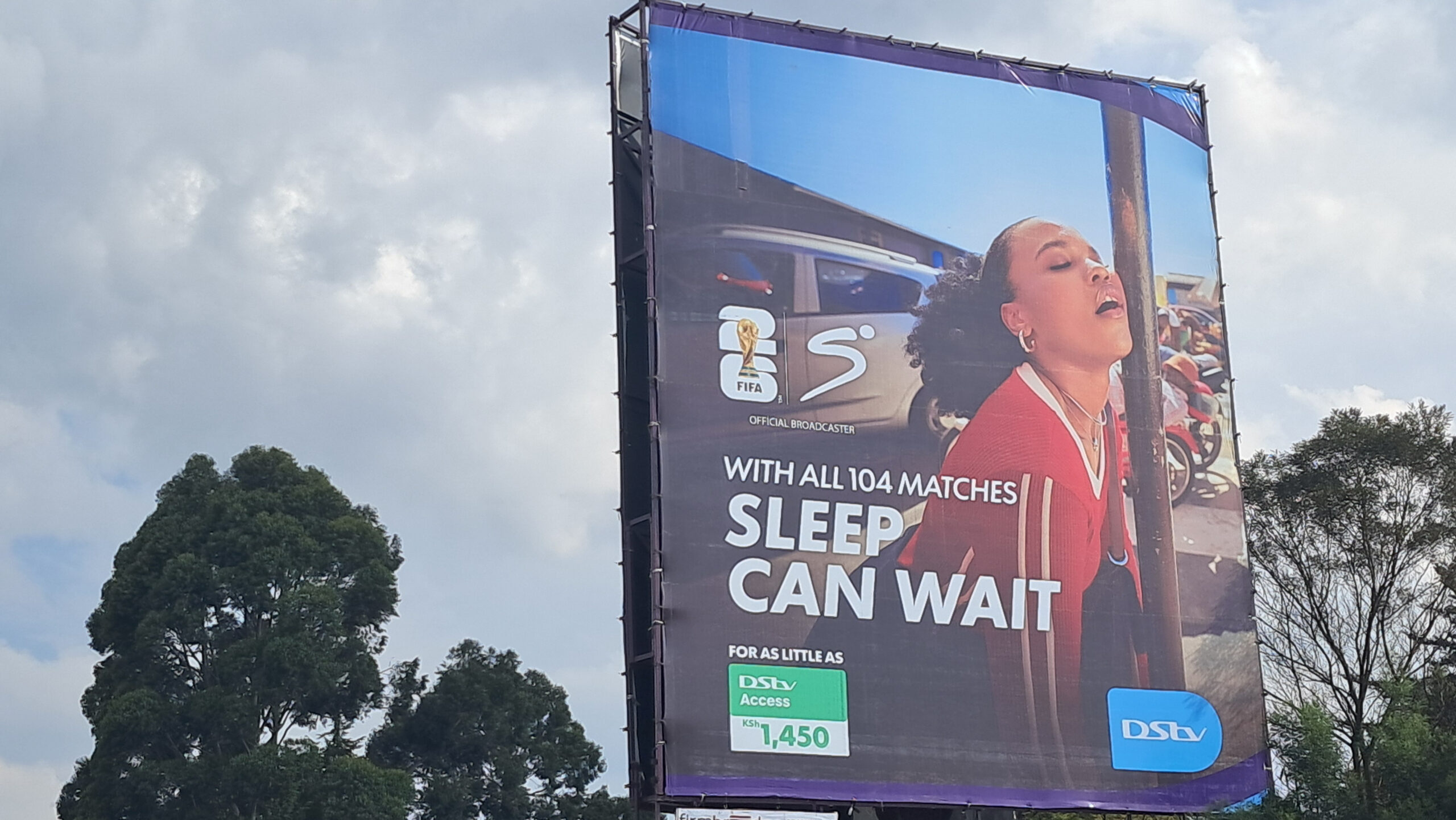
For broadcasters, the pressure points are clear too. Pay television continues to lose ground on price: Khusoko’s analysis of DStv’s Kenyan business found the platform lost 80% of its subscribers in 16 months after raising subscription prices at least five times in three years, pushing its Premium package to KES 11,700 a month, while cheaper rivals StarTimes and Azam TV kept growing.
MultiChoice Kenya nonetheless remained mainstream media’s single largest advertiser in H1 2026, spending KES 1.6 billion across DStv Step Up, DStv FIFA World Cup and DStv and GOtv football season campaigns, a bet on subscriber acquisition even as its base shrinks.
The Bottom Line
Kenya’s advertising market is not in freefall, but it is not stable either. It is repricing itself around a shrinking gambling category, a betting sector regulators have deliberately constrained, an audience that has already moved to WhatsApp and social platforms faster than ad budgets have followed, and a newsroom economy still owed hundreds of millions of shillings by the state.
The KNBS recorded real GDP growth of 5.3% in the first quarter of 2026, up from 4.9% a year earlier, with services, tourism and technology led sectors doing the heavy lifting. That growth gives advertisers room to spend. Whether they choose television, radio, print, digital or outdoor space through the second half of the year will depend less on where audiences already are and more on how quickly the industry can prove it can reach them there.
