


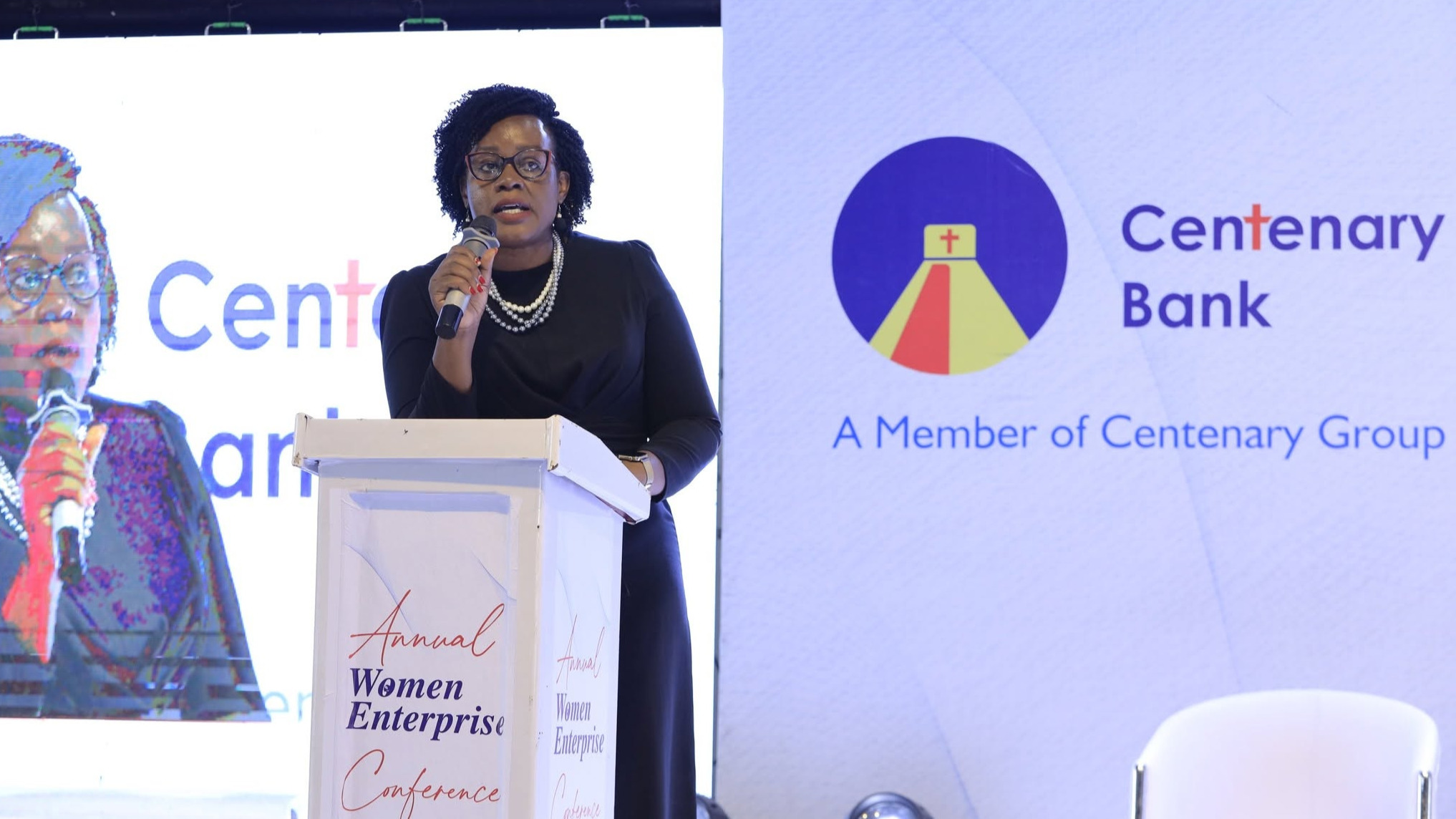
More than 24,000 micro enterprises in Uganda received financing in the first year of a partnership between EIB Global, the development arm of the European Investment Bank Group, and Centenary Bank, one of the country’s largest domestic lenders, according to figures released this week.
The results, drawn from the first annual disbursement report on the scheme, show women entrepreneurs and rural businesses taking up a larger share of the funding than either institution had targeted.
The deal
EIB Global and Centenary Bank signed the agreement in 2024, committing to make €100 million, equivalent to 428 billion Ugandan shillings, available to private sector enterprises over seven years. The structure is straightforward: EIB Global extended a €50 million credit line to Centenary Bank, and the bank matched it from its own balance sheet, doubling the pool available to borrowers.
It is EIB Global’s largest microfinance loan in any country across the African, Caribbean and Pacific region, a scale that reflects both the size of Uganda’s informal economy and the bank’s existing footprint in microfinance. The final borrowers are micro entrepreneurs and micro enterprises with fewer than ten full time employees, a segment that typically falls outside the reach of conventional commercial lending.
Beating the targets
Women made up more than 60% of beneficiaries, above the 50% target set when the deal was signed. Rural projects accounted for 75% of financing, well past the 60% goal. Trade was the largest sector funded, taking around half the total, with agriculture close behind at nearly 40%.
Marko Primorac, EIB Vice President, said the funding was addressing long standing barriers to finance for women and rural communities in Uganda and would keep supporting private sector growth. Centenary Bank’s managing director and chief executive, Godfrey Byekwaso, said the financing had helped close local funding gaps and given the bank a stronger platform to bring small businesses into the formal economy.
Why the gender numbers moved
Behind the headline figures sits a specific EIB Global programme, the Africa Women Rising Initiative, which works inside the Centenary Bank partnership to expand services for female clients. It has pushed the bank to redesign products and lending criteria around women borrowers and to pair credit with training in financial literacy and record keeping.
The effect shows up in the bank’s own numbers: its female client base has grown 21% since the partnership began, and non performing loans among women borrowers have fallen by more than 8%, suggesting the training component is feeding through into repayment behaviour rather than just loan volume.
Jozef Síkela, the European Commissioner for International Partnerships, cast the results as evidence for the EU’s broader Global Gateway strategy, arguing that access to finance lets small businesses grow, hire and build more resilient local economies, and that the reach into women led and rural enterprises shows the strategy working through established local partners rather than parallel structures.
Refugees included in the lending
The financing also reaches refugees living in Uganda, including people who fled the Democratic Republic of Congo and South Sudan. Of the loans disbursed in 2025, 200 went to refugee borrowers.
One beneficiary, Gissele Muganza, a refugee from the Democratic Republic of Congo, runs a children’s clothing store in Uganda. A loan of UGX 2 million allowed her to expand her stock and fund a bachelor’s degree. Her monthly net profit has since nearly doubled to UGX 1.1 million, and she has completed her studies.
Context
The current facility builds on a relationship between EIB Global and Centenary Bank dating back to 2008. EIB Global has provided more than €388 million in Uganda since 1981, with agriculture and gender equality as recurring areas of focus. The financing sits within the European Fund for Sustainable Development Plus, the EU instrument known as EFSD+, which underpins the Global Gateway strategy by drawing private capital into markets that would otherwise struggle to attract it.
Centenary Bank, for its part, is Uganda’s leading commercial microfinance bank, serving over 3.4 million customers through 81 branches, 217 ATMs and close to 9,000 agents across the country.
