



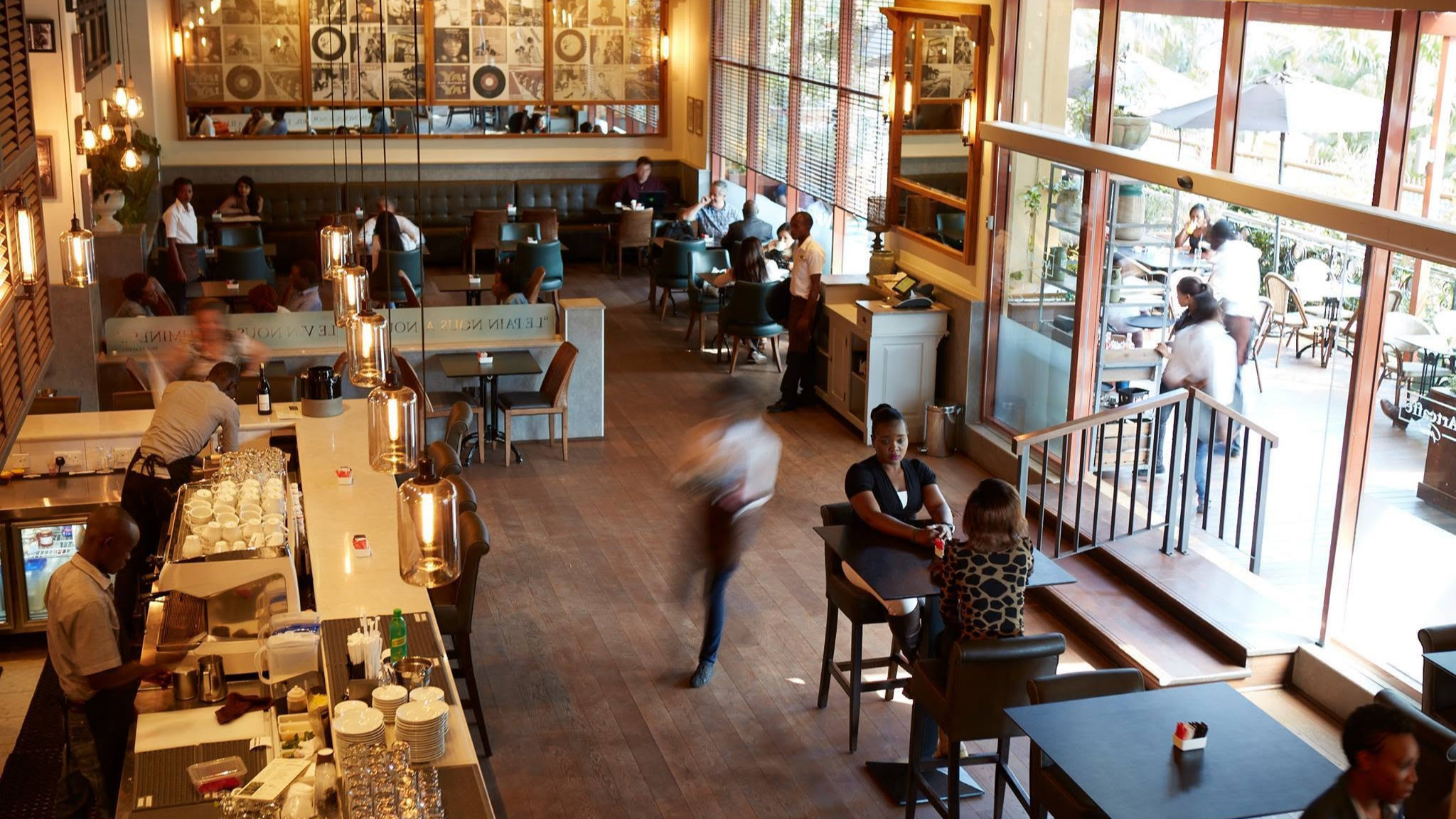
Eating out in Kenya is no longer a special occasion. It is becoming a habit, and restaurants are rebuilding themselves around that shift.
Research on Africa’s foodservice sector found dine in still made up roughly three quarters of restaurant visits in 2025, but delivery is now the fastest growing channel on the continent, a sign that convenience has become as important as the food itself.
Artcaffe and Java House, two of Kenya’s biggest hospitality names, are both responding this month, one with a bolder menu, the other with new branches placed exactly where demand already exists.
Artcaffe Trades Comfort Food For Bold Spice
Artcaffe’s new seasonal menu leans into the food cultures of the Mediterranean, the Middle East and North Africa. Harissa, sumac, za’atar and tahini now sit alongside citrus marinades and slow cooked, open fire dishes, a combination the brand’s Head of Culinary, Jyoti Patel, describes as comforting without being predictable.
The standout newcomer is a Bone Broth Dawa, simmered for 24 hours with ginger and sourced from Artcaffe’s own butchery. Kenyan diners have increasingly gravitated back toward local and traceable ingredients in recent years, driven less by nostalgia and more by concerns over quality, safety and knowing exactly where a meal came from, according to research on restaurant trends in Nakuru County. Sourcing its own broth in house lets Artcaffe answer that question directly.
Elsewhere on the new menu, the Casablanca Chicken Tagine pairs Moroccan spicing with Persian jewelled rice, and the grill runs from Beef Kebab Tabbouleh to Mediterranean Snapper with Tomato and Olives. Diners on the move get a Spicy Chicken Shawarma or a Beef Doner Kebab wrap, while plant based eaters can choose an Adas Falafel Harvest Bowl or an Arabic Bulgur Salad. Breakfast gets the same treatment, with Turkish Eggs joining Moroccan Harira soup and new signature cocktails built around a wine list curated in the South of France.

“This menu has all the comfort people look for in winter, but it still feels bright and alive. There is smoke from the grill, warmth from slow cooking and spices, then freshness from lemons, herbs, chilli, pickles and colourful vegetables. It is one of the best menus we have created,” Artcaffé’s Head of Culinary, Jyoti Patel said.
The menu launches alongside Moments, a new loyalty programme spanning Artcaffe’s restaurants, gourmet food markets, gastro bars and events, the kind of everyday reward system that keeps a brand relevant once eating out stops being a rare treat.
Since opening its first restaurant in 2008, Artcaffe has grown to more than 60 restaurants and 10 food markets nationally, and it is not slowing down. Fresh from opening in Kisumu and Voi, Artcaffe is adding three more locations this month, in Kianda, South C and Ngong Town, with Thika Town, Tatu City, Loresho, Nakuru and Eldoret still to come. The company expects the expansion to create more than 700 jobs across Kenya this year.
Java House Builds Two New Branches Around The Same Idea
Java House has spent the past month proving the same point twice. In late June, the chain opened its 109th branch at Shell Adams Arcade in Nairobi, a short walk from the very first Java House, which opened at Adams Arcade back in 1999.
Group COO Naima Hassan said the choice came down to demand already visible in the area, part of a broader pattern of customers wanting to visit more often and expecting genuinely convenient options once they do. A month later, the chain opened its 110th branch in Thindigua, a fast growing Kiambu Road suburb reshaped by the Northern Bypass and years of private real estate investment.
CEO Priscillah Gathungu described the same logic behind that choice: rather than waiting for Thindigua residents to travel into Nairobi’s centre to eat, Java House is placing itself inside the neighbourhoods where its customers already live and work.
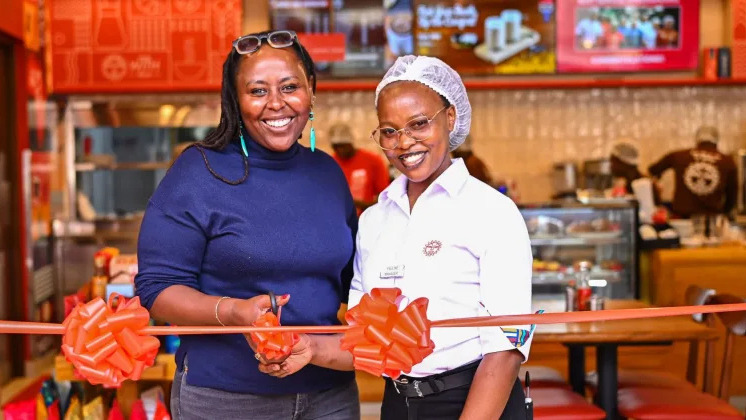
Both branches carry the brand’s full casual dining menu, including its customisable Make It Your Way range, and both are wired into Java House’s mobile app and third party delivery platforms, the plumbing behind what industry analysts call the unbundling of restaurants, where ordering, cooking and eating no longer need to happen in the same place.
Gathungu has pointed to a similar pattern playing out well beyond Nairobi, as devolution pushes retail and dining growth into smaller towns whose residents are just as digitally connected to global food trends as anyone in the capital.
Java House is also testing new flavours by looking outside its own kitchen. Its Guest Chef programme hands a limited menu over to food creators with an established online following, treating their audiences as a live signal of what people actually want to eat. The first edition, run in 2025 with Nairobi creator Cooking With Jaz, centred on a sticky fried chicken burger glazed in honey, soy and garlic, a low risk way to road test ideas shaped by current taste rather than committee decisions.
Java House’s growth since 1999, when it opened as a single coffee shop introducing gourmet coffee culture to Kenya, has been considerable. The chain now runs across 18 cities in three East African countries, and its portfolio includes sister brands Planet Yoghurt, 360 Degrees Pizza and the fast casual chicken concept Kukito. Its community arm, the Java Foundation, backs responsible sourcing and local farmers and artists, and partners with the Food For Education programme to deliver school meals, giving the brand’s expansion a social dimension beyond new store openings.

The Competition Now Includes The Supermarket Aisle
Java House and Artcaffe are not just competing with each other. Africa’s quick commerce market, covering app based delivery of both groceries and prepared meals, is forecast to keep growing at close to 9 percent a year through 2029, with Glovo now the dominant player for online food and grocery orders in Kenya. Dark stores, warehouses built purely to fulfil online orders, are expanding even faster across the region, with Nairobi named among the cities driving that growth.
Supermarkets have noticed too. In South Africa, retailer OK Foods recently opened a Johannesburg store built around a coffee bar, a quick service restaurant, a bakery and a deli alongside its grocery aisles, treating prepared food as central to the shopping trip rather than an afterthought near the till. Africa’s market for ready to eat meals sold through retail channels is expected to grow 8 to 11 percent a year through 2035, with Kenya named among the high growth markets on the back of urbanisation and more women working outside the home, both of which leave less time for cooking from scratch. For a chain like Java House, that means the competition for a quick, reliable meal is no longer just the café down the road. It is also the supermarket aisle and the delivery app on a customer’s phone.
What The Property Data Says About Kenyan Dining
Kenya’s property analysts have been tracking a version of this same shift for years. Knight Frank and Cytonn Investments have both noted that Kenyan retail growth is no longer just about opening more stores. It is about matching supply to where rooftops and footfall are actually growing, and about giving shoppers a reason to stay once they arrive, a point Cytonn’s market reviews have made repeatedly when describing Kenyan consumers as shopping for an experience rather than simply buying.
Knight Frank’s most recent Kenya market commentary points to the same shift on the property side. Retail rents have held steady, but the sharpest growth is happening in well located, quality assets rather than speculative developments, with investors and tenants alike favouring locations that already have proven residential demand.
Nairobi’s Two Rivers Mall made a similar bet when it devoted thousands of square metres to restaurants and cafes during its expansion, drawing in both international chains and Kenyan brands such as Java House. That is exactly the calculation behind Java House’s back to back openings at Adams Arcade and Thindigua, and it echoes Artcaffe’s own recent expansion into Kisumu, Voi and now a cluster of Nairobi satellite towns.
The Bigger Picture For Kenyan Diners
Kenya’s dining scene is no longer defined by a handful of city centre landmarks, and it is no longer only restaurants shaping it. Diners are eating out more, asking harder questions about where their food comes from, ordering more of it through an app, and increasingly finding a hot meal waiting in the same supermarket aisle as their groceries.
Artcaffe and Java House are both betting that the brands built around that reality, new menus shaped by global flavour and traceable sourcing, new branches built around where Kenyans are actually moving, will be the ones still winning the plate in the years ahead.
