


Multiple Hauliers (EA) Limited has landed back under administration, marking the latest turn in a debt battle that has dragged through Kenya’s courts and a London arbitration tribunal for more than five years.
NCBA Bank Kenya PLC has appointed Muniu Thoithi and George Weru of PwC as joint administrators of the once dominant transport and logistics firm, acting under section 534 of Kenya’s Insolvency Act.
The appointment is confirmed in a public notice published in the High Court of Kenya under the Insolvency Act, dated 27 July 2026, which names Thoithi and Weru directly and cites section 534 as the legal basis for their appointment. They must determine whether Multiple Hauliers can survive as a going concern, negotiate an outcome for creditors better than liquidation would deliver, or steer the company toward winding up if neither option holds up.
Who Is Multiple Hauliers, and How Did It Get Here
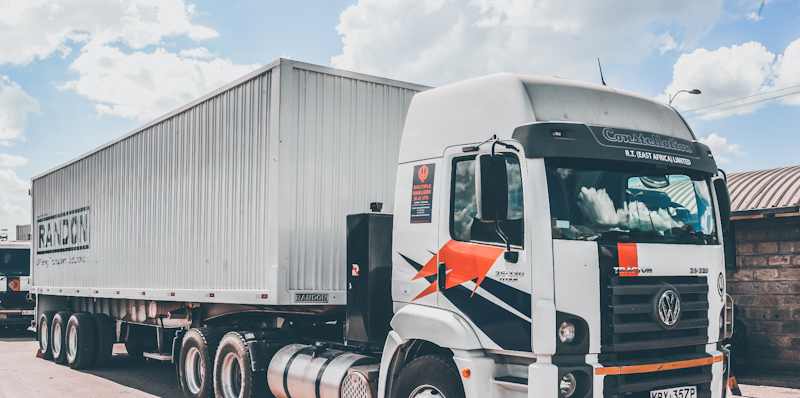
Multiple Hauliers built its name as one of East Africa’s major cross border transport operators, moving freight across Kenya, Uganda, Tanzania and Rwanda. At its peak, the company reported annual revenue north of $53 million and employed roughly 260 people, a scale that made its later collapse all the more consequential for the region’s logistics sector.
The trouble traces back to a syndicated loan Multiple Hauliers took out in 2017, arranged through NCBA and co-lender Barak Fund SPC Limited to fund fleet expansion. The company’s shareholders, including MG Holdings Limited and directors Rajinder Singh Baryan and Manvir Singh Baryan, later argued that NCBA never fully disbursed the agreed facilities, a shortfall they say triggered the financial distress that followed.
By 2020, asset financier Synergy Industrial Credit had petitioned to liquidate the company over an unpaid Sh532 million debt. The High Court gave Multiple Hauliers room to restructure instead of shutting down immediately. That reprieve didn’t last. In June 2021, NCBA placed the company under administration over a Sh7.2 billion debt claim, appointing Ernst & Young’s Anthony Makenzi Muthusi and Julius Mumo Ngonga to run the business. At the time, the company’s total obligations across multiple lenders, including NCBA, Synergy, KCB, Co-operative Bank and the National Social Security Fund, stood at roughly Sh14 billion.
A Debt Fight That Kept Changing Hands
What followed was a prolonged tug of war over who would control the company’s fate. By 2024, the administrators NCBA had appointed resigned, prompting the High Court to hand control to the Official Receiver, a state agency under the Office of the Attorney General. Justice Alfred Mabeya directed the Official Receiver to oversee a rescue deal with South Africa’s Amava Consortium, which had tabled a term sheet backed by an $8.5 million guarantee, with progress reports due to the court every 60 days.
By late 2024, the Official Receiver’s own report revealed the scale of the problem had grown far beyond initial estimates. Total debts had climbed above Sh31.4 billion, against company assets worth roughly Sh17 billion, a gap that made any rescue plan considerably harder to pull off.
NCBA pushed back against the Official Receiver’s appointment, arguing the court lacked jurisdiction to install that role without a formal application and that the bank’s statutory right as a secured lender to appoint its own administrators had been ignored. The Court of Appeal agreed with NCBA in 2025, suspending the High Court order and restoring the bank’s ability to enforce its security and call in guarantees.
Table: Key Events in the Multiple Hauliers Insolvency Saga
| Year | Development |
|---|---|
| 2017 | NCBA and Barak Fund extend a syndicated loan to finance fleet expansion |
| 2020 | Synergy Industrial Credit petitions to liquidate the company over a Sh532 million debt |
| June 2021 | NCBA places the company under administration over a Sh7.2 billion claim; EY administrators appointed; total debt estimated at Sh14 billion |
| April 2024 | NCBA-appointed administrators resign |
| September 2024 | High Court appoints the Official Receiver to oversee a rescue deal with South Africa’s Amava Consortium |
| November 2024 | Official Receiver’s report puts total debts above Sh31.4 billion against Sh17 billion in assets |
| October 2025 | High Court blocks NCBA from appointing administrators or enforcing guarantees pending London arbitration |
| 2025-2026 | Court of Appeal suspends that block, restoring NCBA’s right to enforce its security |
| 2026 | Multiple Hauliers shareholders file an Sh88 billion damages claim against NCBA at the London Court of International Arbitration |
| 27 July 2026 | NCBA appoints PwC’s Muniu Thoithi and George Weru as new joint administrators |
An Sh88 Billion Counterpunch in London
While NCBA has fought to recover roughly Sh12.7 billion it says it is owed, Multiple Hauliers’ shareholders have gone on the offensive with a far larger claim of their own. The company’s owners, including MG Holdings and the estate of the late Tarlochan Singh Heer, filed an Sh88 billion damages claim against NCBA at the London Court of International Arbitration, arguing that the bank’s failure to fully fund the original facilities caused lost business, disrupted contracts and broader commercial harm.
That claim dwarfs NCBA’s own exposure to the debt, complicating any straightforward path to recovery for either side. The dispute has also spilled into parallel litigation in Nairobi, where courts have had to untangle how administration, liquidation and arbitration proceedings interact, at one point consolidating separate insolvency cases and pausing creditor action until the Court of Appeal resolves the underlying jurisdictional questions.
What the New Administration Notice Means Now
With the Court of Appeal having cleared the way for NCBA to reassert control, the bank has moved quickly to install its own administrators once again. Thoithi and Weru now hold authority over all operational and financial matters at Multiple Hauliers, with the company’s directors stripped of their previous powers over its assets. Anyone with a claim against the company has 14 days from the notice date to submit it for inclusion in the roll of creditors, while the administrators act on the company’s behalf without personal liability for its debts.
The Road Ahead for a Company in Limbo
Multiple Hauliers now stands at a familiar crossroads: rescue, restructure, or wind down. What makes this round different is the scale of unresolved liability hanging over any outcome. With debts reported above Sh31 billion, assets worth a fraction of that, and an Sh88 billion arbitration claim still pending in London, the new administrators face a far more complicated balance sheet than the one their predecessors inherited in 2021. How that arbitration resolves may ultimately decide whether Multiple Hauliers survives as a going concern or becomes a cautionary tale about the risks of leveraged expansion in East Africa’s logistics sector.
