



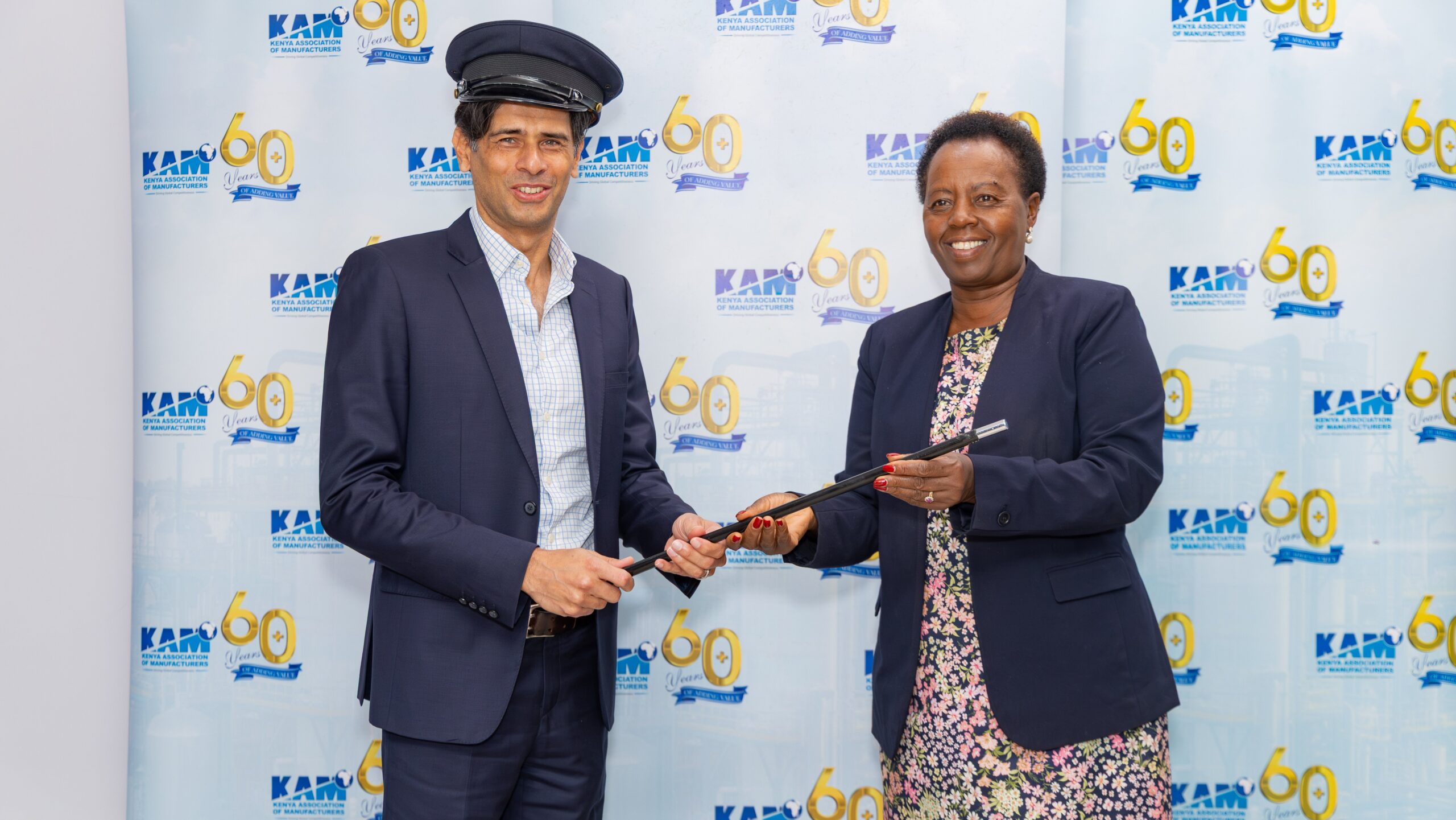
The Kenya Association of Manufacturers has elected Hitesh Mediratta, Managing Director of PG Bison Kenya, as its new Chairperson for a two year term.
He succeeds Jane Karuku, Group Managing Director of East African Breweries Plc, whose tenure at the helm of the manufacturers lobby has ended. The Board also elected Mary-Ann Musangi, Managing Director of HACO Industries Kenya, as Vice Chairperson, while Karuku stays on as an ex officio Board member.
A Familiar Face Steps Into the Top Seat
Mediratta’s rise to Chairperson caps a steady climb through KAM’s leadership ranks. He has served as Vice Chairperson since 2024, when the Board elected Karuku to the top post and moved him into the deputy role. Before that, he chaired the Timber and Furniture Sector and served as Vice Chair of the Trade and Tax Board Committee. He has sat on the KAM Board since 2020, giving him six years of exposure to the association’s policy fights before taking charge of them.
His day job runs even longer. Mediratta has led PG Bison Kenya, a furniture manufacturer, for 21 years, a tenure that spans multiple economic cycles and gives him a long view of what Kenyan manufacturers actually need from policy.
Mediratta Sets Out His Agenda
Speaking after his election, Mediratta framed his appointment against a backdrop of global trade turbulence. He said global uncertainties continue to shape trade and supply chains, but that they also open a chance for Kenya and Africa to strengthen regional value chains.
His stated priorities center on competitiveness and fairness. He wants to build on KAM’s advocacy record by pushing for a level playing field that helps Kenyan manufacturers compete both at home and abroad. He also committed to championing equitable value chains where manufacturers of every size get a real chance to compete, grow and expand, while pursuing practical, evidence based fixes to the tax and policy problems that have dogged the sector for years. Continued engagement with government and industry stakeholders on reforms that unlock industrial expansion sits at the center of that plan, he added, with the aim of delivering outcomes that build lasting value for manufacturers and support Kenya’s wider industrialization goals.
This is not new territory for Mediratta. In earlier remarks as Vice Chairperson, he pointed to artificial intelligence and sustainable practices as forces that could reshape Kenya’s manufacturing sector, framing them as tools central to sustainable growth rather than passing trends.
Musangi Brings a Track Record on Women in Manufacturing
Musangi’s election as Vice Chairperson puts her a step from the top of an association that has now had two women chair its board. She currently chairs KAM’s Women in Manufacturing Programme, where she has pushed initiatives covering leadership development, mentorship, skills training and broader participation for women in the sector. That work gives her a distinct base to build from as she takes on a wider role supporting KAM’s strategic priorities alongside Mediratta.
Karuku Leaves a Legacy Built on Industrialization
Karuku’s exit closes a two year chapter defined by her push to grow manufacturing’s share of Kenya’s economy. When she took the Chair in July 2024, she set her sights on lifting the sector’s contribution to Gross Domestic Product to 20 percent by 2030, a target that became a reference point across her tenure. She becomes the second woman to have chaired the KAM board since its founding in 1959, a distinction that places her leadership in a small and notable group.
Her continued presence as an ex officio Board member means KAM keeps access to her strategic guidance even after her formal term ends. That continuity, paired with Mediratta’s deep institutional memory and Musangi’s advocacy record on gender inclusion, gives the association a leadership team built more on continuation than reinvention. For a sector still fighting for stable tax policy and lower production costs, that kind of steady hand may matter more than a fresh face.
