


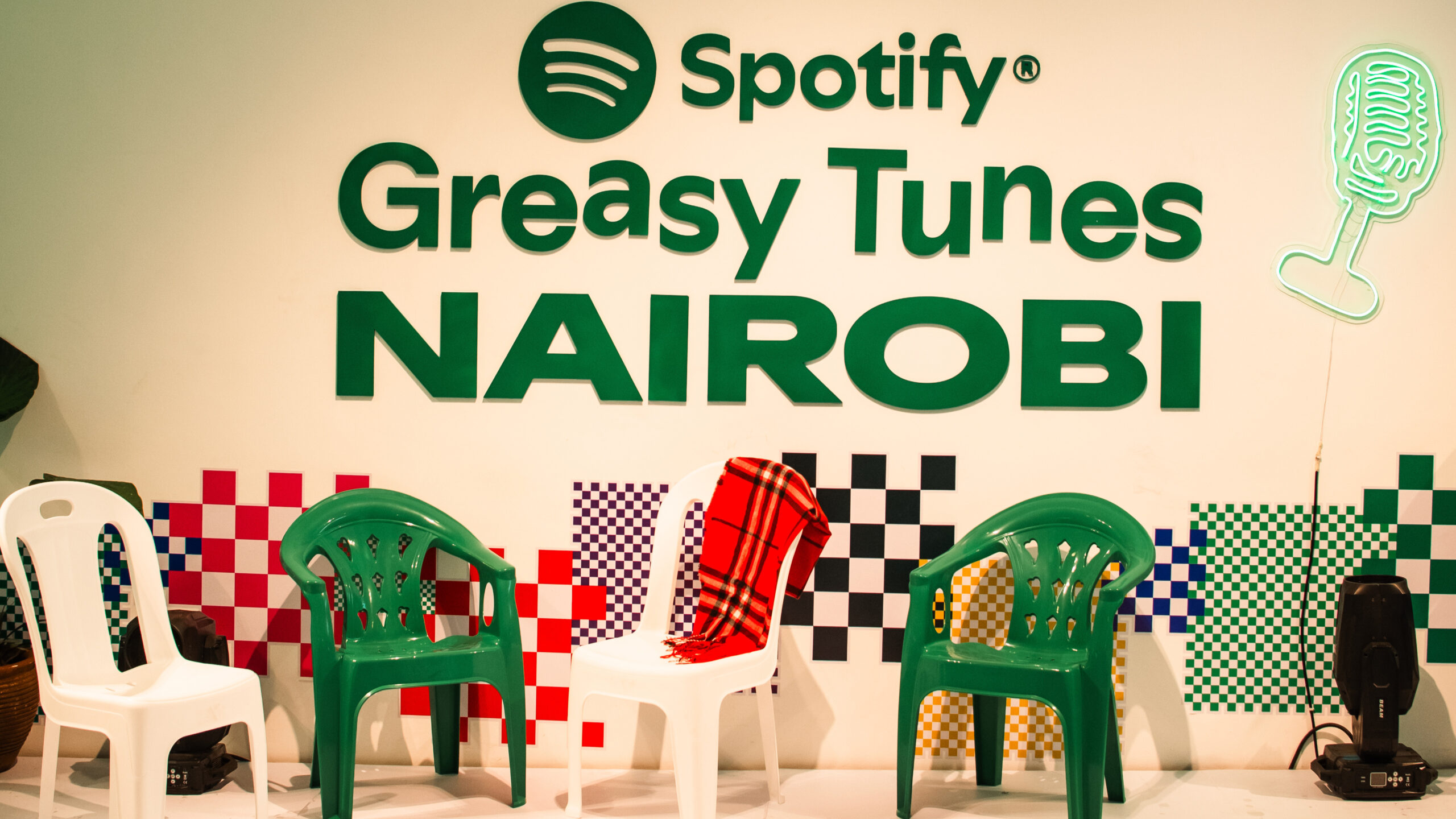
Spotify has opened its Greasy Tunes Café Kitchen in Nairobi, teaming up with local events platform The BAG to launch a twelve day pop up that puts food, music and the city’s creative communities on the same table.
The Nairobi run marks the third stop for Greasy Tunes, following earlier editions in Johannesburg in 2023 and Lagos in 2025. Each city gets its own flavor. In Nairobi, that means a program built around street food culture, local music scenes and the community energy that already drives how young people gather here.
From Braamfontein To Lagos To Nairobi
Greasy Tunes started small and grew with purpose. The first edition landed in Braamfontein, Johannesburg, in July 2023, taking over the neighborhood for a month with a design pulled straight from the township kota cafe, complete with table tennis and jenga on the tables.
Spotify built the run around weekly genre themes, moving fans through electronic and Afrotech sounds, Amapiano, South African hip hop and a closing week of pan African music, with performances from Maglera Doe Boy and Kelvin Momo.
“Spotify has witnessed the undeniable power of audio in spreading South African culture and trends, both within the continent and worldwide,” said Jocelyne Muhutu-Remy, Spotify’s Sub-Saharan Africa managing director, at the launch.
Two years later, the concept crossed into West Africa. Lagos hosted Greasy Tunes for three weeks in October 2025, this time built around a simple trick: order a Nigerian dish and get a Spotify playlist matched to your meal in real time. The Lagos edition leaned into Afrobeats as the city’s constant soundtrack and paired that energy with fireside conversations featuring artists like Made Kuti, Spinall and Vector, alongside performances from Adekunle Gold, ODUMODUBLVCK and The Cavemen. Bea Theron, Spotify’s experiential marketing manager for Sub-Saharan Africa, called it “our future facing model, blending the force of Afrobeats with the authenticity of local cuisine.”
Nairobi inherits that template and localizes it again, swapping Amapiano and Afrobeats for a lineup built around Kenyan drill, gengetone and the genre blending sound coming out of the city’s current scene, while keeping the same core idea: follow what people are actually eating and listening to, then build a room around it.
Opening Night Set The Tone
The BAG kicked things off with an opening night built around Nairobi’s social and street food culture, the same mix of sound, food and conversation young Nairobians already build their evenings around. Known for high energy sets and strong crowds, The BAG is one of several communities featured across the program, and its launch night gave a clear signal of what the next twelve days would look like.
A Menu Built With Local Chefs
Spotify partnered with Jikoni Studio Nairobi to develop the café kitchen’s menu alongside Kenyan chefs, grounding the food in familiar local flavors. The result is a space where music discovery and cultural exchange happen over dishes that feel like home.
Twelve Days, Ten Communities, One City
Running from 15 to 26 July at Heltz House, Greasy Tunes brings together voices across music, fashion, sport, comedy, podcasts and creative culture. The lineup includes Studio 18, The BAG, BluePrint, Fishermans Experience, Bambika TV, Assembly, Ongeza Volume, Standup Collective, Nakili Session and Strictly Soul, plus live recordings from Mic Cheque Podcast and 30 Percent Podcast. Across twelve days, Spotify and its twelve community partners will host twenty events, turning the pop up into a genuine meeting point for the people shaping Nairobi’s creative scene rather than just a place to eat.
The Data Behind Dinner
At the center of the program sits a simple idea: Nairobi’s dinner table has a soundtrack, and Spotify has the numbers to prove it. Listening data from June 2026 shows that among Nairobi listeners aged 18 to 24, the window between 6pm and 9pm accounts for 20.9 percent of all daily Gen Z music listening in the city, making it the largest food related listening period Spotify tracked.
What those listeners choose says as much about the city as the numbers themselves. Kenyan artists fill seven of the top ten tracks streamed during that window, led by Ywaya Tajiri, Wakadinali, Mutoriah, Toxic Lyrikali, Sauti Sol and Njerae, while Alikiba and Bien bring in East African collaboration and Dave featuring Tems and Drake round out the mix with international reach.
The top ten dinner window tracks in Nairobi are:
- Ywaya Tajiri, Chai ya saa kumi
- Dave featuring Tems, Raindance
- Wakadinali, LAST DANCE
- Alikiba and Bien, Finale
- Mutoriah, Beta
- Toxic Lyrikali, Hate
- Drake, Janice STFU
- Drake, Shabang
- Sauti Sol, Feel My Love
- Njerae, Aki Sioni
“What stands out in this data is not just that Kenyan artists dominate the dinner playlist, but that they sit naturally alongside names like Dave, Tems and Drake,” said Agnes Opondo, Artist and Label Partnerships, East Africa, at Spotify.
She added that young Nairobians move between local and global sounds within the same evening, and that Kenyan artists hold their own in that mix, a signal she called meaningful for anyone working with East African talent.
What It Means For African Music
Greasy Tunes lands in Nairobi at a moment when the wider data backs up its premise. Spotify’s own figures show Amapiano expanding into East Africa by 34 percent over the past year, with R&B up 28 percent, Afrobeats up 25 percent and Afropop up 21 percent among the same Nairobi audience the dinner window data covers. Nairobi’s Gen Z listeners are not just consuming these sounds, they are helping set the pace for how far they travel across the continent.
That cross pollination is not new to Spotify’s Africa strategy. The company has spent years building the infrastructure to move a song from a local playlist to a global one, a system credited with pushing Rema’s “Calm Down” to become the continent’s first Spotify track to pass a billion streams, and with helping Wizkid become the first African artist to cross ten billion career streams earlier this year.
Afrobeats streams overall have grown more than fivefold since 2021, and Sub-Saharan Africa remains one of Spotify’s fastest growing regions by monthly active users.
Seen against that backdrop, Greasy Tunes reads as more than a marketing exercise. Each edition doubles as a data gathering exercise and a talent showcase at once, giving Spotify a direct read on what a city’s youngest listeners actually want and giving local artists a stage before that demand shows up in the global charts.
Johannesburg surfaced South African hip hop and Amapiano acts before their wider international break. Lagos did the same for a new generation of Afrobeats names. Nairobi’s edition, with its gengetone and drill leaning lineup, looks built to do the same for Kenyan artists standing at a similar threshold.
Why It Matters
For young Nairobians, food and music already share the same evening. Greasy Tunes simply gives that pairing a physical home for twelve days, built by the communities who live it every night. It also gives the city’s artists a rare kind of proof, that the sounds coming out of Nairobi’s estates and studios can hold their own on the same stage, and increasingly the same playlist, as the biggest names on the continent and beyond. Anyone wanting to keep the soundtrack going after the pop up closes can pick up where it left off with Spotify’s Made in Kenya playlist.
