



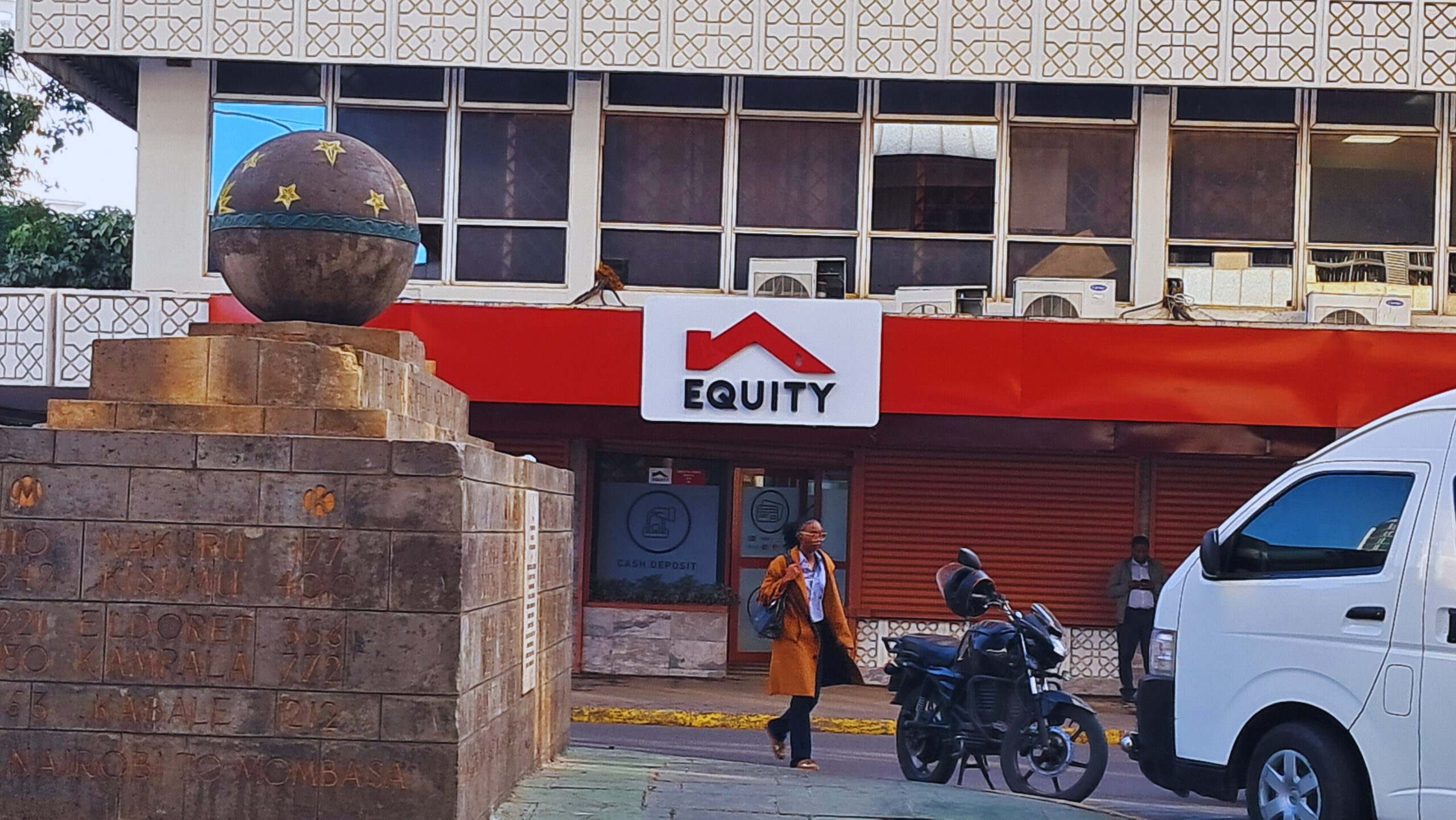
Equity Group, AfricaNenda Foundation and the Gates Foundation have signed a partnership to speed up the rollout of Digital Public Infrastructure across Africa, betting that stronger ties between banks, regulators and technology providers can close a financial inclusion gap that still leaves nearly 400 million Africans outside the formal financial system.
The agreement, announced in Nairobi, brings together AfricaNenda’s technical expertise on payment systems with Equity Group’s reach across East and Central Africa. Together, the partners will work on interoperable payment systems, digital identity, government and merchant payment solutions, and cross border payment corridors, four building blocks that determine whether digital finance actually reaches ordinary people rather than staying confined to policy documents.
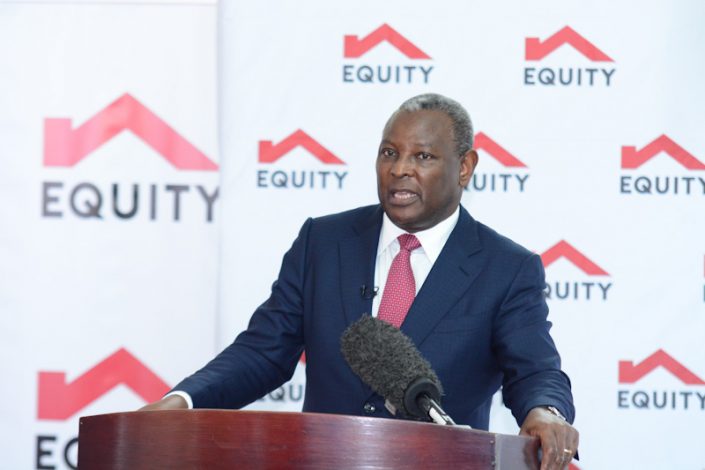
Equity CEO named continental champion
Dr James Mwangi, Equity Group’s Managing Director and CEO, has been appointed Continental Digital Public Infrastructure Champion, a new role created to lead advocacy and coordination for the continent’s digital infrastructure agenda. AfricaNenda presented Mwangi with a plaque marking the appointment, describing it as recognition of his role in pushing digital transformation forward across the region.
Mwangi framed the appointment as a natural extension of Equity’s existing mission. “Championing Africa’s economic transformation has always been our purpose,” he said, adding that digital infrastructure now provides the foundation for the next stage of that work by making financial services reachable for every citizen. He was careful to draw a distinction between the initiative and any transfer of control away from the state. “We are not asking governments to surrender ownership of public infrastructure,” he said, describing the partnership instead as a way for the private sector to help implement systems such as digital identity and interoperable payments alongside government agencies.
Why the private sector matters here
Robert Ochola, AfricaNenda’s Chief Executive Officer, put the scale of the problem plainly during the signing. Equity has already transformed banking access for millions of people, he said, yet close to 400 million Africans still sit outside formal financial services. The plan is to build practical infrastructure models with Equity and then scale them across twenty to thirty African markets.
That gap tracks with what recent industry data shows. AfricaNenda’s fourth State of Inclusive Instant Payment Systems report, published in November 2025 alongside the World Bank and the United Nations Economic Commission for Africa, found that African instant payment systems processed 64 billion transactions worth nearly 2 trillion dollars in 2024, with transaction volumes growing at an average annual rate of 35 percent since 2020. Thirty six systems now operate live across 31 countries. But the same report found only 10 of those 36 systems currently support government to person payments, and just 11 support cross border transfers, gaps this new partnership aims squarely at closing.
Ochola argued that policy alone will not close that gap. Digital Public Infrastructure cannot succeed without private sector participation, he said, pointing to Equity’s execution capacity and market reach as the missing piece needed to move the agenda from paper to practice.
Nanjira Sambuli, Senior Advocacy Officer for Africa at the Gates Foundation, explained why the foundation backed the deal. Building digital infrastructure is only the first step, she said. The real test is whether people actually use it to improve their lives, which is why the foundation chose to support a partnership anchored by an institution with a track record on financial inclusion.
A continental policy already points this way
This partnership does not emerge in a vacuum. The African Union approved a continental Data Policy Framework in February 2022, and a simplified guide to that framework, published by KICTANet and GIZ in July 2025, lays out much of the same ground Equity and AfricaNenda are now trying to build on. The framework names broadband access, data infrastructure and digital identity as the three core enablers that determine whether any data driven economy functions at all, and it says plainly that many people across Africa lack legal identity, a gap that blocks access to digital services before any policy can even apply to them. That is precisely the problem this DPI partnership is now attempting to solve at implementation level.
The AU framework also pushes for interoperable data systems and cross border data flows as prerequisites for a functioning digital single market, principles that echo directly in the interoperable payments and cross border corridors Equity and AfricaNenda have committed to build. Where the AU framework calls for member states to align national data strategies with continental instruments like the African Continental Free Trade Agreement and the Smart Africa Vision for a single digital market by 2030, this partnership functions as one of the private sector implementation vehicles that policy has been waiting for.
Robert Karanja, Founder and Senior Advisor at DPI4Africa and a board member of the Mojaloop Foundation, said accelerating this agenda across the continent will require sustained private sector leadership working in step with governments on adoption and innovation, a framing that matches the AU guide’s own conclusion that regulatory harmonization and institutional capacity building must move together rather than in sequence.
What comes next
The partnership also builds on momentum from Equity’s Africa Recovery and Resilience Plan, which has pushed digital innovation across agriculture, trade and manufacturing, and follows Mwangi’s role co chairing the Business Forum at the Africa Forward Summit, where he championed value addition and market access for African products. That summit helped open international markets for Kenyan specialty teas, including the launch of Kenyan Purple Tea in Paris, evidence Equity points to as proof that its model of pairing infrastructure with market access can move beyond payments into agriculture and trade.
For the roughly 400 million Africans still locked out of formal finance, the test now shifts from signing ceremonies and policy frameworks to delivery. If Equity, AfricaNenda and the Gates Foundation can turn interoperable payments and digital identity into infrastructure people actually use for wages, savings and cross border trade, this partnership could become the template that finally moves the AU’s data policy vision from a continental document into something citizens experience directly.
