



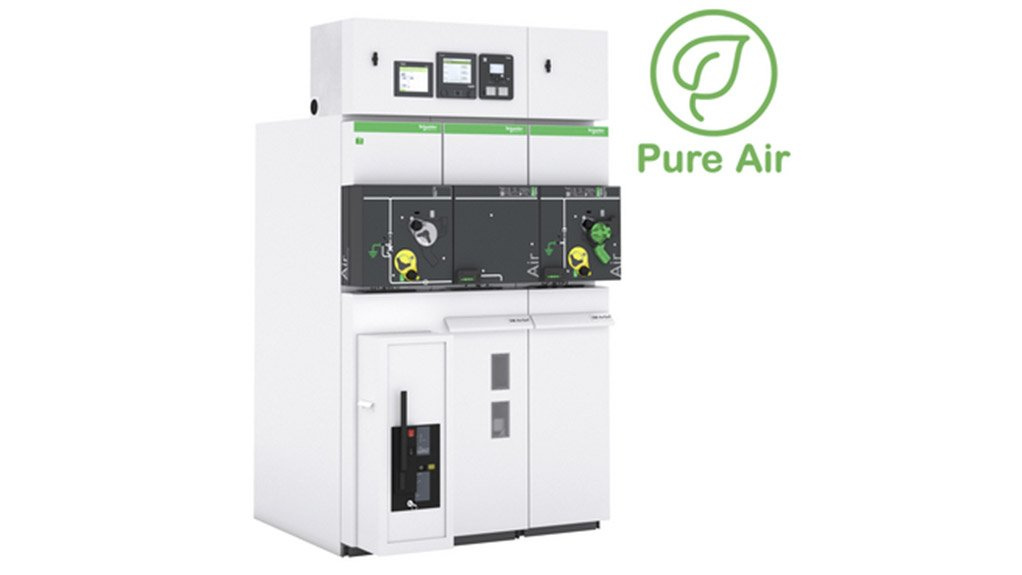
East Africa’s power infrastructure is changing fast, and Schneider Electric is at the centre of that shift. The company is accelerating the rollout of its SM AirSeT pure-air switchgear across the region, offering utilities, commercial facilities, industrial operators and infrastructure developers a medium-voltage solution that removes one of the electrical industry’s most damaging greenhouse gases from the equation.
SM AirSeT, part of the broader AirSeT family, runs on pure air rather than sulphur hexafluoride, or SF₆, a gas with 24,300 times the global warming potential of CO₂. That distinction matters because SF₆ has long been standard in medium-voltage switchgear, and replacing it represents a measurable step toward lower-carbon electrical networks. The World Economic Forum’s Alliance of CEO Climate Leaders took note, recognising the AirSeT portfolio in its Scope 3 Downstream Solutions category for Sustainable Design.
By June 2025, the AirSeT range had helped customers globally avoid 1.7 million tonnes of CO₂ emissions, a figure validated by third-party auditors through Schneider Electric’s Sustainability Impact framework.

What Is Driving Demand in East Africa
Across Kenya, Uganda, Tanzania, Rwanda, Burundi and Ethiopia, electrification targets are intensifying pressure on grid operators and private developers alike. The push to expand networks, attract industrial investment and build out digital infrastructure requires medium-voltage equipment that performs reliably in demanding conditions while meeting tightening environmental standards.
“From utilities expanding medium-voltage networks to data centres powering the digital economy, and from manufacturing plants to critical infrastructure like airports and seaports, customers want solutions that combine reliability, safety and sustainability,” says Symphrose Ochieng, Infrastructure Segment and Power Systems Business Leader at Schneider Electric East Africa. “SM AirSeT delivers on all fronts.”
Where SM AirSeT Is Being Deployed
Utilities and Grid Expansion
Grid operators across the region are under pressure to extend networks into urban peripheries and rural areas without locking themselves into technology that may face regulatory restrictions. SM AirSeT gives utilities a path forward, replacing SF₆ with pure air and aligning with both global climate commitments and emerging local regulations. It suits urban network extensions, rural electrification programmes and infrastructure upgrades in equal measure.
Commercial Buildings and Data Centres
Hospitals, data centres, universities and logistics facilities share one critical requirement: power that does not go out. SM AirSeT supports this through a design built for high-availability environments, with smart monitoring, remote diagnostics and condition-based maintenance baked in. These capabilities reduce unplanned downtime and allow facility managers to maintain visibility over their electrical systems without waiting for a fault to surface.
Industrial Facilities and Manufacturing
Food and beverage producers, cement plants, textile manufacturers and light industrial operations all depend on consistent power to keep processes running. SM AirSeT meets that operational need while helping facilities reduce their environmental footprint. Its construction handles difficult site conditions, and its SF₆-free profile supports compliance as sustainability requirements become part of procurement and investment decisions across the industrial sector.
Infrastructure and Transport
Airports, seaports and rail systems require both operational continuity and the ability to integrate renewable energy sources as they modernise. SM AirSeT supports both, providing compliant, future-ready distribution infrastructure across complex, high-demand transport assets. As East Africa’s logistics and mobility networks expand, the switchgear’s reliability and environmental credentials make it a practical fit for projects where failure carries significant consequences.
Technical Design That Supports Fast Deployment
SM AirSeT’s modular construction fits into space-constrained installations without requiring major site modifications. Its digital architecture enables real-time monitoring and smart grid integration out of the box. The arc-resistant design draws on decades of Schneider Electric’s medium-voltage development, and its compatibility with standard form factors, accessories and operating procedures keeps retraining requirements low, which matters in markets where engineering capacity is stretched.
“Phasing out SF₆ is not just a technical achievement,” says Ochieng. “For our customers across East Africa, this means they can deploy world-class medium-voltage equipment that aligns with global climate commitments and emerging regulatory frameworks.”
