


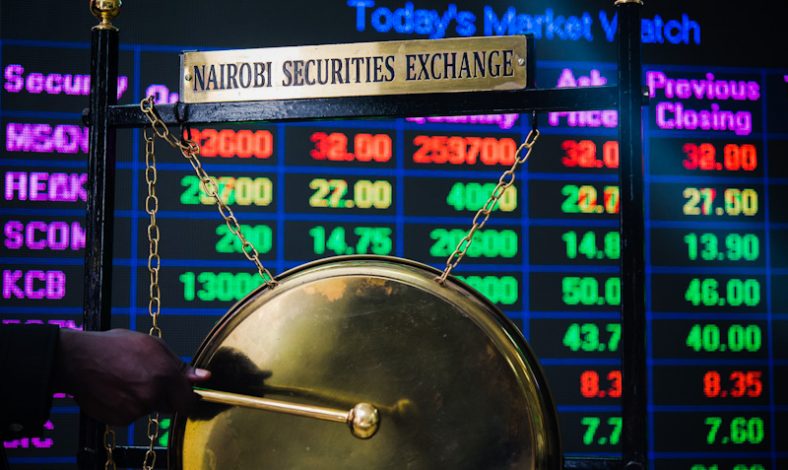
The Nairobi Securities Exchange has introduced Options on Single Stock Futures for six of its most traded companies, giving investors a new tool to manage risk and position themselves on future price movements without committing to an outright buy or sell.
The contracts cover Safaricom PLC, KCB Group PLC, Equity Group Holdings, Co-operative Bank of Kenya, I&M Holdings PLC, and Kenya Electricity Generating Company. All six will be cash-settled through NSE Clear, the exchange’s existing clearing infrastructure, and supported by its network of clearing and trading members.
What a futures contract actually does
A futures contract is a legally binding agreement to buy or sell a standardized asset at a fixed price on a specified future date, executed through a regulated exchange.
The maize farmer analogy makes this concrete. If maize sells for KSh 3,000 per bag today and a farmer fears the price will fall by harvest, they can lock that price in now through a futures contract.
If the market drops to KSh 2,500 at harvest, the farmer is protected. If it rises to KSh 3,500, they miss the upside but walk away with the agreed price. The contract removes uncertainty in both directions.
What an option adds to that equation
An option on a futures contract takes the logic one step further. Instead of locking in a price with full obligation, the buyer pays a small premium today for the right, but not the obligation, to enter that futures position later. Using the same maize example: a trader offers the farmer the right to lock in KSh 3,000 per bag within three months, in exchange for a fee of KSh 100 now.
The outcomes differ meaningfully from a standard futures contract.
| Scenario | Market Price at Harvest | Action | Outcome |
|---|---|---|---|
| A | KSh 2,500 (falls) | Activate the option | Sell at KSh 3,000. Protected. |
| B | KSh 3,500 (rises) | Ignore the option | Sell at market price. Lose only the KSh 100 premium. |
The difference in plain terms: a futures contract is a binding commitment. An option is a paid reservation that you can walk away from if the market moves in your favour.
How this plays out on the NSE
Consider Safaricom trading at KSh 35. An investor who expects the stock to rise but wants to limit downside exposure can buy an option on a Safaricom futures contract. If Safaricom climbs to KSh 45, the option gains value and the investor profits. If the stock falls to KSh 30, the investor loses only the premium paid, not the full position. The asymmetry is the product’s defining feature: capped loss, open upside.
Why this matters for Kenya’s capital markets
Derivative products have traditionally attracted institutional investors, market makers, and professional traders, because they generate activity in the underlying stocks and deepen available liquidity. Options extend that logic by adding a second layer of instruments that let participants hedge existing positions or express views on future price direction with defined risk.
NSE Chief Executive Frank Mwiti framed the launch in those terms. “The introduction will provide investors new instruments to support efficient capital deployment whilst offering advanced risk management tools enabling hedge against adverse price movements in the underlying contracts,” he said. He added that the exchange will conduct investor education and run settlement tests with clearing and trading members before full rollout, alongside monitoring risk controls to limit potential defaults.
The NSE says the move responds to growing market demand and aligns with its stated goal of building a broader suite of investment products. Options on indices are expected to follow the initial single-stock rollout.
For retail investors, the practical takeaway is that Kenyan markets now offer a way to take a view on Safaricom, Equity, KCB or KenGen without needing to buy or short the shares outright. The tool carries its own complexity, and the exchange’s planned education drive will determine how quickly that understanding reaches beyond institutional trading desks into the broader market.
