


A private cables company with no prior public profile has signed a deal to acquire East African Cables, the once-dominant NSE-listed manufacturer whose years-long insolvency battle erased shareholder value and brought trading in its shares to a halt.
Cable Experts Limited (CEL) signed a Share Purchase Agreement on May 19, 2026, to acquire the entire 68.37% controlling stake that TransCentury PLC holds through its wholly-owned subsidiary, Cable Holdings (Kenya) Limited. The sellers are TransCentury’s court-appointed Joint Receivers, Muniu Thoithi and George Weru of PricewaterhouseCoopers Kenya, acting under High Court supervision. If regulators approve the deal, it would mark the end of one of Kenya’s most drawn-out corporate insolvency dramas, and transfer ownership of a 60-year-old manufacturer to a buyer whose shareholders remain undisclosed.
Six Decades, Then a Collapse
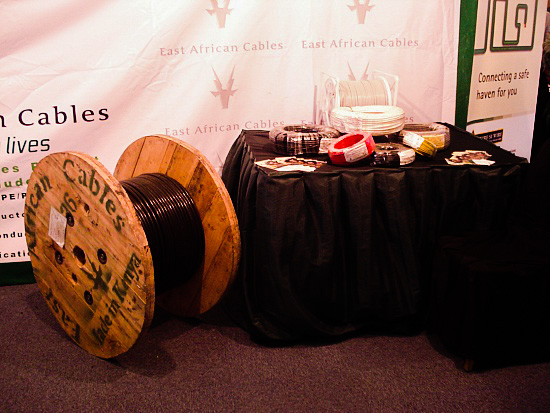
East African Cables, listed on the NSE as CABL and incorporated in 1966, built its name across six decades as Kenya’s leading manufacturer of power cables and conductors, supplying utilities, contractors, and project developers across East and Central Africa. Its collapse traces back to a KSh 2.2 billion loan default to Equity Bank, which triggered administration proceedings in June 2023.
Thoithi and Weru, initially appointed on 16 June 2023, resumed their roles as joint receivers and managers for TransCentury and joint administrators for East African Cables on 19 June 2025, following the lapse of a 90-day court order extension. They assumed operational control of EAC’s Nairobi factory and began court-sanctioned asset recovery.
The Capital Markets Authority suspended trading in CABL shares under Regulation 73(2)(a) of the Capital Markets (Public Offers, Listings, and Disclosures) Regulations, 2023, effective June 23, 2025, with the suspension remaining in force indefinitely. By the time it took effect, EAC’s market capitalisation had collapsed to roughly KSh 253 million.
The battle in court was relentless. On May 23, 2025, the Court of Appeal dismissed East African Cables’ application to prevent Equity Bank from selling four key properties held as security, effectively clearing the bank to exercise its statutory right of sale. The company had fought the move at every level, arguing the appeal had prospects of success and that asset sales would render any favourable ruling meaningless. The court disagreed.
How TransCentury Fell
The parent company’s collapse deepened the crisis. TransCentury, once a flagship of Kenya’s post-independence investment class, was placed under full receivership by Equity Bank on June 19, 2025, after a two-year window of court orders protecting it from the bank expired.
The road to receivership stretched back years. TransCentury and East African Cables had been running on negative net worth since 2017. Earlier attempts at rescue included a KSh 2.06 billion rights issue that recorded a subscription rate of just 40%, the lowest at the NSE in data going back to 2008. The company also alleged that Equity Bank frustrated its efforts to raise alternative funding. Court documents reveal TransCentury’s claim that the bank “took all TC and EAC security worth approximately KSh 11 billion” while declining to release working capital, and that it “continuously frustrated all efforts by the Group to raise funds from other interested financiers.”
Despite this, TransCentury recorded a net profit of KSh 580 million for 2024, driven by a 27.1% rise in gross profit to KSh 2.34 billion and an operating profit of KSh 714.5 million, compared to a KSh 317.4 million loss in 2023. It was the company’s first annual net profit since 2013. That turnaround, however, could not reverse the momentum of the bank’s legal process.
EAC’s parent company carried approximately KSh 2.8 billion in debt to Equity Bank, while East African Cables itself owed around KSh 2.2 billion, bringing the lender’s total combined claim to approximately KSh 4.74 billion. TransCentury’s CEO Ng’ang’a Njiinu resigned on the day receivers moved in, ending a 17-year stint at the firm.
What Cable Experts Has Agreed To
The CEL transaction is structured as a rescue acquisition. It includes retiring EAC’s existing secured bank debt, the mechanism through which Equity Bank’s claim against EAC gets resolved and the company re-emerges as a going concern under new ownership. The deal was negotiated within the framework of the Insolvency Act, 2015, under the supervision of the court-appointed officeholders.
The acquisition covers 173,071,149 ordinary shares registered in the name of Cable Holdings Kenya Limited. Trading in shares of both East African Cables and TransCentury remains suspended pending completion of the proposed transaction and related regulatory processes.
CEL, registered at Westside Tower on Lower Kabete Road in Westlands, has applied to the Capital Markets Authority for an exemption from the mandatory takeover offer requirement. Ordinarily, acquiring effective control of a listed company obligates the buyer to extend an offer to minority shareholders. CEL argues four grounds justify the exemption: the insolvency court framework governing both TransCentury and EAC, the rescue character of the acquisition, public interest considerations under Regulation 5(2), and the court-supervised nature of the entire process.
CEL states it intends to maintain and grow EAC’s local workforce and restore the company as a market-leading brand. KCB Investment Bank serves as financial advisor to the transaction, with Triple OK Law Advocates acting as legal counsel.
