



Equity Group Holdings is moving to acquire banks in Angola, Zambia, and Mozambique, Group CEO James Mwangi confirmed this week, as Kenya’s most profitable lender extends its reach along the mineral and trade corridors that now define sub-Saharan Africa’s economic geography.
The expansion push follows the group’s strongest financial year on record. For the full year ended December 2025, Equity posted a 55 percent rise in profit after tax to KShs 75.50 billion. Regional subsidiaries outside Kenya generated 51 percent of banking profit before tax — a milestone that confirms the group’s transformation from a Kenyan lender into a genuinely pan-African banking operation.
The DRC Blueprint That Shapes the Southern Africa Strategy
The Democratic Republic of Congo sits at the centre of Equity’s regional logic. The group entered the DRC through two acquisitions — in 2015 and 2020 — and now ranks as the country’s second-largest lender. In 2025, the DRC subsidiary posted a 58 percent jump in profit to KShs 24.70 billion, making it the group’s single most profitable market outside Kenya.
Mwangi pointed to the DRC’s position within the US-backed Lobito transport corridor as the strategic thread that connects the three new target markets. The Lobito corridor runs from the DRC’s copper belt westward to Angola’s Atlantic port of Lobito, while parallel routes channel minerals through Zambia and on to Mozambique’s Indian Ocean ports for shipment to Asian markets.
“There is an opportunity we can get in Angola, Zambia and Mozambique,” Mwangi told Reuters. “It’s not just about countries, it’s about following our customers and following trade routes.”
How Geography Drives the Sequencing
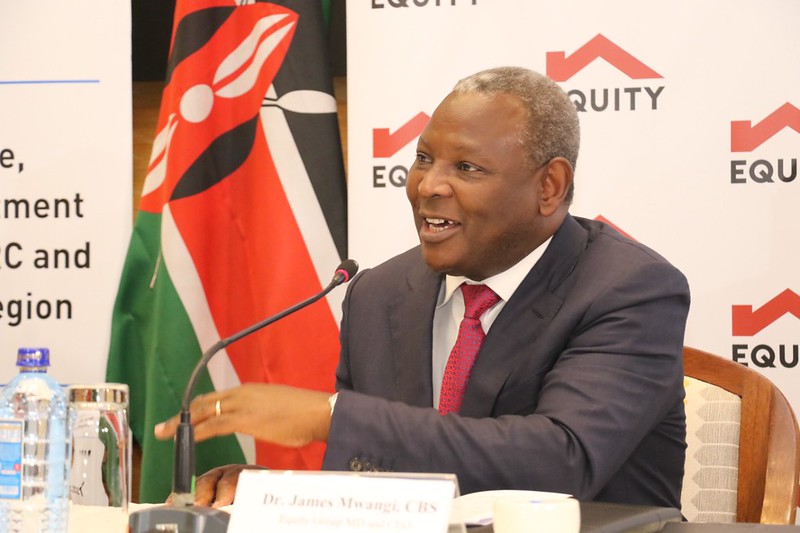
The three target markets form a connected arc rather than three separate bets. Angola anchors the western end of the Lobito corridor at the Atlantic coast. Mozambique handles the eastward flow of minerals bound for Asian buyers. Zambia connects both. Mwangi was direct about the interdependence: “You can’t do Mozambique without Zambia.”
Angola represents the most advanced target. Equity is moving to acquire a majority stake in an undisclosed Angolan bank in 2026. That deal, if completed, would give Equity its first foothold in Southern Africa and open the corridor logic in practical terms.
Angola Takes Priority After Ethiopia Stalls
The Southern Africa push also reflects a deliberate reprioritisation. Equity had long planned an entry into Ethiopia — Africa’s second-most populous country and a market the group had publicly targeted for years. That process stalled after regulatory constraints emerged: Ethiopian law caps foreign ownership in any single bank at 40 percent, making it difficult for Equity to acquire the controlling stake its model requires.
With Ethiopia on hold, Angola moved up the sequencing. It now represents the group’s most immediate acquisition target, with Zambia and Mozambique to follow as corridor relationships develop.
Presidential Diplomacy Opens the Mozambique Door
The Mozambique entry carries a diplomatic dimension. Mwangi credited President William Ruto with facilitating an introduction to Mozambican President Daniel Chapo, and confirmed he was scheduled to meet Chapo this week. State-level introductions of this kind matter in markets where banking licences require government relationships alongside regulatory approvals.
If Mozambique proceeds to a subsidiary, it would become Equity’s sixth operation outside Kenya. The group currently runs subsidiaries in the DRC, Uganda, Rwanda, Tanzania, and South Sudan.
The Road to 15 Countries by 2030
Equity’s stated goal is to operate across 15 African countries by 2030, up from seven today. Angola, Zambia, Mozambique, Ethiopia, and Libya all appear on the expansion list — though no acquisition targets, deal terms, or completion timelines have been disclosed for any of the three Southern African markets.
The group has a track record of executing on ambition that once looked overstated. When Equity first entered the DRC a decade ago, the market looked difficult and the payoff uncertain. That subsidiary now generates more profit than most of Equity’s peer banks generate in total. The Southern Africa corridor presents a comparable opportunity and the group appears to be moving with the same deliberate patience it applied in Central Africa.
