


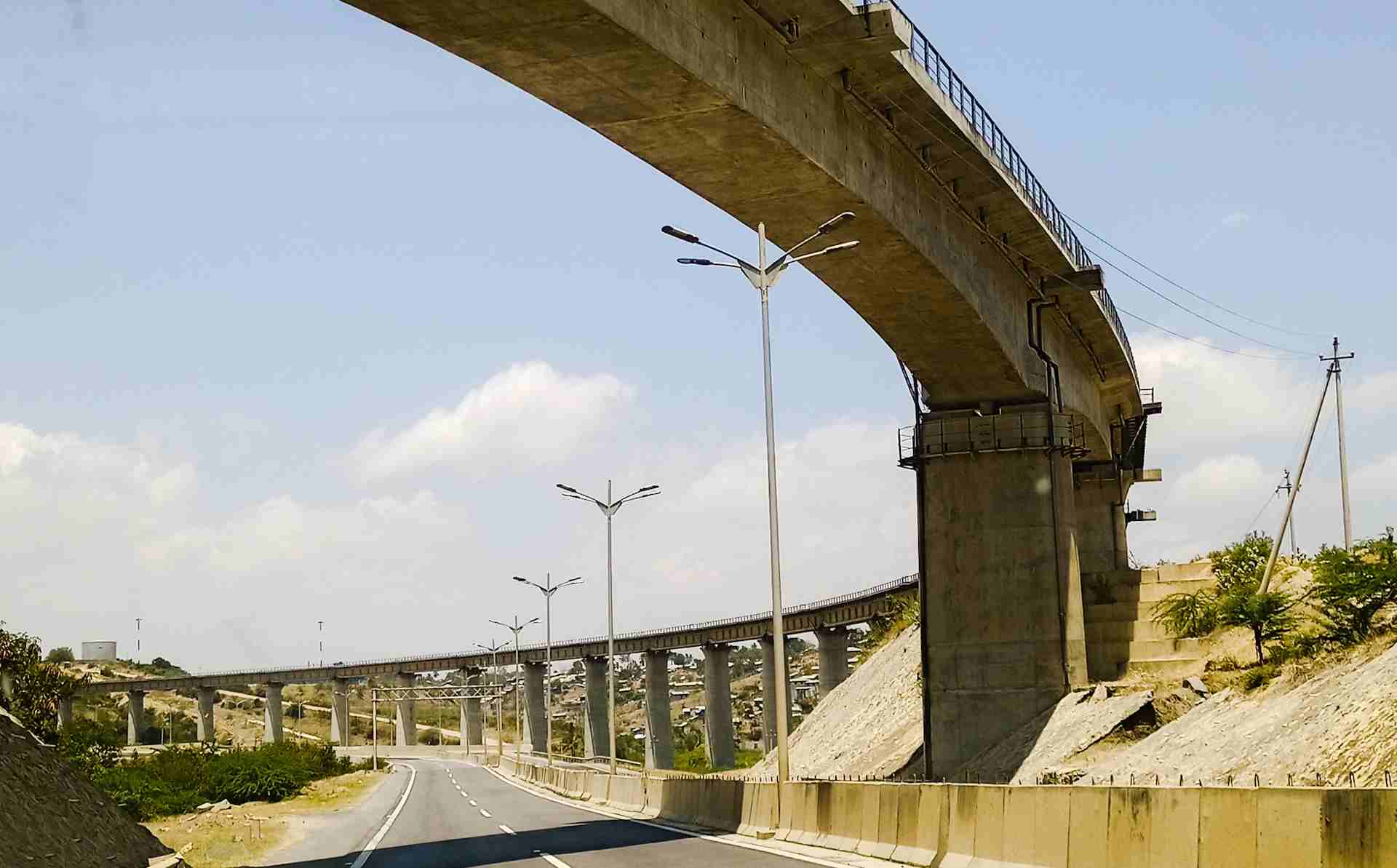
Kenya broke ground on Thursday on the next phase of its Standard Gauge Railway, a project that stopped near Naivasha in 2019 when Chinese government financing for large African infrastructure projects was cut.
The new construction is funded through the securitisation of railway levy revenues rather than sovereign debt, a structure that reflects both Kenya’s constrained public finances and a shift in how China and African governments are now structuring infrastructure deals.
The Naivasha-Kisumu main line will span 264km, complemented by an 8.69km line branching to the proposed new Kisumu Port while the Kisumu- Malaba section will cover 107km, seamlessly linking Kenya to Uganda and the wider region. pic.twitter.com/vTPvU4qwyT
— William Samoei Ruto, PhD (@WilliamsRuto) March 19, 2026
Where the Railway Stopped and Why
The SGR’s first section, from the Port of Mombasa to Nairobi, opened in 2017. The plan was to extend the line westward to the Ugandan border, creating a rail corridor to serve landlocked neighbours including Rwanda, Burundi, South Sudan, and the Democratic Republic of Congo.
Construction stopped near Naivasha, in the Rift Valley, more than 350 kilometres short of the Ugandan border. It stayed there for over six years. The immediate cause was China’s decision in 2019 to reduce lending to Africa following concerns about debt sustainability across the continent. The extension became one of the more visible stalled projects from the Belt and Road Initiative’s first phase in East Africa.
Two Launch Ceremonies
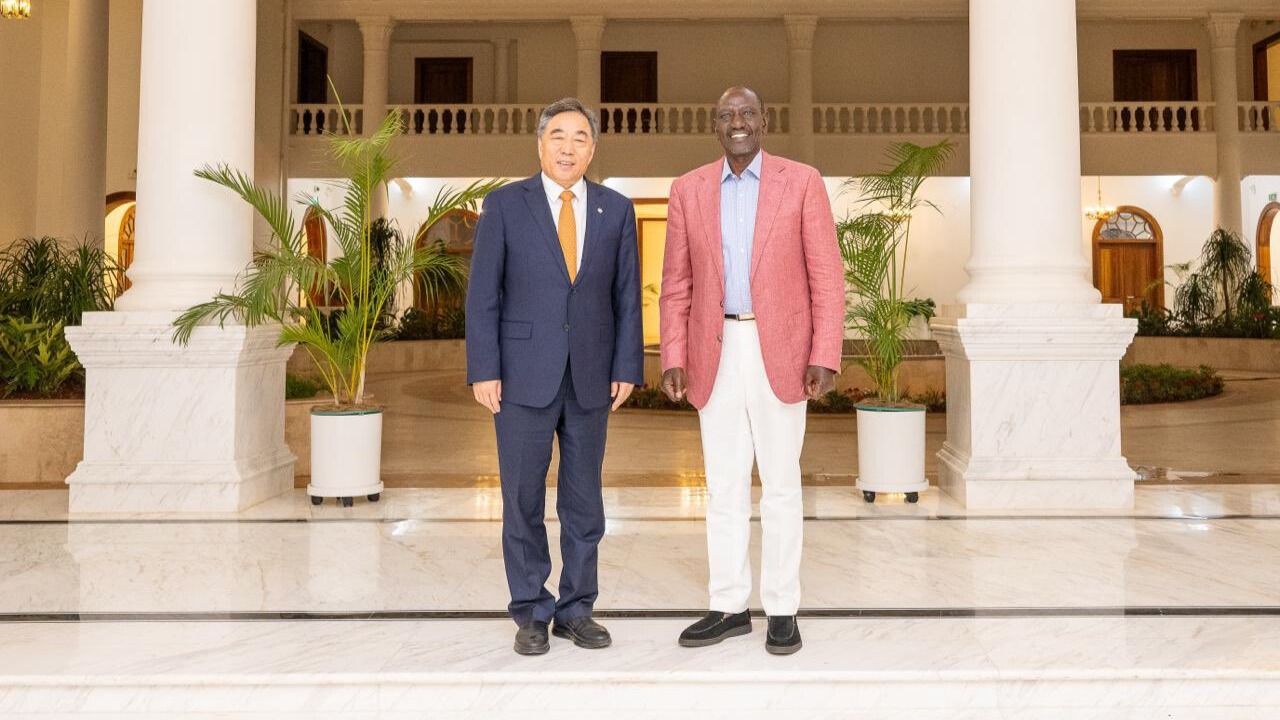
President William Ruto met China Communications Construction Company Chairman Song Hailiang at State House in Nairobi on Wednesday. Two ground-breaking ceremonies follow: the Narok-to-Kisumu leg on Thursday and the onward section to Malaba on Saturday. China Communications Construction Company Vice-President Chen Zhong and China Road and Bridge Corporation Chairman Du Fei were also present at the Wednesday meeting.
In a post on his X account, Ruto described the extension as positioning Kenya as “the regional trade and logistics hub, linking Uganda, Rwanda, Burundi, South Sudan, and the Democratic Republic of Congo to the Port of Mombasa while unlocking the economic potential of Western Kenya.” He added that the line would “ease road congestion by shifting bulk cargo to rail, cutting costs, saving time, and improving safety across our highways.”
China Road and Bridge Corporation, a state-owned Chinese company, is a contractor on the new phases, Kenya Railways confirmed.
Traversing nine counties – Narok, Bomet, Nyamira, Kericho, Kisumu, Siaya, Vihiga, Kakamega, and Busia, this strategic corridor will significantly ease the movement of people, goods, and services.
It will also catalyse regional economic growth, and firmly position Kenya as a… pic.twitter.com/5WzE8Z7neK
— William Samoei Ruto, PhD (@WilliamsRuto) March 19, 2026
How the New Financing Works
Kenya amended its legislation to allow the future proceeds of the Railway Development Levy — charged on cargo carried on the existing SGR line and estimated at KSh 35 billion ($270 million) per year — to be pledged as collateral to raise construction financing.
In March 2026, Ruto signed the Miscellaneous Fees and Levies (Amendment) Bill 2026, which widened the levy’s scope beyond the SGR to cover railway transport infrastructure more broadly. The law established a Railway Development Levy Fund and Board to manage the proceeds and permits up to 90% of the fund’s receipts to be securitised to raise additional project financing.
In 2014, we embarked on the bold task of replacing the 130-year old colonial railway line from Mombasa to Kisumu, infamously called the “Lunatic Express”, with a modern Standard Gauge Railway (SGR).
The first phase of the SGR, running from Mombasa to Naivasha, was initially… pic.twitter.com/4aB8EtGFH0
— William Samoei Ruto, PhD (@WilliamsRuto) March 19, 2026
The Shift in China-Africa Infrastructure Financing
The change in structure reflects a position agreed at a 2024 summit between China and African governments in Beijing. After several years in which large Belt and Road loans drew criticism — from Western governments and from African civil society — over the debt burden they created, Beijing and African leaders agreed to move toward investment-based arrangements rather than loan-based ones. China pledged $50 billion in credit and investments over three years under the revised framework.
Kenya and two Chinese firms are building a $1.5 billion highway expansion under the same structure.
Kenya’s Fiscal Position
The shift also suits Kenya’s domestic financial constraints. Debt repayments take up a large share of annual government revenue. A 2024 attempt to raise additional revenue through new taxes triggered protests that resulted in deaths and forced the government to withdraw the finance bill and dismiss the cabinet. The administration has since turned to securitisation of specific revenue streams as an alternative way to fund capital projects without increasing tax rates or adding to the national debt.
Last year, Kenya and China renegotiated the loan terms on the first two SGR phases, reducing Kenya’s annual repayment obligations.
