



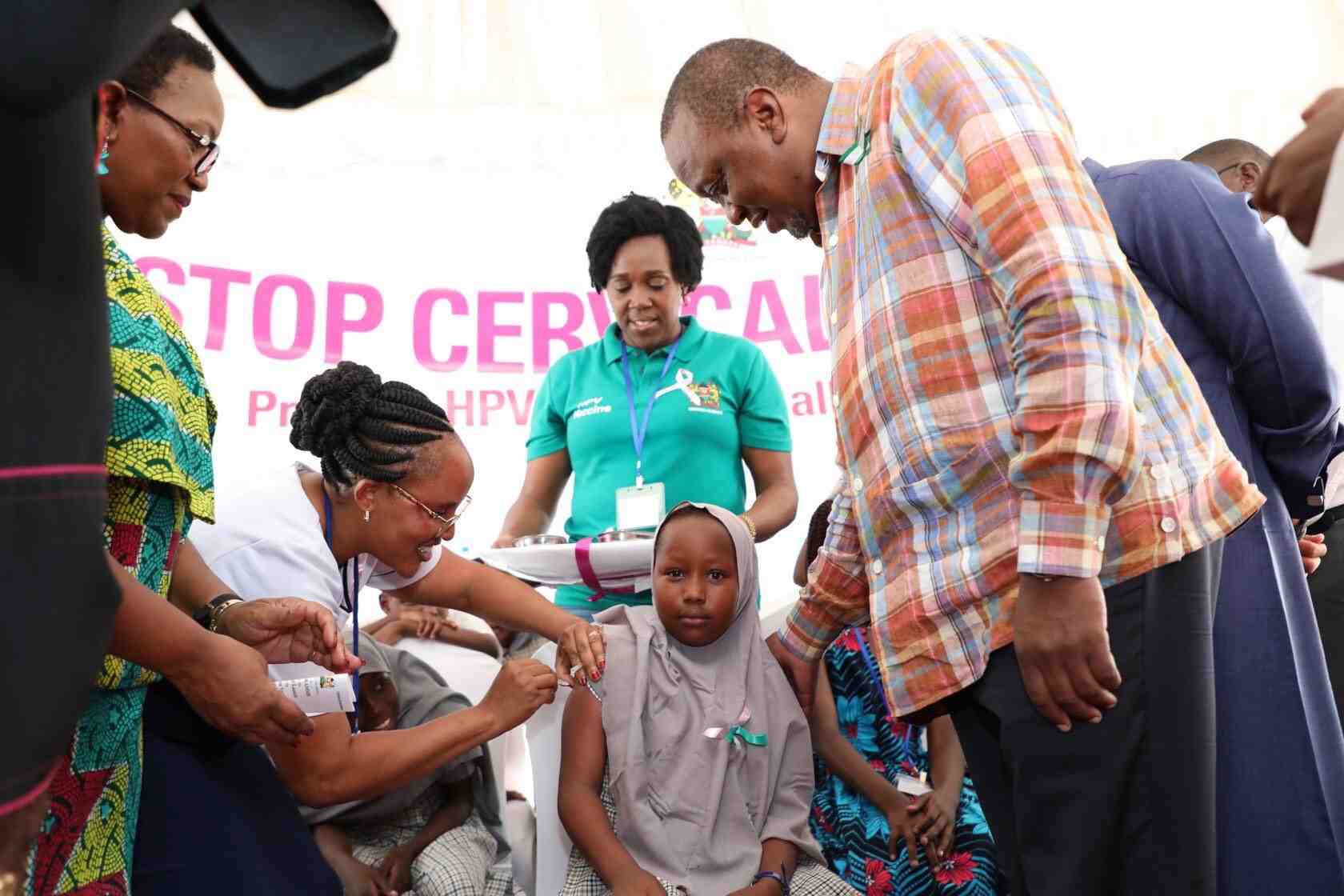
The Government of Kenya has unveiled the National Cervical Cancer Elimination Action Plan 2026–2030, a five-year strategy developed with support from the World Health Organization (WHO).
The plan aims to accelerate prevention, early detection, and treatment of cervical cancer — one of the leading causes of cancer-related deaths among women in Kenya.
Cervical Cancer Burden: Kenya and Beyond
Cervical cancer remains the second most common cancer among women in Kenya, with an estimated 5,845 new casesand 3,600 deaths each year. Globally, it is the fourth most common cancer among women, causing 660,000 new casesand 350,000 deaths annually, with 90% of deaths occurring in low- and middle-income countries. Africa alone accounts for nearly a quarter of global cervical cancer deaths.
Despite being largely preventable through HPV vaccination and early screening, many women are still diagnosed at advanced stages due to gaps in access to services.
Cervical Cancer: Facts, risks, and how to protect yourself this year
Action Plan Goals
The strategy is costed, results-oriented, and equity-focused, aligning with WHO’s 90–70–90 targets:
- 90% of girls fully vaccinated against HPV by age 15.
- 70% of women screened with high-performance tests at ages 35 and 45.
- 90% of women diagnosed with cervical disease receiving timely treatment and care.
For patients, this means earlier detection, faster treatment, and fewer preventable deaths.
Building on HPV Vaccination Success
Kenya introduced its national HPV vaccination programme in 2019. In November 2025, the country transitioned to a single-dose HPV vaccination schedule, simplifying delivery and improving coverage. WHO supported the Ministry of Health to train more than 11,000 health workers nationwide, strengthening vaccine delivery and cervical cancer services.
Integrated Care at Primary Health Level
The Action Plan emphasizes integration of services into primary health care, including through the Women Integrated Cancer Services (WICS) project. Currently implemented in Nyandarua and Bungoma Counties with WHO support, WICS provides:
- Screening for cervical and breast cancer.
- Checks for hypertension, diabetes, and mental health conditions.
- Services targeting at least 10,000 women at primary health care level.
Key Reforms and Innovations
“Let us make a vow to end cervical cancer in Kenya; we must leave no girl unvaccinated, no woman unscreened, and no patient untreated,” said HealthCS Aden Duale.
WHO Representative to Kenya, Dr. Neema Rusibamayila Kimambo, through Dr. Boston Zimba, added:
“This Action Plan demonstrates Kenya’s commitment to ensuring that every woman, regardless of where she lives, has access to lifesaving cervical cancer services.”
Kenya’s new cervical cancer strategy is ambitious, equity-focused, and results-driven. For patients, it means:
- More girls protected through HPV vaccination.
- More women screened earlier, reducing late-stage diagnoses.
- Faster, fairer access to treatment, regardless of location or income.
- Integrated care that addresses both cancer and other health conditions.
With strong political will, community engagement, and global partnership, Kenya is positioning itself to eliminate cervical cancer as a public health problem and save thousands of women’s lives every year.
