


The United States House of Representatives has passed a bill extending the African Growth and Opportunity Act (AGOA) for three more years, a move hailed as a critical milestone in U.S.–Africa trade relations.
The decision provides renewed certainty for exporters and signals Washington’s continued commitment to strengthening economic ties with sub‑Saharan Africa.
Renewed Confidence for Kenya’s Textile Sector
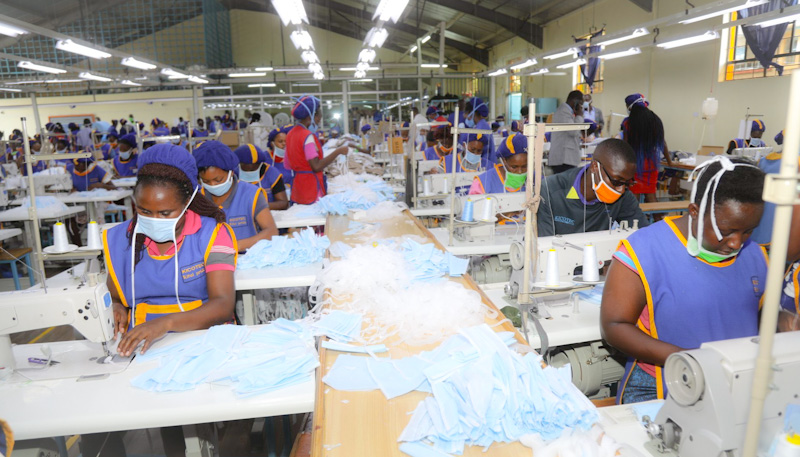
Kenya’s textile and apparel industries, anchored in Export Processing Zones (EPZs), employ more than 80,000 workers directly and support an additional 250,000 indirectly. The extension of AGOA is expected to ease uncertainty that had clouded the sector, paving the way for expanded production, job creation, and investor confidence.
Kenya remains the largest exporter of apparel to the U.S. in Africa, with exports worth Kshs 60.6 billion ($470 million) in 2024. Apparel accounts for about 72% of Kenya’s exports to the U.S., generating approximately $730 million annually and sustaining nearly 700,000 dependents.
Government Targets Diversified Exports
Investments, Trade, and Industry Cabinet Secretary Lee Kinyanjui welcomed the development, emphasizing Kenya’s ambition to broaden its export basket under AGOA beyond textiles.
“We are in discussions on a bilateral trade agreement that will cover other key sectors and further cement Kenya’s long‑standing partnership with the United States,” said Mr. Kinyanjui.
The Ministry aims to leverage AGOA to grow exports in coffee, tea, horticulture, and tourism services, ensuring Kenya maximizes opportunities to generate wealth and employment across diverse industries.
Strategic Engagement with Washington
The announcement follows President William Ruto’s recent visit to Washington, D.C., where Kenya’s request for enhanced market access was tabled. The discussions underscored Kenya’s ambition to deepen trade ties with the U.S. and align export growth with its broader economic agenda.
Private Sector Endorsement
Both the Kenya Association of Manufacturers (KAM) and the Kenya Private Sector Alliance (KEPSA) have welcomed the vote.
- Tobias Alando, Chief Executive, KAM, “This vote signals U.S. commitment to deepening trade with Africa. Extending AGOA sustains gains made and positions Kenya as a trusted investment destination.”
- KEPSA Statement, “The extension provides market certainty for Kenyan exporters and reinforces investor confidence in key sectors.”
KEPSA noted that the move could safeguard more than 65,000 jobs in Kenya and help sustain investor confidence in export‑oriented industries.
AGOA’s Role in U.S.–Africa Trade
First enacted in May 2000, AGOA was designed to strengthen economic relations between the United States and sub‑Saharan Africa. By offering duty‑free access to the U.S. market for more than 6,000 product lines, the legislation has become a cornerstone of Africa’s trade strategy with America.
The latest extension not only sustains the gains made over the past 25 years but also reinforces Kenya’s position as a leading exporter in the region. It signals continued U.S. commitment to African economies while creating a platform for mutual growth, stability, and industrial expansion.
Looking Ahead
The AGOA Extension Act now moves to the U.S. Senate and Presidential approval. Both KAM and KEPSA remain optimistic that the legislation will be passed, ensuring continued socio‑economic growth and stronger U.S.–Kenya trade ties.
At a time of global uncertainty, the extension sends a clear signal that Kenya remains a competitive and trusted investment destination, giving confidence to apparel manufacturers and opening doors for diversified exports.
