



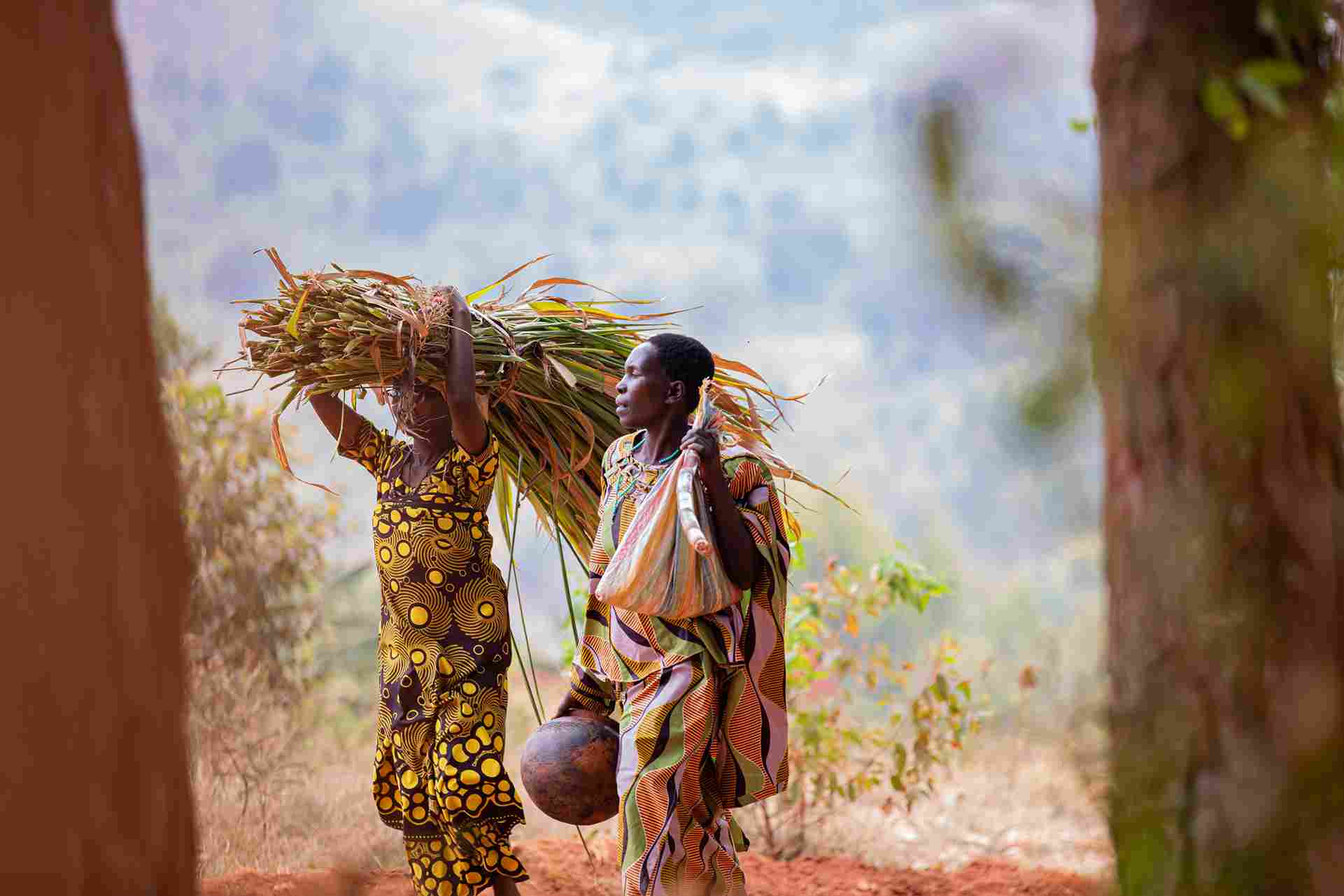
Unpaid domestic and care work in Kenya is a silent economic engine, essential, undervalued, and overwhelmingly performed by women.
According to the 2025 Household Satellite Account by the Kenya National Bureau of Statistics (KNBS), this labour was worth KSh 2.24 trillion in 2021, equivalent to 23.1% of the country’s GDP.
“Measuring unpaid work is crucial for gender equality,” says Macdonald Obudho, Director General of KNBS.
The Gendered Burden of Unpaid Work
Women contributed 80% of the 30.7 billion hours of unpaid labour nationwide. They performed over five times more food preparation work than men, with the activity valued at KSh 1.07 trillion for women versus KSh 157.7 billion for men. Cleaning, childcare, and clothing services followed similar patterns.
Breakdown of Imputed Labour Value by Activity (2021)
| Activity | Women (KSh Million) | Men (KSh Million) | Total (KSh Million) |
|---|---|---|---|
| Food & Meal Preparation | 1,073,009 | 157,769 | 1,230,778 |
| Cleaning & Home Maintenance | 192,919 | 48,172 | 241,092 |
| Childcare & Instruction | 216,249 | 22,666 | 238,914 |
| Clothing Services | 295,986 | 55,334 | 351,320 |
| Care for Dependent Adults | 5,223 | 2,919 | 8,142 |
| Help to Non-Dependent Adults | 3,342 | 1,037 | 4,379 |
| Repairs & Maintenance | 4,032 | 11,568 | 15,600 |
Source: KNBS 2025 Household Satellite Account
Global Context: Time Poverty and Economic Impact
UN Women reports that globally, women and girls perform 16 billion hours of unpaid care work daily, limiting their access to education, employment, and civic participation.
In Kenya, this “time poverty” is stark: women spent 25.8 billion hours on unpaid labour in 2021, compared to 4.8 billion hours by men.
“When care work counts, so do women,” UN Women affirms.
Globally, 45% of working-age women are excluded from the labour market due to care responsibilities, compared to just 5% of men. UN Women estimates that investments in care infrastructure could generate nearly 300 million jobs by 2035, with higher returns than construction and lower emissions.
Why Recognition Matters
Unpaid domestic work, including cooking, cleaning, laundry, and home management, makes up 88.7% of Kenya’s unpaid labour economy. Care work, such as childcare and eldercare, accounts for 11.3%. If included in national accounts, unpaid labour would rival or surpass sectors like manufacturing and transportation.
Contribution to Extended GDP (2021)
| Sector | Share of Extended GDP |
|---|---|
| Other Industries (SNA) | 72.8% |
| Non-SNA Household Production | 18.7% |
| SNA Household Production | 8.4% |
Source: KNBS 2025 Report
Toward a Care-Inclusive Economy
The KNBS report calls for integrating unpaid care work into Kenya’s extended GDP framework and policy reforms. Gender advocates urge the expansion of public childcare, parental leave, and care-friendly workplace policies to unlock women’s full economic potential.
In East and Southern Africa, UN Women highlights successful models: community-based childcare centres, flexible work arrangements, and national care strategies that are transforming lives.
“Unpaid care work is the invisible force that holds households and communities together,” UN Women states.
Kenya’s economy is powered not only by industries and infrastructure but also by the unpaid labour of millions of women. Recognising, reducing, and redistributing this work is essential for gender equality, inclusive growth, and sustainable development.
