



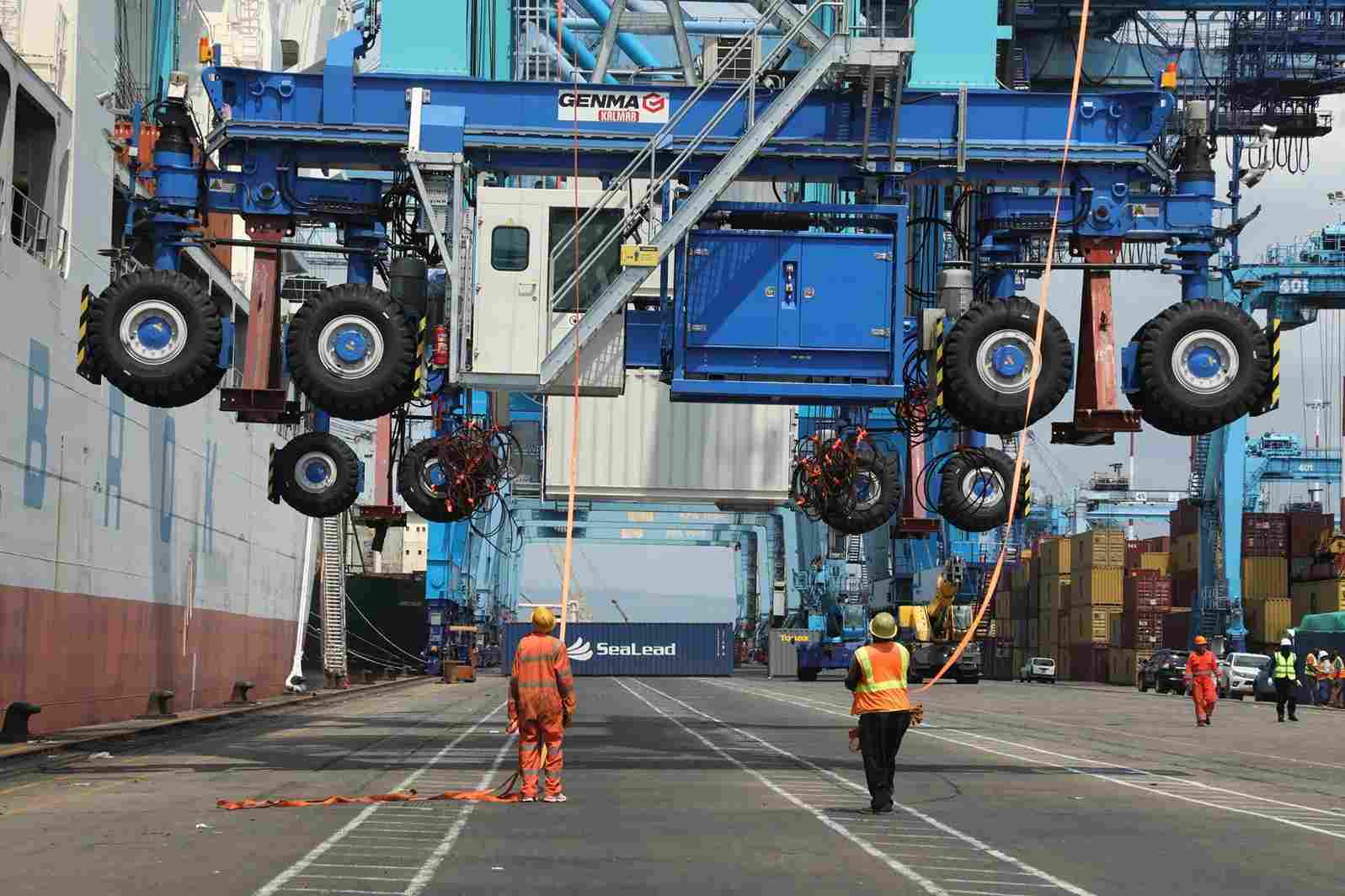
The Government of Kenya has committed KSh 41 billion to expand the Port of Mombasa, aiming to increase cargo throughput, reduce dwell time, and enhance regional trade efficiency.
The investment forms part of the country’s Vision 2030 infrastructure agenda and reinforces Kenya’s role as a strategic maritime gateway for East and Central Africa.
President William Ruto announced the funding during the commissioning of the Mombasa Commuter Rail Service, confirming that construction will begin in December and conclude by the end of the year.
“We are expanding the Port of Mombasa to make it more efficient, bigger, and better,” said President Ruto. “This investment is a key pillar in our agenda to strengthen trade, improve transport logistics, and support job creation.”
Mombasa is increasingly growing into the hub of logistics in the region.
We are upgrading infrastructure to enhance port efficiency, boost performance and generate more jobs for our young people.
Addressed the people of Miritini after the inaugural ride on the Mombasa Commuter… pic.twitter.com/Mrwkyhpivl
— William Samoei Ruto, PhD (@WilliamsRuto) September 17, 2025
Expansion Scope and Capacity Targets
The Port of Mombasa currently serves as the region’s largest seaport, facilitating imports and exports for landlocked economies, including Uganda, Rwanda, South Sudan, and the Democratic Republic of Congo. The expansion includes:
- Construction of new berths
- Development of a modern container terminal
- Installation of advanced cargo handling systems
According to the Kenya Ports Authority (KPA), the upgrades will double the port’s annual container throughput from 1 million to over 2 million Twenty-Foot Equivalent Units (TEUs). The improvements are also expected to reduce congestion and streamline maritime logistics.
In 2024, the Port of Mombasa handled a record 40.99 million metric tons of total cargo throughput, with container traffic surpassing the 2 million twenty-foot equivalent units (TEUs) mark for the first time.
Integrated Infrastructure Strategy
The Mombasa Port expansion complements ongoing national infrastructure projects, including
- Upgrades to the Mombasa–Malindi Highway
- Development of Lamu Port
- Enhancements to the Standard Gauge Railway (SGR)
These initiatives form a multi-modal logistics framework designed to improve connectivity, lower transport costs, and boost Kenya’s export competitiveness under the African Continental Free Trade Area (AfCFTA).
Economic Impact and Regional Positioning
Kenya’s investment in maritime infrastructure responds to rising demand for efficient trade corridors across Africa. The expanded port is expected to unlock new economic opportunities in the Coast region, support industrial growth, and attract foreign direct investment.
