



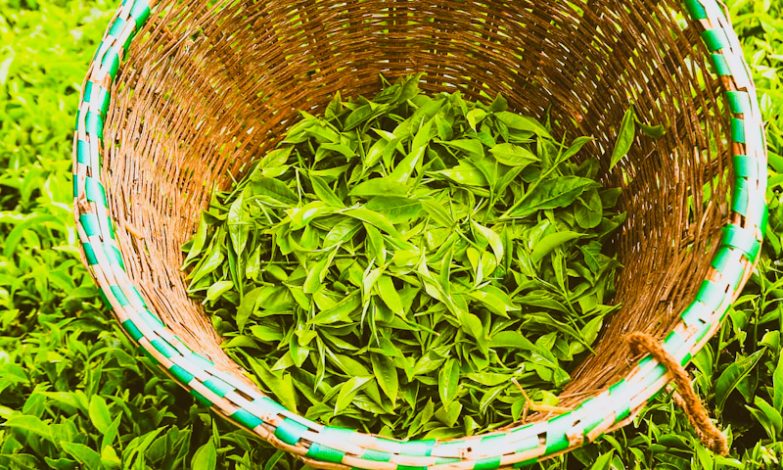
Kenya’s tea industry posted a market value of Sh218.79 billion in 2025, recovering from years of oversupply and depressed prices to record its strongest performance in recent memory.
Export earnings climbed to Sh186.91 billion, up 2.87 percent from Sh181.69 billion the previous year, according to the Tea Industry Performance Report by the Tea Board of Kenya. Export volumes told an even stronger story, jumping 9.81 percent to 652.80 million kilogrammes from 594.50 million kilogrammes in 2024. Domestic sales grew 6 percent to Sh19.13 billion, pushing total marketed tea value up 2 percent from Sh215.21 billion.
The gains came after a difficult period in which unsold stocks exceeding 100 million metric tonnes piled up at the Mombasa Tea Auction, dragging prices down through 2023 and 2024. Some of that carryover stock contributed to the 2025 volume surge.
However, a fresh threat now shadows the recovery. Disruptions to shipping routes linked to the Iran conflict have left an estimated eight million kilogrammes of tea stranded in Mombasa warehouses, putting pressure on both future earnings and farmers’ income.
Who grew the tea
Seven hundred thousand small-scale growers delivered 272.77 million kilogrammes, forming the backbone of production. Estates contributed 135.5 million kilogrammes, independent producers added 138.818 million kilogrammes, and government-owned Nyayo Tea Zones supplied 4.24 million kilogrammes.
Where it went
Kenya expanded its export reach from 96 to 100 markets in 2025. Egypt led all destinations, absorbing 90.70 million kilogrammes, or 13.9 percent of total exports. The United Kingdom took 56.38 million kilogrammes, followed by the UAE at 32.54 million kilogrammes, Russia at 27.44 million kilogrammes, and Kazakhstan at 24.44 million kilogrammes. The top ten markets together accounted for 81.5 percent of all exported volumes.
Some of the fastest growth came from unexpected corners. The UAE and Oman recorded a 320 percent surge in volumes. Ireland grew by 454 percent, Japan by 287 percent, and Kazakhstan by 186 percent. Value-added tea exports reached 25.36 million kilogrammes across 70 markets.
What the government is doing
Agriculture Cabinet Secretary Mutahi Kagwe released the report at Embu’s Rukuriri tea factory, describing the sector’s trajectory as the result of deliberate policy rather than chance. He pointed to aggressive marketing, quality enforcement, and trade diplomacy through frameworks such as the African Continental Free Trade Area as key drivers.
Kagwe signed two new legal frameworks at the event: the Tea (Registration and Licensing) Regulations 2026 and the Tea (Levy) Regulations 2026. The regulations introduce mandatory registration for farmers, factories and exporters, and establish traceability systems to tackle green leaf hawking, middlemen exploitation, and falsification of weighments at buying centres.
A 0.8 percent export levy will fund global marketing, branding, research, infrastructure and industry oversight. A separate 100 percent levy on imported tea takes effect to protect local producers.
The Tea Board of Kenya plans to launch a business-to-business e-commerce marketplace connecting international buyers directly with local producers. Kagwe also urged farmers to maintain quality standards by plucking two leaves and a bud. “For too long, Kenya has produced some of the best tea in the world, but invested too little in marketing it,” he said.
