


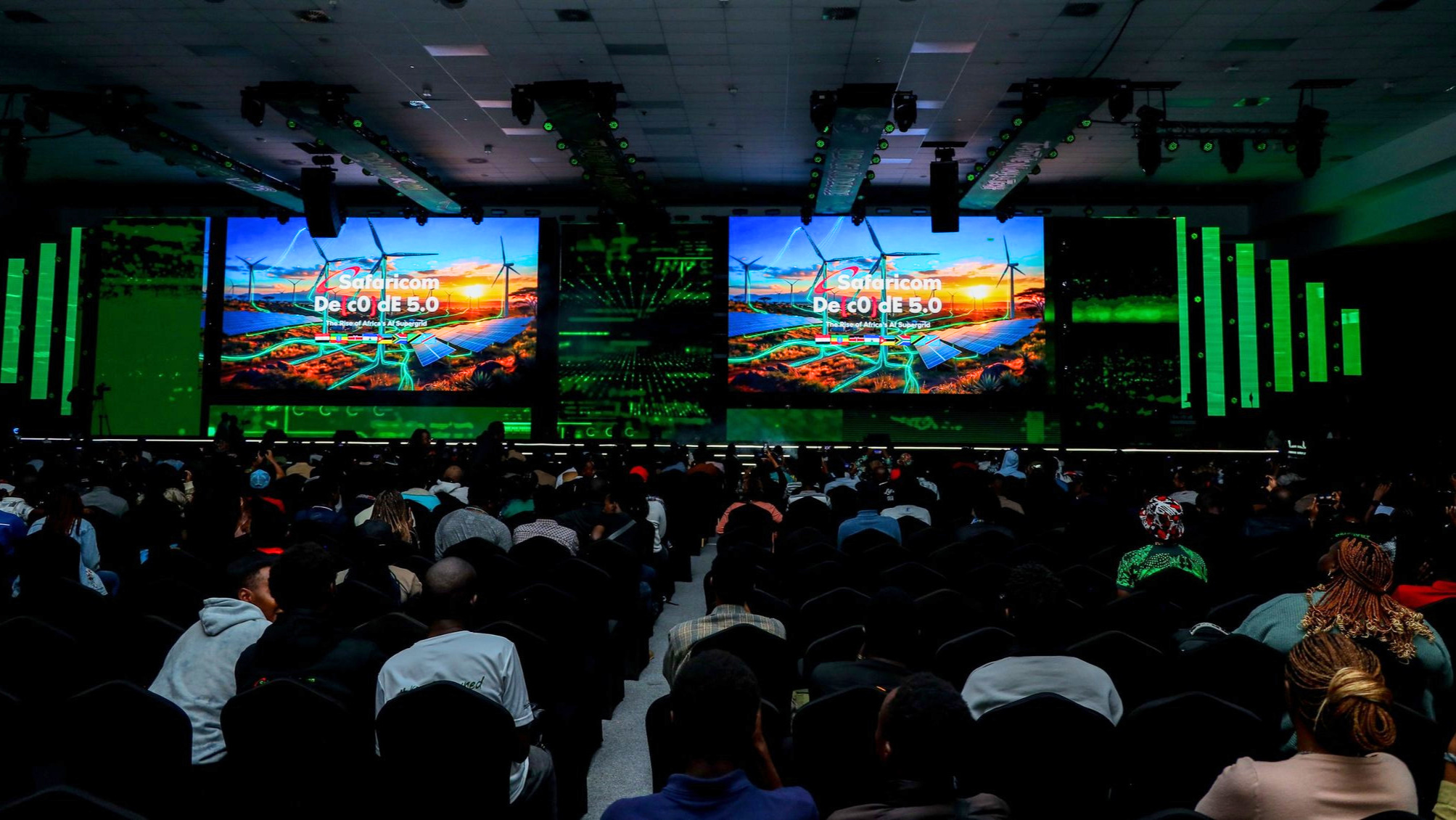
Safaricom has moved beyond the idea of local innovation. At the close of Decode 4.0, the company unveiled Decode 5.0, formally titled De{c0}de 5.0: The Rise of Africa’s AI Supergrid, signalling a shift from building standalone products to laying shared digital infrastructure across the continent.
The announcement reframes Safaricom’s ambitions. Rather than a single-market telco refining its own platforms, the company now positions itself as the backbone of a connected African technology ecosystem, one that developers, businesses, and governments can build on together.
Eight Markets, One Framework
Decode 5.0 spans Kenya, Ethiopia, Tanzania, Lesotho, the DRC, Mozambique, South Africa, and Egypt. The programme centres on open, interoperable infrastructure, meaning that systems built in Nairobi could, in theory, plug directly into platforms running in Cairo or Kinshasa.
Safaricom describes this as a foundational layer. The goal is not to own every solution but to create the conditions under which innovation at scale becomes possible across borders.
Three Sectors Driving the Agenda
The programme organises its priorities around three sectors: climate, food security, and health. Each reflects a system-level challenge where connectivity and data can shift outcomes.
On climate, Safaricom targets smarter energy management and data-driven resource allocation, including renewable integration. On food security, the focus lands on connected farming, drawing on real-time soil health data and crop yield metrics to support agricultural decisions. In health, the vision extends to digital care environments covering diagnostics and integrated service delivery.
These are not peripheral use cases. They anchor the entire Decode 5.0 framework and define where Safaricom expects the infrastructure to generate the most tangible impact.
Code Cafes Take the Programme Beyond Nairobi
One practical shift announced alongside Decode 5.0 is the rollout of Code Cafes across Eldoret, Kisumu, and coastal regions. The model blends physical meetups with online participation, responding directly to feedback from Decode 4.0 attendees who had travelled long distances to engage with the programme.
The move acknowledges something the ethics panel at Decode 4.0 made explicit: access alone no longer defines participation. Creators and developers must be present in the rooms where systems get designed, not just among the audiences receiving them.
What the Ethics Panel Said
Before Decode 5.0 took centre stage, Day 3 of Decode 4.0 hosted a session that cut to the core tension in Kenya’s creator economy: how do you scale storytelling without stripping away authorship, accuracy, or income?
The panel, moderated by Peter Kuria of Safaricom, featured Ellein Nasieku of SemaBOX Africa, Philip Karanja of Phil-it Productions, James Ahere of Weza Interactive Entertainment, and Pauline Kieleko, Safaricom’s Digital Services Tribe Lead.
Kieleko pointed to the infrastructure already in place, citing 98 percent 4G population coverage and over 21,000 kilometres of fibre as the distribution foundation creators now sit on. The upcoming Baze 2.0 platform was presented as the layer connecting that infrastructure to direct creator-to-consumer monetisation.
But the panel quickly moved past connectivity. Nasieku framed the real challenge as cultural: scale, she argued, distributes memory and lived experience, not just content. Creators need seats at the design table, not just profiles on the platform.
“Representation has moved from being seen to being involved,” she said.
Algorithms, Ownership, and the Income Gap
The session addressed what many creators already know. Visibility does not guarantee income. Platforms built around engagement metrics reward views and watch time, which can push creators toward content that performs algorithmically rather than content that reflects their actual voice or community.
Kieleko acknowledged the need to measure beyond surface engagement, incorporating authenticity and cultural relevance into how platforms surface and reward content.
On artificial intelligence, the panel drew a clear line. Nasieku rejected the framing of AI as a replacement for human creativity, calling instead for systems that support authorship without claiming it.
“AI should support creation, not become the author,” she said.
Panelists raised concerns about AI models trained on existing creative work reproducing content without compensating original creators. Proposed responses included stronger copyright enforcement, unique creator identifiers, and revenue-tracking systems that route earnings back to original sources. Karanja urged creators to secure intellectual property protections early, through copyright and trademark registration, before scale makes ownership harder to prove.
The closing line of that session stayed with the room: “You can be visible and still be broke. The system has to change.”
From Conversation to Infrastructure
Decode 5.0 represents Safaricom’s answer to that challenge, at least at the infrastructure level. By building shared systems that span multiple markets, the company attempts to address the structural conditions that determine whether creators, developers, and communities participate in digital economies or simply consume them.
The closing address at Decode 4.0 put it plainly: “We are not building the future, we are already in it.”
