



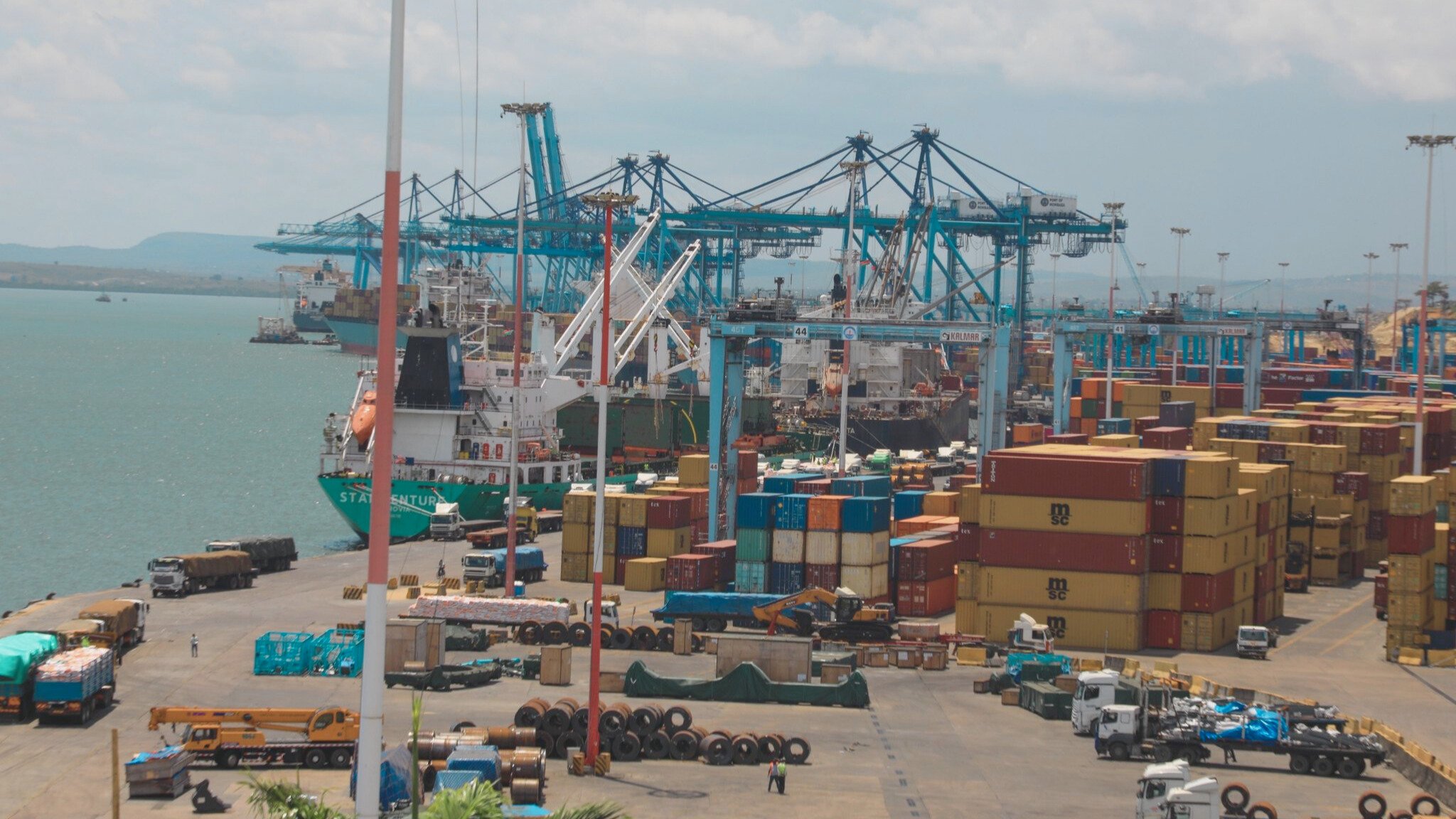
East African importers and exporters trading with Gulf countries are bracing for sharply higher shipping costs as global carriers impose emergency surcharges and reroute vessels in response to escalating conflict in the Middle East.
The disruption strikes East Africa at a moment when the region’s three leading logistics operators, CMA CGM, Hapag-Lloyd, and FedEx, have been deepening their footprint across the continent.
Carriers move to Protect Crews and Cargo
CMA CGM and Hapag-Lloyd have introduced war risk surcharges on cargo moving to and from Gulf states, citing heightened security risks. MSC has gone further, suspending all bookings to the Middle East until conditions improve. Meanwhile, Maersk has paused Trans-Suez sailings through the Bab el-Mandeb Strait, diverting vessels around the Cape of Good Hope to safeguard crews and cargo.
The surcharges compound a critical moment for CMA CGM, which launched its dedicated KILIMA service to East Africa in August 2025, a weekly direct connection from the Far East to Mombasa and Dar es Salaam, with full Asian port coverage via Singapore and an additional call at Colombo to connect Indian East Coast volumes. The route, designed to reduce transit times and deepen East African market share, now faces disruption as it intersects with the contested Gulf corridor. CMA CGM operates 91 offices across 54 African nations and deploys 33 maritime services calling at more than 80 ports, making it uniquely exposed to the current crisis.
Hapag-Lloyd faces parallel pressure on multiple fronts. The carrier’s EAS3 service offers weekly direct sailings between China, South-East Asia, Kenya, and Tanzania using seven 2,800 TEU vessels. Its EAS2 connects the region with India’s West Coast and — critically — Jebel Ali in Dubai, placing Hapag-Lloyd’s East Africa network squarely in the path of the Gulf disruption. The company, which opened its own Kenya office in March 2021 and routes inland cargo for Uganda, Rwanda, Burundi, and South Sudan through Mombasa, now faces a stress test of those supply chains.
Freight Charge Climb
The financial impact is already hitting shippers. FedEx reinstated demand surcharges on international parcels and freight, while Maersk announced steep emergency freight increases. Maersk raised charges by approximately KES 234,000 for 20-foot containers and KES 390,000 for 40-foot containers, reflecting the added costs of longer routes and operational disruptions.
For FedEx, the surcharges arrive as the express carrier deepens its East Africa air network. FedEx launched its first regular flight into Kenya to support East and Central Africa businesses, a move underpinned by Kenya’s position as the world’s leading exporter of black tea and cut flowers, generating over US$1.8 billion in perishable and agricultural exports annually. Reinstating surcharges now threatens to undercut the carrier’s price competitiveness at a critical growth stage.
Across its Middle East, Indian Subcontinent, and Africa (MEISA) region, FedEx delivered US$1.6 billion in direct and indirect economic impact in FY2025, with indirect contribution reaching US$330 million, a 17 percent increase on FY2024. In calendar year 2024, FedEx spent US$704 million with regional suppliers, 82 percent of which went to small and medium-sized enterprises. Those gains now face headwinds from its own surcharge reinstatement.
Key Freight Cost Increases at a Glance
| 20-ft Container (Maersk) | KES 234,000 emergency freight increase |
| 40-ft Container (Maersk) | KES 390,000 emergency freight increase |
| FedEx International | Demand surcharges reinstated on parcels & freight |
| CMA CGM / Hapag-Lloyd | War risk surcharges on all Gulf routes |
| MSC | All Middle East bookings suspended |
East Africa operator Intelligence
The three dominant logistics operators in the East African market each carry distinct exposure to the current disruption:
CMA CGM
CMA CGM commands the broadest logistics footprint in East Africa following its 2022 acquisition of Spedag Interfreight through its subsidiary CEVA — a major regional player with operations in Kenya, Tanzania, and Rwanda. Combined with the KILIMA service launch, CMA CGM has positioned itself as the dominant sea-freight operator in the corridor. Its 2024 logistics segment revenues reached US$18.4 billion globally, with total group revenue at US$55.48 billion.

Hapag-Lloyd
Hapag-Lloyd operates the most structured dedicated sea-freight service lines to East Africa. The carrier records annual container trade growth rates of approximately six percent in the region — the highest on the African continent. Kenya’s rising import and export volumes alongside infrastructure investment drove vessel utilisation beyond expectations on the original EAS service within four months of launch. The current crisis tests whether that demand holds as costs rise sharply.
FedEx
FedEx plays a distinct but complementary role in the East African logistics ecosystem, focusing on time-sensitive air freight rather than sea cargo. Its International Connect Plus (FICP) service — expanded to 14 markets across Asia Pacific, the Middle East, and Africa — delivers most shipments within one to three business days. The carrier’s SME Connect Series events in Nairobi signal a deliberate push to capture e-commerce and high-value trade flows. Reinstating surcharges risks pushing cost-sensitive SME clients toward alternatives.

Operator Comparison: East Africa Market Position
| Company | Mode | Key EA Service | EA Ports | 2024 Revenue / Impact |
|---|---|---|---|---|
| CMA CGM | Sea freight | KILIMA (Aug 2025) | Mombasa, Dar es Salaam | US$55.48B (group, 2024) |
| Hapag-Lloyd | Sea freight | EAS1/2/3, CKX | Mombasa, Dar es Salaam | ~6% EA annual growth |
| FedEx | Air express | Weekly Nairobi flight | Nairobi (JKIA) | US$1.6B MEISA impact FY25 |
Outlook For Kenyan Trade
With multiple carriers tightening operations, Kenyan businesses trading with Gulf partners face mounting uncertainty. Rising freight costs threaten to erode margins for exporters and inflate import prices for local consumers. Industry analysts warn that if tensions persist, logistics bottlenecks could deepen, forcing companies to absorb higher costs or pass them on to end markets.
The timing is particularly damaging for Kenya’s flower and perishables export sector. The sector’s reliance on the speed and connectivity of air freight, a channel now subject to FedEx surcharges, amplifies the economic stakes. Any sustained disruption to the Nairobi-Dubai-Gulf corridor could force exporters to seek alternative routing, adding cost and lead time to an already compressed supply chain.
Port of Mombasa Cargo Volumes Hit Record 45.45 Million Tons in 2025
What is Next
Shipping lines continue to monitor the situation closely, pledging to resume normal operations once security conditions stabilize. Traders must navigate a volatile freight environment where surcharges, rerouting, and booking suspensions have become the new reality.
For CMA CGM and Hapag-Lloyd, protecting the integrity of their East Africa service corridors — built through years of route investment and office expansion — will be the immediate priority. For FedEx, the challenge is preserving the competitive air-freight proposition it has spent recent years establishing in one of Africa’s fastest-growing logistics markets.
