


The Stanbic Foundation has joined forces with the Kenya Institute of Entrepreneurship (KIE) to strengthen financial literacy and business resilience among women entrepreneurs across ten Kenyan counties.
Working alongside county governments, the initiative has reached more than 100,000 women-led micro, small and medium enterprises (MSMEs) with practical entrepreneurship and financial management training. The programme spans Homa Bay, Busia, Kakamega, Kisumu, Uasin Gishu, Kisii, Nyamira, Kericho, Nairobi and Kiambu counties.
Building Skills That Actually Stick
The curriculum targets the fundamentals that determine whether a business survives or stalls — structured record-keeping, cash flow management, budgeting, financial planning, and navigating Credit Reference Bureau (CRB) processes. For many participants, demystifying the CRB alone removes one of the most persistent barriers to accessing formal credit.
The broader goal is clear: equip women-led businesses to engage confidently with formal financial systems, rather than remain locked out of them.
The D.A.D.A Effect: Banking Women Into the Economy
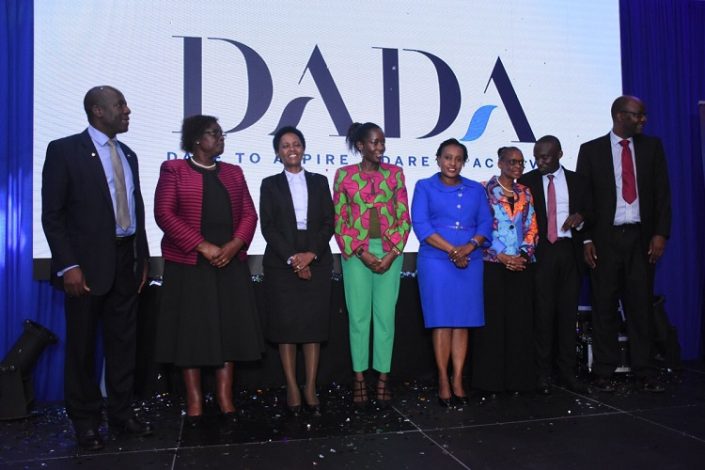
The KIE partnership builds on Stanbic’s D.A.D.A platform, a dedicated programme offering both financial and non-financial services to women entrepreneurs. Since its launch, the platform has supported over 100,000 women-led businesses and disbursed nearly KES 37.8 billion in affordable financing, according to the Group’s 2024 Sustainability Report. That capital has helped women expand their enterprises and deepen their contribution to Kenya’s economy in measurable ways.
The D.A.D.A model demonstrates what inclusive finance looks like in practice: not just access to credit, but the skills and confidence to use it well.
Why This Matters for Kenya’s Economy
Women entrepreneurs power Kenya’s county economies, yet a significant share operate informally — a reality that caps their growth and limits their access to capital. The gap is not one of ambition, but of structured support.
Closing that gap carries consequences beyond individual businesses. Greater financial confidence among women entrepreneurs drives job creation, stabilises households, and fuels inclusive growth at the county level. When capacity building connects directly to financial access, it becomes more than a training programme.
Stanbic’s own supply chain reflects this philosophy. The Group directed 10% of its procurement spend to women-owned businesses in 2024, signalling that gender inclusion extends beyond community programmes and into how the bank operates day to day.
Five Years, KES 180 Million, Hundreds of Jobs Created
Marking its fifth year of operation in 2025, the Stanbic Foundation has disbursed over KES 180 million in grants and catalytic funding to MSMEs since 2020. In 2024 alone, the Foundation extended KES 63 million alongside partners, funding that has directly created over 400 jobs across the country.
The latest partnership with KIE deepens that commitment, bringing structured financial pathways to the women who need them most and positioning grassroots entrepreneurship as a genuine engine of Kenya’s long-term growth.
