



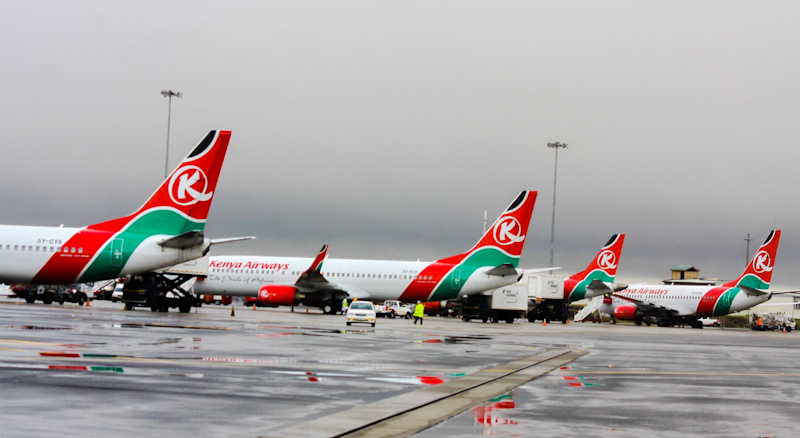
Air traffic control staff resumed duties at Jomo Kenyatta International Airport (JKIA) after the Kenya Aviation Workers Union (KAWU) signed a return‑to‑work formula with the Kenya Civil Aviation Authority (KCAA) and the Kenya Airports Authority (KAA) on Tuesday.
The move restored operations at Kenya’s busiest airport, with flights gradually resuming nationwide. Passengers are advised to check directly with their airlines for updated schedules as services normalize.
Strike ends as Kenya Aviation Workers Union signs a return-to-work formula, restoring operations at JKIA.
Operations are normalizing across all airports. Passengers are advised to contact their airlines for the latest flight schedules. pic.twitter.com/5DpBYolEPg
— Kenya Airports Authority (@KenyaAirports) February 17, 2026
Pilots Raise Safety Concerns
The Kenya Airline Pilots Association warned that recent disruptions could affect crew scheduling and rest, increasing fatigue. The association stressed: “Aviation safety is non‑negotiable.”
Their caution highlights the delicate balance between operational recovery and maintaining strict safety standards.
Why the Strike Happened
KAWU had threatened industrial action over pay disputes and poor working conditions. Secretary General Moss Ndiema told the BBC that this was “not a go‑slow strike but a full‑blown industrial action.”
He cited the aviation authority’s failure to conclude a collective bargaining agreement on salaries and working conditions as a key trigger.
In its press release, KAWU added that management had frustrated dialogue efforts, leaving workers with no alternative but to exercise their constitutional right to strike.
Impact on Flights and Passengers
The strike brought JKIA to a standstill. Flight tracking site Flightradar24 showed minimal air traffic, while Premier Airlines cancelled its Juba service. Kenya Airways reported delays in departures and arrivals, apologizing for the inconvenience and advising passengers to expect schedule changes.
Travelers shared their frustrations. One senator said he had to travel by road from Kisumu. Another passenger quipped: “If you have a flight today, carry a mattress—you might be living at the airport.”
Authorities Respond
The Kenya Airports Authority (KAA) activated contingency plans to manage the crisis and urged passengers to stay in touch with their airlines. Aviation workers accused the Kenya Civil Aviation Authority (KCAA) of stalling salary talks, delaying union remittances, and showing little willingness to resolve disputes that have dragged on for over a decade.
Last week, KCAA sought court orders to halt the strike. A labour court temporarily suspended the action, with further directions expected next week. In its latest statement, KCAA said it was engaging all parties in line with labour laws and court rulings while activating measures to safeguard aviation safety.
Breakthrough Agreement
Under the new deal:
- Union Representation Expanded: KCAA employees in Job Groups 4 and 5 can now join the union, ending a long‑standing recognition dispute.
- Structured Reconciliation: Outstanding issues will be addressed through a reconciliation process overseen by a conciliator appointed by the Ministry of Labour.
- Worker Protection: No employee will face victimization, intimidation, or disciplinary action for participating in the lawful strike.
KAWU expressed regret for the inconvenience caused to passengers and reaffirmed its commitment to dialogue, fair labour practices, and protecting workers’ rights.
Press release pic.twitter.com/2D9QAqF7LH
— Kenya Aviation Workers Union (@Kawu_KE) February 18, 2026
A Regional Gateway
JKIA is one of Africa’s busiest hubs, connecting the continent to the rest of the world. In 2025, it handled about nine million passengers, underscoring its critical role in regional and global travel.
With operations now stabilizing, the strike serves as a reminder of the fragile balance between labour relations and the smooth running of essential infrastructure.
