



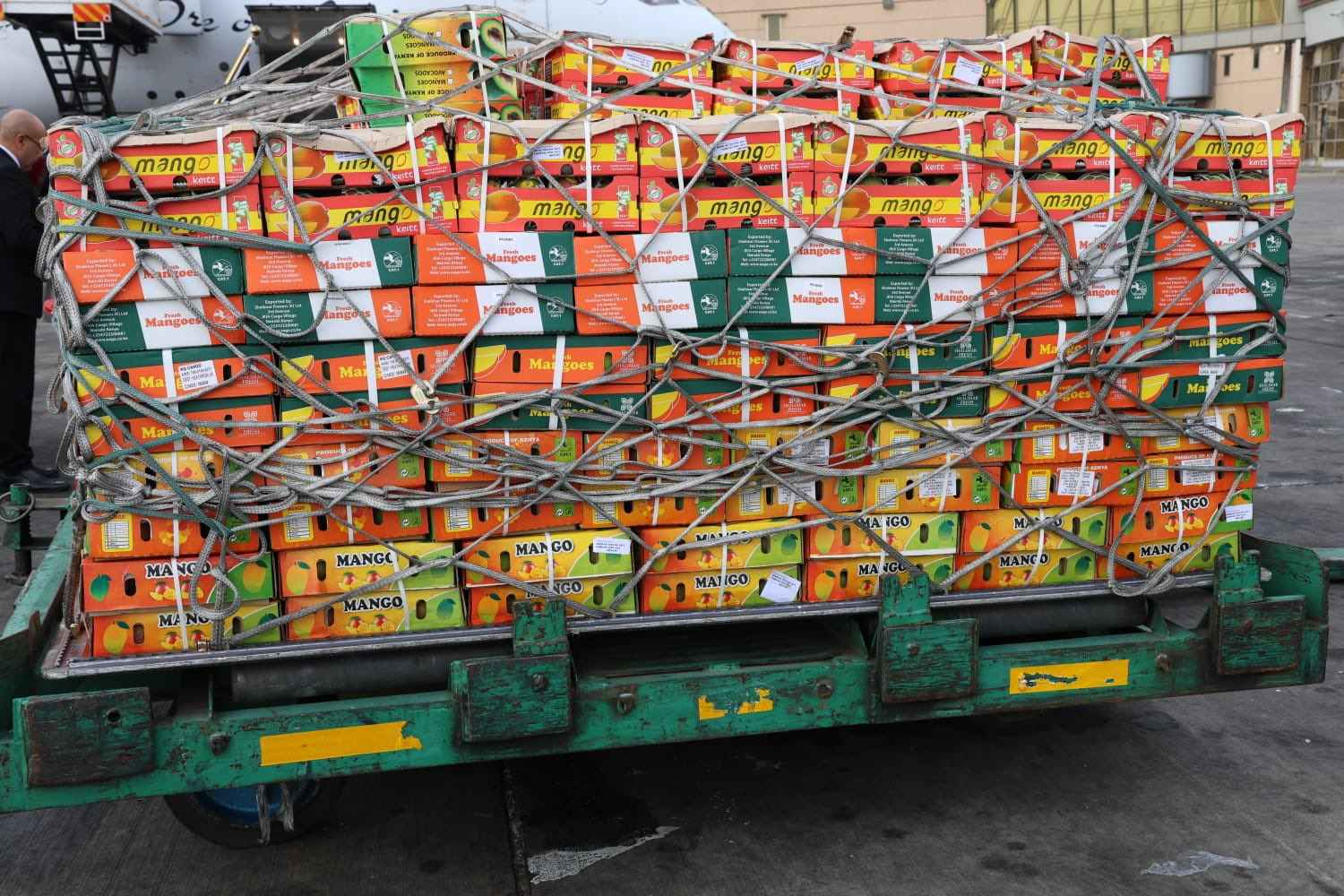
Kenya has recorded an agricultural trade milestone with the arrival of its first-ever consignment of fresh Apple mangoes in the United Kingdom (UK), opening new market opportunities for Kenyan farmers and strengthening Kenya–UK trade relations.
Kenya’s First Apple Mango Shipment Lands in the UK
On December 22, 2025, the Kenyan Mission in the UK announced via its official X account that the pilot shipment marks “a new chapter in Kenya–UK trade relations.” The mission described the consignment as proof of Kenya’s ability to meet the UK’s stringent requirements for quality, safety, and sustainability in agricultural products.
“This pilot showcases Kenya’s ability to meet the UK’s high standards on quality, safety and sustainability, unlocking new opportunities for our farmers and UK consumers alike,” the Mission stated.
The government confirmed that this pilot will be transformed into sustained commercial exports beginning in 2026, working closely with UK importers, retailers, and regulators to deliver premium quality for UK shoppers and better incomes for Kenyan smallholder farmers.
Apple Mango: Kenya’s Leading Variety
Apple mangoes now account for over 80% of Kenya’s mango production, following decades of investment in varietal improvement, orchard management, and post-harvest handling.
Unlike other varieties often used in processing, Apple mangoes are prized for fresh consumption and valued for their juicy texture and natural sweetness.
Smallholder Farmers at the Heart of Mango Exports
The Apple mango value chain is dominated by smallholder farmers, integrated into organised supply systems.
The flag-off ceremony was held on December 20, 2025, at Jomo Kenyatta International Airport (JKIA). Speaking on behalf of Trade Principal Secretary Regina Ombam, Floice Mukabana, CEO of the Kenya Export Promotion and Branding Agency (KEPROBA), reaffirmed the government’s commitment to supporting farmers in accessing global markets.
“This flag-off signals Kenya’s growing footprint in high-value export markets and reflects strong collaboration between government agencies, development partners and the private sector to boost agricultural exports,” Mukabana said.
She added that the pilot shipment demonstrates Kenya’s readiness to meet global standards while strengthening value chains and supporting higher incomes for farmers. Sustained exports, she noted, will depend on continued collaboration to standardise the commodity and ensure compliance with international quality and safety requirements.
Kenya has flagged off the first consignment of apple mangoes to the United Kingdom marking a major milestone in the country’s fresh produce exports.
Speaking on behalf of the Principal Secretary for Trade Regina Ombam during the flag off at the Jomo Kenyatta International… pic.twitter.com/3ttlnKEjD8
— Trade Kenya (@Trade_Kenya) December 20, 2025
Overcoming Past Export Challenges
Kenya’s mango exports faced setbacks between 2010 and 2014, when repeated fruit fly interceptions forced a self-imposed export ban. Since then, reforms such as national fruit-fly surveillance, orchard registration, accredited laboratory testing, and tighter cold-chain controls have rebuilt compliance capacity.
Kenya now produces an average of 650,000 tonnes of mangoes annually, valued at KShs.10 billion, but gaps in surveillance and traceability have historically limited access to advanced markets like the UK. The pilot shipment now demonstrates that sustained investment in compliance can restore market access.
UK–Kenya Economic Partnership Agreement Strengthens Trade
The Apple mango pilot shipment reflects the broader UK–Kenya Economic Partnership Agreement (EPA), in force since 2021, which aims to reduce trade friction and expand bilateral trade.
Kenya’s first-ever consignment of fresh Apple mangoes has landed in the UK, marking a new chapter in Kenya–UK trade relations. This pilot showcases Kenya’s ability to meet the UK’s high standards on quality, safety and sustainability, unlocking new opportunities for our farmers… pic.twitter.com/r2te1EGf97
— Kenya in UK 🇰🇪🇬🇧 (@KenyaMissionUK) December 22, 2025
Floice Mukabana, CEO of KEPROBA, described the shipment as a defining moment in Kenya’s export transformation story, while Daniel Wilcox, economic counsellor at the British High Commission, highlighted it as a significant outcome of long-term trade infrastructure improvements.

Kenya Floriculture Industry: Resilient and Globally Competitive 🌸
While mangoes are breaking new ground, Kenya’s flower industry continues to dominate global markets.
- In 2024, flower exports generated Sh108 billion, contributing 1.6% of national GDP and nearly 20% of total export earnings.
- The sector sustains over two million livelihoods and remains a flagship contributor to the Bottom-Up Economic Transformation Agenda (BETA).
Growth Potential in Kenya’s Flower Exports
With supportive policies, revenues could grow from USD 835 million in 2024 to USD 1.4 billion by 2030. Expansion plans include:
- 5,000 additional hectares of production over the next decade
- 20,000 new jobs through value addition
Smallholder Farmers Expanding Floriculture
Kenya Flower Council CEO Clement Tulezi emphasised that smallholder participation is reshaping the industry. Counties such as Nakuru, Laikipia, Kiambu, Meru, Uasin Gishu, and Nyandarua are seeing expansion of smallholder and medium-scale farms, strengthening inclusivity and rural income diversification.
Challenges Facing Kenya’s Flower Industry
Despite resilience, the sector faces:
- Punitive taxes
- A Sh12 billion VAT refund backlog
- Intensifying global competition
Tulezi urged reforms to reduce costs, streamline cargo clearance, and ensure predictable regulatory policies to protect jobs and expand Kenya’s export goals.
