



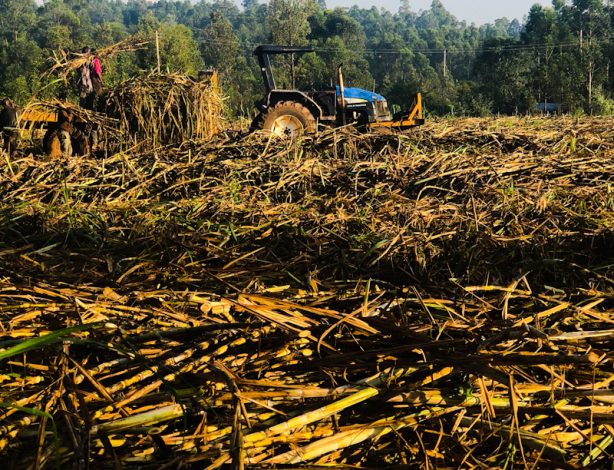
Kenya’s sugar industry has suffered a steep decline in 2025, with output dropping 28.4% year-on-year to 440,652 metric tonnes (MT) between January and September.
This compares to 615,499 MT in the same period of 2024. September was particularly weak, with production plunging 54.2% YoY to just 33,845 MT, marking one of the lowest monthly totals in recent years.
The collapse began in April, erasing strong first-quarter gains and underscoring the return of a boom-bust cycle driven by cane shortages and low factory throughput.
KNBS Data Confirms Decline
Figures from the Kenya National Bureau of Statistics (KNBS) show factories produced 406,807 tonnes of sugar in the first eight months of 2025, down from 541,681 tonnes last year, a 24.9% decline. Cane deliveries also fell sharply, with 4.58 million tonnes delivered compared to 6.3 million tonnes in 2024.
Production hit its lowest point in May (32,760 tonnes) before recovering slightly to 40,800 tonnes in August.
Why Output Collapsed
The downturn stems from a severe shortage of mature cane, linked to overharvesting and reduced cultivation in previous seasons. Millers resorted to cutting cane at 10–13 months, well below the optimal 16–18 months required for sucrose development.
In response, the Kenya Sugar Board ordered a three-month suspension of milling operations starting July 14, 2025, in western Kenya. The closure affected seven factories, including Mumias, Butali, West Kenya, Nzoia, Naitiri, Busia Sugar, and Olepito. The move aimed to curb immature harvesting and cane poaching, where millers sourced crops from farmers before they were ready.
Government Turns to Imports
To cushion the impact, the government ramped up duty-free sugar imports, stabilising local prices. Imports from Uganda, Eswatini, and South Africa helped fill the gap.
KNBS data shows Kenya’s import bill rose in Q2 2025, driven by higher inflows of sugar, iron, steel, and industrial goods. Sugar, molasses, and honey imports surged 56.9%, while iron and steel rose 84%, industrial machinery 18%, and motor vehicles 38%.
Outlook for the Sector
Kenya’s sugar industry faces renewed volatility, with production cycles increasingly tied to cane shortages and factory inefficiencies. While imports have temporarily stabilised supply, long-term sustainability will depend on:
- Improved cane husbandry and replanting programs.
- Stricter enforcement of harvesting regulations.
- Investment in factory efficiency and farmer support.
