


Agriculture remains the backbone of Kenya’s economy, engaging nearly 70 per cent of the population directly or indirectly.
Yet, for decades, farmers have faced a persistent challenge: how to access reliable, profitable markets for their produce.
While Kenyan farmers toil tirelessly in their fields, producing crops that sustain the nation, their returns often fail to reflect their efforts due to inefficiencies in market access, exploitation by middlemen, and losses along the supply chain.
For days, months, and years, they are always looking for solutions. And that is why, when financial institutions with an eye on innovation, such as Stanbic Bank, step in to rewrite the story of Kenyan agriculture, then the definition of “light at the end of the tunnel” becomes fulfilled.
Agriculture at Kenya’s Core: Why Market Access Still Holds Farmers Back
One of the most remarkable interventions is OneFarm Grow, Stanbic Bank’s digital platform designed to connect farmers with markets and optimise supply chains.
Unlike traditional farming ecosystems where smallholders were often invisible and disconnected from end markets, OneFarm Grow integrates technology, finance, and partnerships to ensure that what a farmer grows actually reaches a buyer on time and in good condition.
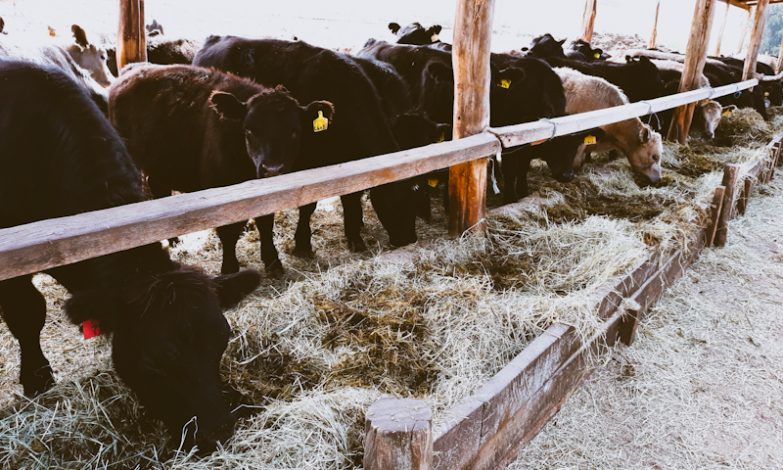
This shift represents not just a technological advancement but a reimagining of how financial institutions can empower agriculture. Currently, OneFarm connects only dairy farmers.
Stanbic Bank’s OneFarm Grow: A Digital Lifeline for Dairy Farmers
OneFarm Grow tackles two stubborn bottlenecks in agriculture: market visibility and supply chain efficiency. Farmers often produce crops with no assurance of demand, leaving them vulnerable to oversupply, post-harvest losses, and low bargaining power.
Having a platform where farmers can see market demand in real time and connect directly with buyers turns guesswork into informed decision-making.
Real‑Time Market Visibility: Turning Guesswork into Profitable Decisions
The optimisation of supply chains is equally transformative. Kenyan farmers lose up to 30 per cent of their harvests post-harvest due to inefficiencies in transportation, storage, and distribution.
OneFarm Grow leverages partnerships with logistics providers, aggregators, and processors to minimise these losses.
Cutting Post‑Harvest Losses: How Digital Supply Chains Save 30% of Produce
Produce is collected and delivered within agreed timelines, ensuring freshness and quality while reducing costs. This is not only beneficial for farmers but also for buyers who get reliable supplies of traceable, quality produce. The ripple effect is a stronger agricultural ecosystem that functions with the efficiency of modern commerce.
Finance Meets Technology: Digital Records Unlock Loans and Insurance for Farmers
Stanbic Bank’s intervention also demonstrates how finance and technology can merge to address systemic challenges in agriculture.
Digital platforms like OneFarm Grow do more than connect farmers to markets; they also create a data trail.
By capturing information on production volumes, sales, and buyer preferences, the platform generates valuable insights that can be used for credit scoring.
This means that farmers who were previously excluded from formal finance due to a lack of documentation now have digital records that make them eligible for loans and insurance products.
Inclusive Growth: Empowering Women and Youth Through Digital Marketplaces
Moreover, this platform enhances inclusivity. Women and youth, who are often marginalised in traditional supply chains, find it easier to participate in digital marketplaces where barriers such as physical access, information asymmetry, and exploitation are minimised.
This aligns perfectly with Kenya’s development agenda of empowering vulnerable groups and modernising agriculture to attract the next generation of farmers.
Food Security and Rural Prosperity: The Ripple Effects of Smarter Supply Chains
The broader implications of Stanbic Bank’s digital approach cannot be overstated. Connecting farmers to markets and optimising supply chains not only addresses immediate challenges but also contributes to food security, poverty reduction, and rural economic development.
Farmers who earn more can invest in better inputs, expand their farms, educate their children, and uplift their communities. Buyers benefit from predictable supply chains, while consumers enjoy access to affordable, high-quality produce.
The Future of Farming: Profitable, Sustainable Livelihoods Powered by Innovation
There is no doubt that Stanbic Bank’s OneFarm Grow offers a glimpse into the future, a future where technology ensures that farming is not just about production but also about profitable, sustainable livelihoods.
It is a powerful reminder that innovation in finance and technology can be the missing link between hard-working farmers and thriving markets.
