


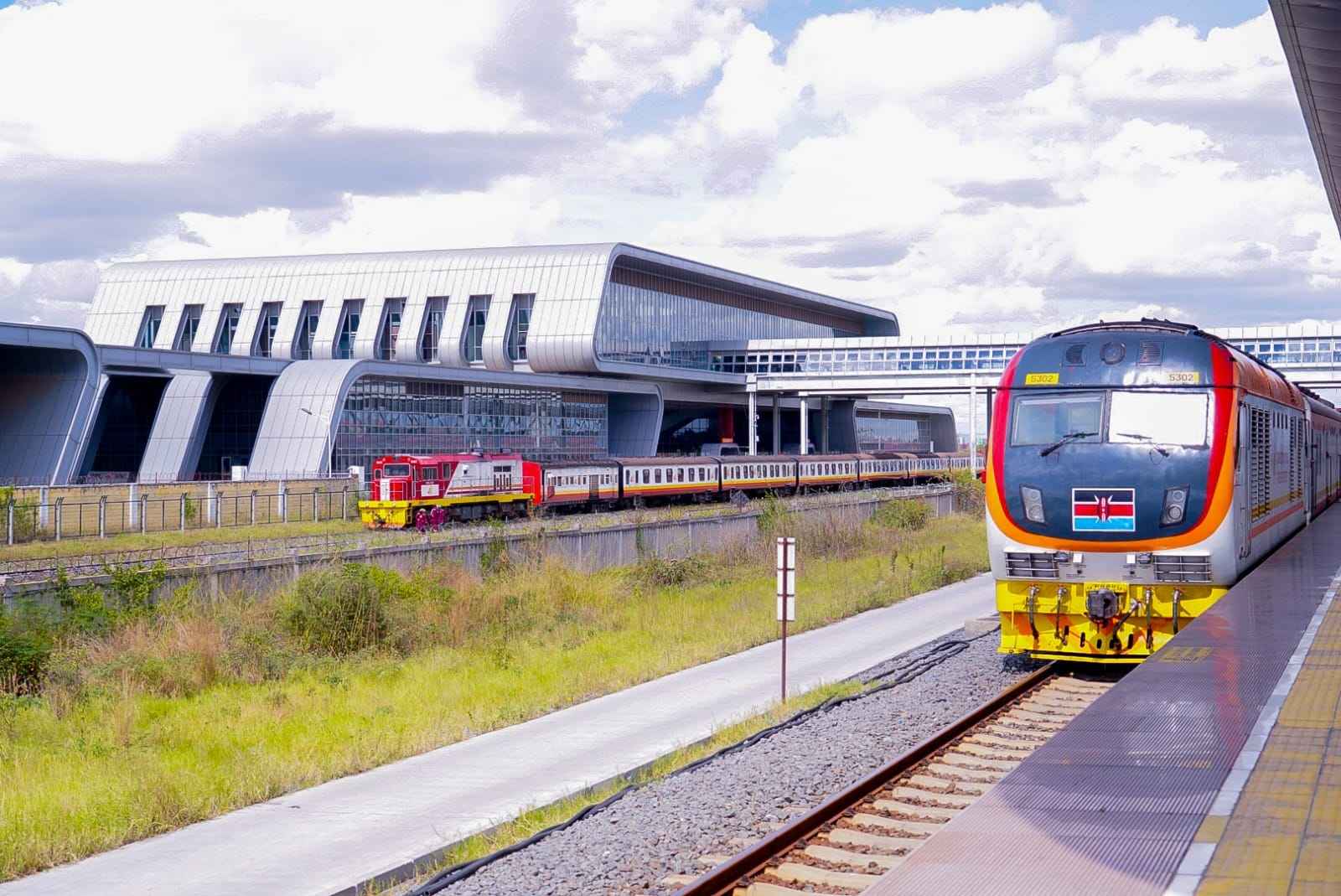
Kenya has finalised a currency conversion deal with China for its Standard Gauge Railway (SGR) loans, a strategic move expected to save the country approximately $215 million (Ksh27.79 billion) annually in debt servicing.
The announcement was made by Treasury Cabinet Secretary John Mbadi, who confirmed that the government successfully converted part of its Chinese railway debt from U.S. dollars to Chinese yuan (renminbi) following bilateral talks.
“Presently, our debts are so concentrated in one currency, in dollar terms, especially external debts,” Mbadi told Bloomberg. “We are trying to spread that risk by diversifying currencies.”
Currency Diversification Strategy
The conversion is part of Kenya’s broader debt management strategy aimed at reducing exposure to dollar-denominated liabilities. Kenya had borrowed $5 billion (Ksh646 billion) from the Export-Import Bank of China to finance the SGR line from Mombasa to Nairobi. As of June 2024, $3.5 billion (Ksh452.375 billion) remained outstanding.
Kenya currently spends about $1 billion (Ksh129.25 billion) annually servicing its Chinese debt. The yuan switch is expected to reduce exchange rate volatility and lower interest costs.
“Big debt service win for Kenya as the CS Treasury confirms that the floating rate USD-denominated SGR loan is converted to a yuan-denominated loan,” said Razia Khan, Chief Economist for Africa and the Middle East at Standard Chartered. “No, if anything the FX risk could work in Kenya’s favour,” she added, addressing concerns about sourcing yuan.
“All three SGR loans were USD denominated. Conversion applies to all three,” said David Ndii, Chair of the President’s Council of Economic Advisors. “The concessional loan becomes slightly more expensive in CNY, the $ loans cheaper. We have also reprofiled maturities.”
The three SGR loans were originally structured over 20 years, with grace periods of 5 and 7 years. Given the initial disbursement in 2014, the final maturity horizon now extends to 2034, with reprofiling expected to ease near-term repayment pressure.
While the government did not disclose the new interest rates or repayment terms, Mbadi confirmed that plans to issue a panda bond were shelved due to unfavourable pricing.
Global Trend Toward Yuan Financing
Kenya joins a growing list of countries exploring yuan-denominated financing. Hungary, Kazakhstan, and Sri Lanka have all issued yuan bonds or secured yuan loans in recent years, citing cost advantages and diversification benefits.
This shift aligns with President William Ruto’s broader strategy to reduce reliance on traditional foreign borrowing, particularly the expensive Eurobond market, and pivot toward Asian lenders and alternative instruments.
Debt Restructuring and Eurobond Buyback
Beyond the currency conversion, Kenya is actively restructuring its debt portfolio. The government has refinanced three Eurobonds to extend maturities and is negotiating a $1 billion debt-for-food swap backed by the U.S. International Development Finance Corporation.
Kenya faces $26 billion in external debt redemptions over the next decade and around $1.5 billion in annual interest payments. Bloomberg reports that over half of the country’s tax revenue is currently used for debt servicing.
To ease pressure, Kenya launched a tender offer to repurchase its entire $1.0 billion (7.25%) Eurobond due 2028. The offer price is $1,037.50 per $1,000 principal, representing 103.75% of the face value plus accrued interest.
IMF Engagement and Fiscal Oversight
Kenya is also in talks with the International Monetary Fund (IMF) for a new funded program. An IMF mission is currently in Nairobi, scheduled to conclude on October 9.
“Engaging with the IMF has benefits,” Mbadi said. “You need someone to continuously engage with you, to look at you and tell you that you are losing track because if you are just self-assessing, you may not know how well or how poorly you are performing.”
