



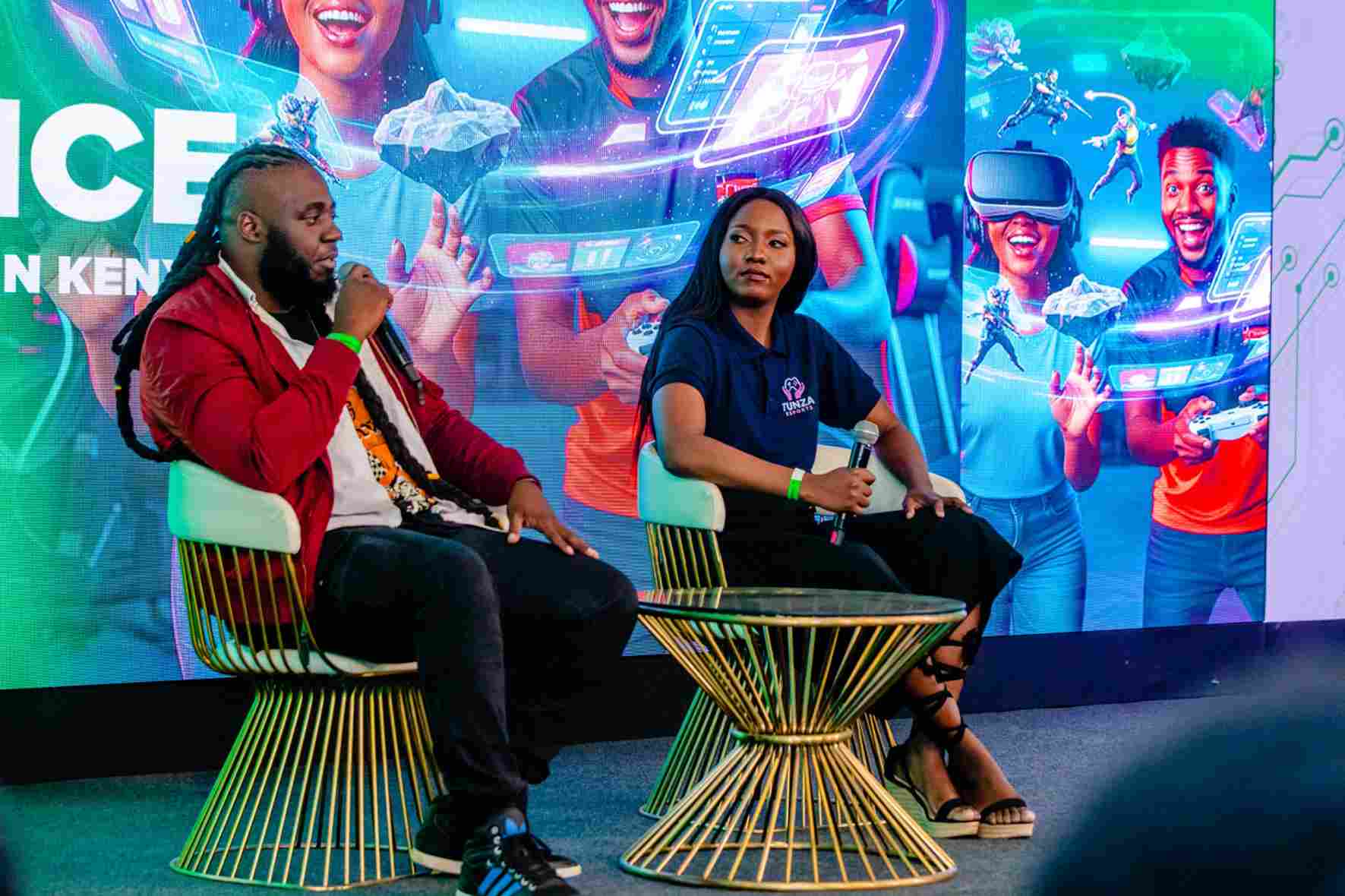
Safaricom (NSE: SCOM) hosted its inaugural Gaming Conference at the Michael Joseph Centre, bringing together industry leaders, developers, gamers, and policymakers to chart the future of Africa’s gaming ecosystem.
Themed “Level Up Africa: Unlocking Gaming Potential in Africa,” the one‑day forum explored how gaming is shaping the continent’s future—from eSports and game development to the role of technology, policy, and investment in driving growth.
A Celebration of Gaming and Pop Culture
Beyond panel discussions and keynote sessions, the conference doubled as a pop culture showcase, featuring movies, TV shows, music, cosplay, live performances, and merchandise exhibitions, which underscored gaming’s deep ties to entertainment and youth culture.
“Gaming is more than just play – it’s talent, creativity, and opportunity. At Safaricom, we believe in powering the youth and building platforms where skills can turn into careers, innovations, and thriving communities,” said Fawzia Ali‑Kimanthi, Chief Consumer Business Officer at Safaricom.
Safaricom’s Vision: From Network Provider to Gaming Enabler
Ali‑Kimanthi reaffirmed Safaricom’s ambition to become the number one brand for gaming in the region, not only through connectivity but also by bridging infrastructure gaps and creating custom propositions for gamers.
“A gamer told me today that where he lives, connectivity is not great. That is a gap we must bridge. We are investing heavily, but we also need gamers to tell us what they want so we can tailor our services to meet that demand.”
This aligns with McKinsey’s view that African telcos must “make bold, forward‑thinking strategic choices” to reach the continent’s next 500 million users and unlock an estimated $170 billion in GDP by 2030.
The report notes that rising demand for data‑heavy services like online gaming is already pushing operators to invest in 5G fixed wireless access (FWA) and fibre expansion—both areas where Safaricom has been active.
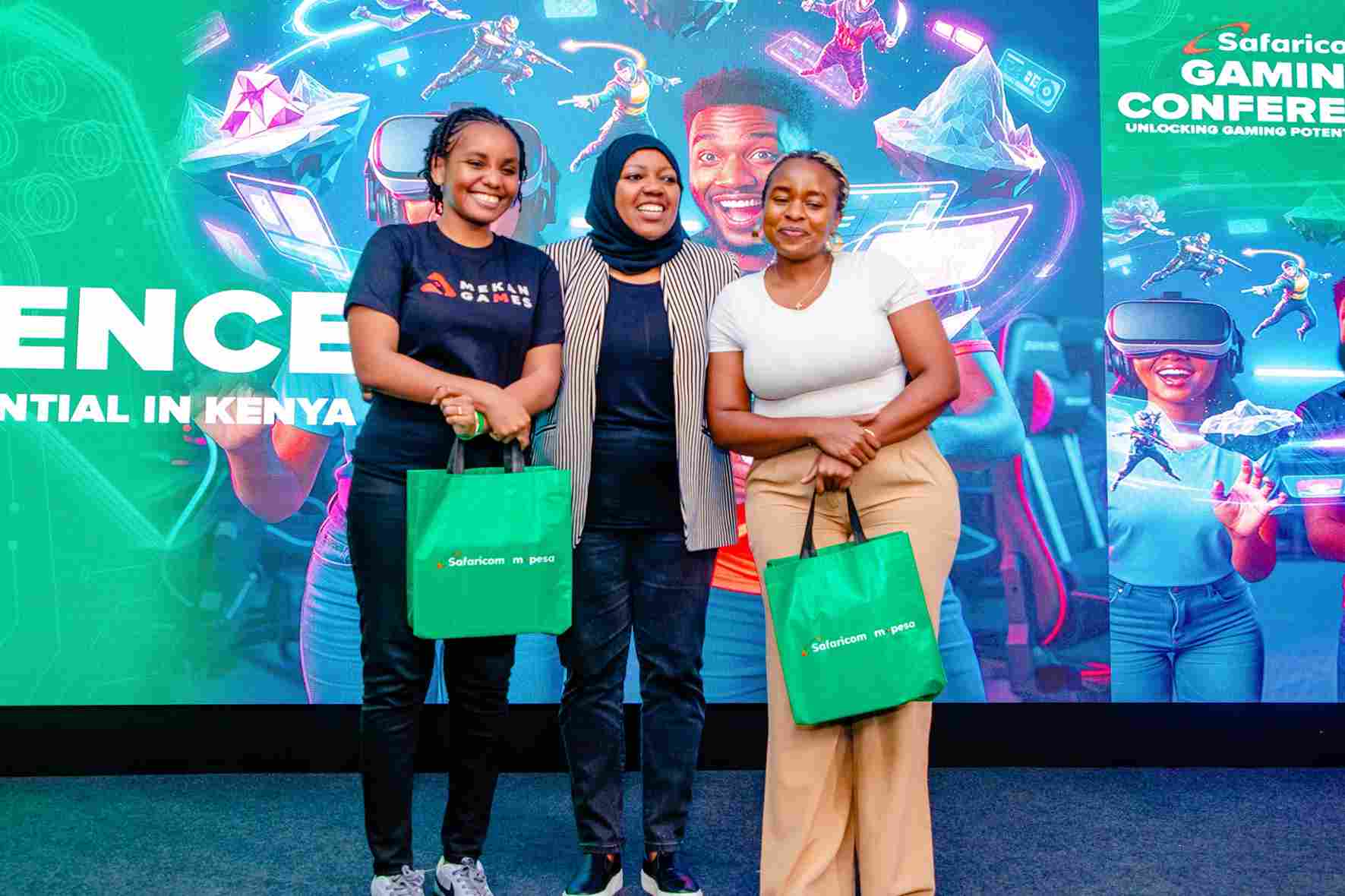
(centre), and Maryanne Musyimi (right) pose for a photo during the Safaricom Inaugural
Gaming Conference held at MJC, Safaricom Headquarters in Nairobi.
A Gamer’s Journey: From Nairobi to Riyadh
Among the attendees was Mweri Chege (Mwerii), a competitive Fortnite and Valorant player who represented Kenya at an international tournament in Riyadh.
“My parents only took gaming seriously when I showed them my visa and plane ticket to Riyadh. Suddenly, I wasn’t just playing games — I was going somewhere with it,” he said.
Chege’s story reflects both the opportunities and barriers facing Kenyan gamers—from latency issues due to the lack of African servers to the need for parental support—but he believes the ecosystem is moving in the right direction, citing growing communities, national teams, and corporate backing from brands like Safaricom and Shuffle PCs.
Building the Ecosystem: Safaricom’s Track Record in Gaming
Safaricom’s involvement in gaming is not new. The telco has steadily invested in the space through youth‑focused platforms, sponsorships, and infrastructure:
- 2019 – Partnered with Pro Series Gaming (PSG) to launch a national eSports tournament for youth aged 18–26, combining competition with mentorship.
- 2021 – Introduced the MobiPlay Challenge via its Games Lounge platform, an 8‑week online competition with daily, weekly, and grand prizes.
- 2024 – Rolled out the ‘Wai Ndai’ 90‑day online gaming challenge, offering KES 500,000 in daily cash vouchers and three Suzuki Altos as grand prizes.
- 2025 – Sponsored the Otamatsuri Gaming Convention at KICC, powering the event with 5G connectivity for seamless, low‑latency gameplay.
Why Gaming Fits the Telco Growth Playbook
McKinsey’s analysis highlights digital content and gaming as prime adjacencies for African telcos seeking to diversify revenue streams.
“Leading telcos are achieving 15 to 20 percent of revenues from digital businesses through adjacencies… Adjacent opportunities could include digital content, gaming, and digital advertising,” the authors note.
For Safaricom, gaming is more than brand positioning—it’s a strategic bet on a youth‑driven, data‑intensive sector that can accelerate uptake of 5G, broadband, and mobile money services.
The report also stresses that 5G FWA is a cost‑effective way to deliver “fibre-like speeds” to underserved areas—directly addressing the connectivity gaps Ali‑Kimanthi referenced.
Industry and Government: The Missing Pieces
The conference doubled as a call to action for policy reform, funding, and inclusive infrastructure.
“We cannot create relevant solutions in a vacuum,” Ali‑Kimanthi urged. “Tell us what you need — whether it’s better latency, accessible broadband, or more localised content — we are ready to support that growth.”
McKinsey’s authors echo this, urging telcos to “invest in localised content, digital literacy, and affordability solutions” to close Africa’s 60% mobile internet usage gap.
Chege added that more local tournaments would boost visibility, prize pools, and validation for aspiring players.
The Road Ahead
As the Safaricom Gaming Conference closed, the message was clear: Kenya is ready to compete on the global gaming stage—but success will require robust infrastructure, sustained investment, and a unified ecosystem.
With Safaricom’s leadership, the rise of players like Chege, and growing public interest, Kenya’s gaming sector is no longer niche—it’s an industry on the rise.
Or, as McKinsey’s Can Kendi and colleagues put it:
“Rather than looking backward, CEOs… should imagine themselves five years in the future, looking at today’s decisions and asking, ‘What choices did we make? What bets did we miss?’”
