



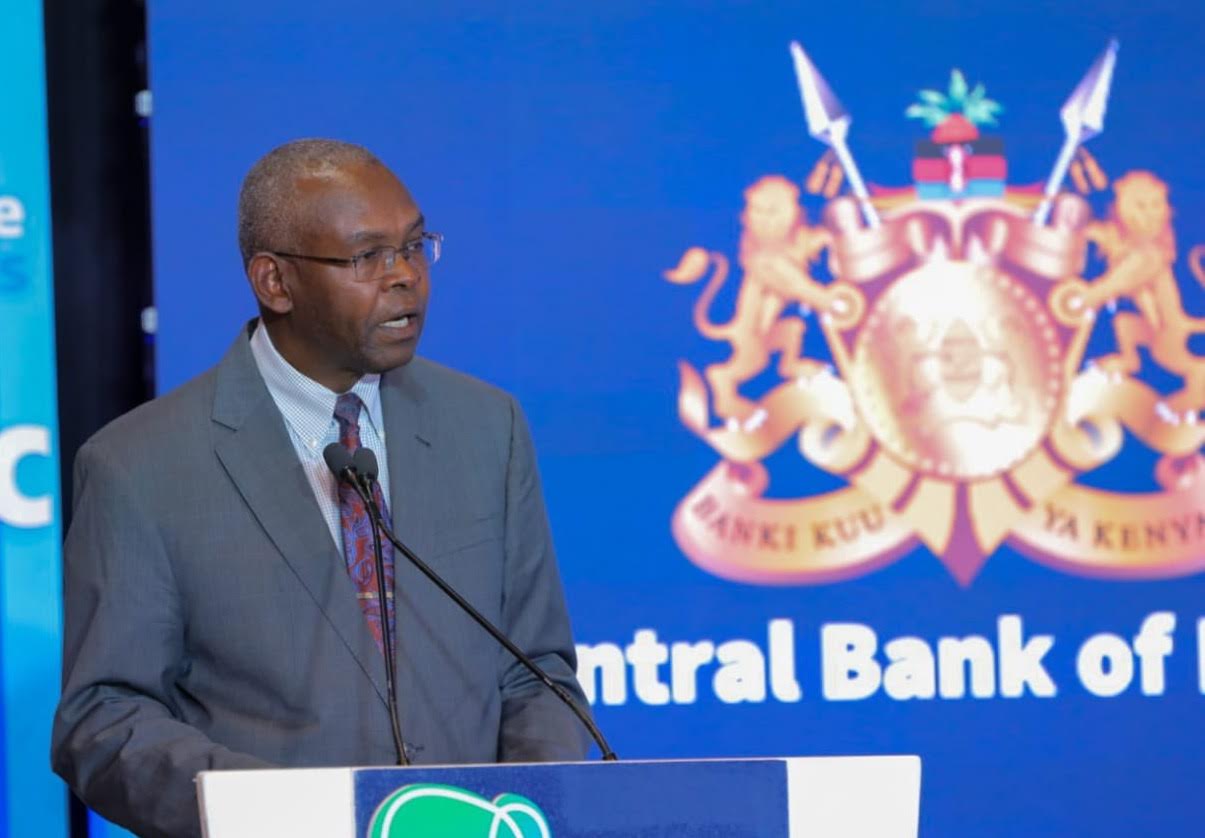
The Central Bank of Kenya (CBK) has announced a sweeping reform to how commercial banks price loans, unveiling a revised Risk-Based Credit Pricing Model (RBCPM) that ties lending rates to a new interbank benchmark known as the Kenya Shilling Overnight Interbank Average (KESONIA).
Starting September 1, 2025, all new variable-rate loans in Kenyan shillings will be priced as KESONIA + “K”, where “K” represents a bank-specific premium based on cost of funds, shareholder returns, and borrower risk. Existing loans will transition to the new model by February 28, 2026, following a six-month adjustment period.
“KESONIA will be applicable to all variable-rate loans except for foreign currency-denominated loans and fixed-rate loans,” CBK stated in a memo released Tuesday. “Where KESONIA is not practical, customers may be availed the use of the Central Bank Rate (CBR) as the alternative reference rate.”
What the New Model Means for Borrowers
Under the revised framework:
- KESONIA becomes the base rate for all shilling-denominated variable loans.
- Banks must disclose the full cost of credit, including the “K” premium, fees, and charges, on their websites and the Total Cost of Credit (TCC) portal.
- The CBK will publish KESONIA daily, ensuring transparency and real-time market alignment.
This shift is designed to improve monetary policy transmission, a long-standing challenge in Kenya’s financial system, where changes in the central bank rate have not consistently influenced lending behaviour.
“The model aims to strengthen monetary policy transmission, enhance transparency, and ensure lending reflects borrower risk profiles,” CBK said.
Policy Evolution
The reform follows months of consultation and resistance from commercial banks. In April, CBK initially proposed anchoring loans to the Central Bank Rate (CBR), prompting criticism from the Kenya Bankers Association (KBA), which warned of a return to rate controls.
Banks advocated for an interbank-based benchmark, citing global standards like SONIA (UK) and SOFR (US). By July, CBK signalled its preference for a transaction-based rate, ultimately renaming the overnight rate KESONIA to reflect its new role.
“By tying credit pricing to a transaction-based benchmark, CBK hopes to gain a transparent anchor rate, while banks retain room to set borrower-specific premiums,” said a senior banking analyst.
Market Impact and Monetary Policy Alignment
The adoption of KESONIA marks a structural shift in Kenya’s credit market. It limits banks’ discretion in setting base rates and aligns lending more closely with real-time liquidity conditions.
This move also complements CBK’s current monetary stance. On August 12, the Bank cut its policy rate by 25 basis points to 9.50%, its seventh consecutive reduction, aimed at stimulating private sector lending amid stable inflation.
Transparency, Risk Differentiation, and the Road Ahead
While the new model promises greater transparency, its impact may vary. Borrowers with strong credit profiles could benefit from clearer risk-based pricing, while those with weaker profiles may face higher costs.
The first test of the system begins in September, when banks roll out new loans under the KESONIA framework. How lenders disclose and justify the “K” premium will determine whether CBK’s promise of fairer, more transparent lending is realised.
