


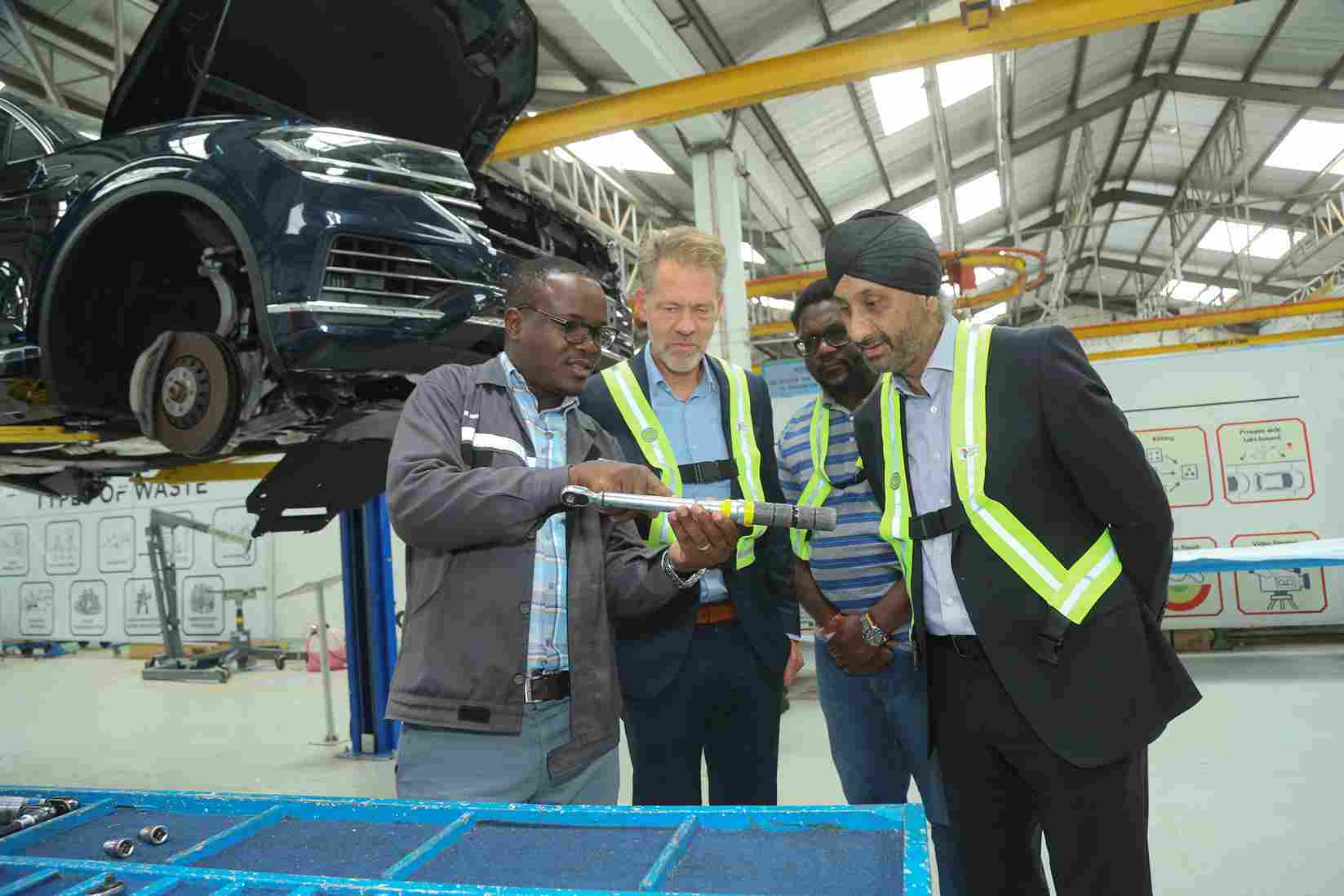
Kenya Vehicle Manufacturers (KVM) has restarted the local assembly of Volkswagen vehicles at its Thika plant, marking a renewed push to strengthen Kenya-Germany industrial cooperation and expand Kenya’s footprint in regional automotive manufacturing.
The facility is now producing the Volkswagen Touareg, Tiguan, and T-Cross models under a Level 2 Completely Knocked Down (CKD) arrangement, a move expected to boost localisation, create jobs, and transfer modern automotive technologies into the Kenyan market.
“Germany recognises the critical role that the automotive industry plays in driving economic development,” said Alexander Fierley, Germany’s Deputy Ambassador and Trade Counsellor, during a visit to KVM. “Our renewed cooperation with Kenya seeks to build stronger linkages between our industries, foster innovation and technology transfer, while supporting the country’s economic ambitions.”
Strategic Revival and Expanded Portfolio
KVM’s revival comes nearly a decade after Volkswagen’s previous attempt to gain traction in Kenya faltered. The 2016 rollout of the Polo Vivo saw limited success due to low output and competition from used imports. This latest effort, featuring a broader model lineup, aims to sharpen technical expertise and position Kenya as a regional hub for vehicle assembly.
“Through our investment at KVM, we are providing more job opportunities to Kenyans, offering innovation and skills transfer from global OEMs, supporting growth of SMEs through local content input, and availing even more affordable vehicles to the Kenyan consumer,” said Arvinder Reel, Managing Director of CFAO Mobility Kenya, which holds a majority stake in KVM.
The Thika-based assembler already produces a wide range of vehicles for the Kenyan market, including Mercedes-Benz trucks and buses, Sinotruk, Tata, Hyundai, and electric buses from BasiGo. The addition of Volkswagen models strengthens its multi-brand portfolio and supports Kenya’s industrialisation agenda.
Kenya-Germany Partnership for Automotive Growth
The renewed collaboration between Kenya and Germany is expected to unlock new opportunities for investment, innovation, and market development in the automotive sector. Fierley emphasised that the partnership will support skills development, the adoption of modern assembly technologies, and the promotion of greener mobility solutions.
“We see KVM as a strategic step in the right direction,” Fierley added, noting Germany’s interest in fostering mutual partnerships that promote innovation and spur economic growth.
Industry analysts say the move could encourage more manufacturers to shift to local assembly, aligning with government efforts to grow the automotive value chain and reduce reliance on used imports.
KVM’s Expanding Assembly Capacity
KVM remains one of Kenya’s leading assemblers, handling a diverse portfolio that includes:
- Mercedes-Benz Trucks and Buses
- Volkswagen (Touareg, Tiguan, T-Cross)
- Sinotruk, Tata, Hyundai
- Electric buses from BasiGo
- Caetano Renault, JMC pickups, Mobikey MAN trucks
- Foton, GB Auto Eicher, Kinglong vans, IEA UD trucks
The facility’s expansion signals growing confidence in Kenya’s automotive sector and its potential to serve both domestic and regional markets.
From Mombasa to AI Hubs: Japan’s $5.5B Vision for Africa’s Future
